Showing posts with label Beau Agana. Show all posts

Tuesday, February 11, 2014

MeTA 16: Day 1 of Conference 2014

The 2014 Medicines Transparency Alliance (MeTA) Philippines forum 2014 started today, here at the Bayanihan Center of Unilab Complex, Pasig City, Metro Manila. Attendance is big, 100+ people attending. I see many new faces here compared to past MeTA PH fora.

Below, they key speakers, from left: Former Bulacan Gov. Roberto "Obet" Pagdanganan, MeTA Philippines Chairman, gave the Opening Remarks. Dr. Tim Reed, Health Action International (HAI, Amsterdam, the International MeTA Secretariat). Dr. Deirdre Dimancesco of WHO in Geneva, and Dr. Francisco Tranquilino of the UP College of Medicine, also Chairman of the Ethics Committee, Philippine College of Physicians (PCP). He gave the Keynote Speech. 

In his brief speech, Dr. Tim Reed noted that "Multistakeholder engagement is clearly achieved in this forum" as the participants come from different sectors and agencies -- government, corporate and industry players, and civil society organization. 


Dr. Art Catli of the Pharmaceutical and Healthcare Association of the Philippines (PHAP) introduced Dr. Tranquilino. Said that the latter is a very popular, well-sought speaker, giving countless speeches here and abroad; that he is a "terror" teacher at UP; a workshorse, a researcher who has published dozens of academic articles, an ambassador of good will. 

Dr. Tranquilino disclosed his past and present engagement in the pharma industry, most of which were with the innovator companies. He started discussing "striking a balance" between innovation and government regulations. 

Medicines save lives, but developing new medicines now take 11-15 years out of 20 years total patent period. Many compounds that were originally discovered and were patented do NOT become medicines, if they do not pass the various clinical trials for safety, efficacy and other criteria. In the last decade, there was dying of pipelines of new revolutionary drugs, resulting in more mergers and consolidation of big pharma companies.  

The Mexico City Principles (MCP) for voluntary codes of ethics of businesses especially in biopharmaceutical sector was adopted by APEC member countries to help reduce corruption, bribery, and at the same time protect public health. 


The next session was on “Multistakeholder advocacy for adherence to the MCP”. The speakers were, from left: Tomas Marcelo "Beau" Agana, Past President of the Philippine Chamber of Pharmaceutical Industry (PCPI), the federation of domestic or national pharma manufacturers and drugstores; Teodoro "Ted" Padilla, Executive Director of PHAP; Atty. Florina Agtarap of the Department of Justice (DOJ) Office of Competition; Dr. C. Diza of the Food and Drugs Administration (FDA); and Dr. Melissa Guerrero of DOH National Center for Pharmaceutical Access and Management (NCPAM). Moderator was Yolanda Ibarle, MeTA Project Director.

Dr. Guerrero said that there are ethical issues in government processes, they have to address those upfront. She hopes that MeTA Philippines and its multi-stakeholder partners can help the DOH urge the local government units (LGUs) abide by DOH rules on the selection of suppliers, truthful procurement of medicines.


Dr. Diza said that FDA will hopefully develop guidelines or an Administrative Order (AO) specifying what needs to be followed from the MCP.

Beau Agana of PCPI talked about their draft Code of Ethics, an APEC workshop for voluntary code of ethics in 2012. Relationship building becomes problematic in pharmaceutical marketing under information asymmetry condition, he said. Code of Ethics will temper maximizing personal interest of doctors and other 3rd party decision makers, and prioritize patients' interests. He added that  patients have started to turn to pharmacists, not their doctors, in their medicines purchase. 


Ted Padilla of PHAP said that they have their Code of Ethics early, that penalties are imposed on  violating member firms and personel. Monetary sanction, a fine, is more effective in tightening behavior. Transparency is essential, there is no substitute to being transparent and honest, and medical decisions must always be made with the best interest of the patients, he added.

During the open forum, some concerns were raised regarding the procurement process and practices of LGUs, not only of medicines but also medical supplies, equipment and facilities.

My main concern in being involved in topics like this is how civil society and voluntary organizations will have greater role in promoting transparency and competition in the economy. Very often, self-regulation by industry players themselves are better than government regulations, restrictions and politics. Manufacturers, wholesalers and retailers who sell only good quality products because they have concern for their customers, or because they are scared that they will be scandalized if their products are discovered to be unsafe and/or ineffective. 
-----------

See also:
Health Transparency 12: MeTA Philippines Dynamism, October 02, 2012 
Health Transparency 13: MeTA International Visit to Manila, April 16, 2013 

Health Transparency 14: IMS-CHAT Meeting, April 18, 2013, Friday, July 12, 2013 

MeTA 15: Forum 2014 on Healthcare Ethics and Transparency, January 30, 2014

Thursday, August 30, 2012

Fat-Free Econ 22: Three Years of Drug Price Control Policy

* This is my article yesterday in TV5's news portal,
http://www.interaksyon.com/business/41795/fat-free-economics-three-years-of-drug-price-control-policy
---------

The drug price control policy turned three years old in mid-August. The Maximum Retail Price or MRP was imposed through Executive Order No. 821 and Advisory Council Resolution 2009-001 - both issued in July 2009 and took effect August 16, 2009.

The imposition was driven by a political emergency and not a health emergency, as the Presidential and local elections were just nine months away back then.

Prevailing drug prices data at that time contradicted the necessity of imposing price regulation. Competition among various brands from different drug manufacturers and drugstores was healthy at that time, such that consumers had various options for their needs.

Three examples of drugs are given below. Data came from Tomas Marcelo “Beau” Agana, who is president of the Philippine Chamber of Pharmaceutical Industry. Beau prepared a PowerPoint for the public hearing of the Congressional Oversight Committee on Republic Act No. 9502 last May at the Senate. But due to limited time, Beau was unable to present it. The event became a “public speaking” -instead of a public hearing - by Rep. Ferjenel Biron and Sen. Manny Villar, as both were pushing their respective bills creating a new bureaucratic layer, the Drug Price Regulation Board.

First is amlodipine, an anti-hypertension drug. While the leading brand, Norvasc by Pfizer, was selling for around P38 for the 5 milligram tablet, similar drugs were selling for P25, P15, P11 and P10. Consumers had choices, but the politics of envy centered on Norvasc. So their solution was more politics, more government coercion.


Source: Agana, May 2012. Primary data for the second chart - prices of different brands - is from the Drugstore Survey, March 2012.

Beau showed that for the average retail price for various brands of amlodipine, Philippine prices were cheaper than those in Indonesia, but more expensive than those in Malaysia, Singapore, Taiwan and Thailand.

Now consider this: some countries - such as Malaysia - do not slap taxes on medicines. Philippine taxes on medicines include an import tax of 3-5 percent and value-added tax of 12 percent - all of which result in a 15 percent price spike. If other taxes and fees are included - local taxes and fees and Food and Drug Authority fees - the government share could rise up to 20 percent of the retail price.

Then there are indirect taxes on medicines, namely the corporate income tax and the mandatory social security contributions by drug manufacturers, wholesalers and importers, and drugstores. Those taxes and fees, direct and indirect, are passed on to consumers.

Thus, the price difference of amlodipine between the Philippines and Malaysia could pretty much approximate the difference in tax treatment they both applied (or not applied) on medicines and on corporations: 12 percent VAT in the Philippines vs. zero in Malaysia; and 32 percent CIT in the Philippines vs. 20 percent for the first RM 500,000 and 28 percent on the balance.

Second case is co-amoxiclav, an anti-infection drug. Before the MRP policy three years ago, the leading brand, Augmentin by GSK was selling for nearly P83 for the 625 milligram bottle. But consumers had other options that were selling for only P59, P47, or P35.


Comparing again with some Asian countries, drug prices here for co-amoxiclav were similar with those in Indonesia and Thailand. The price difference with Malaysia because of a different tax treatment appears to explain why they are cheaper in Malaysia.

Comparing with prices in Singapore, VAT in the city-state stands at only 5 percent and CIT at 17 percent, or almost half that in the Philippines.

The third case is simvastatin, a drug against high cholesterol and certain cardiovascular diseases. See the different prices for different brands.


And here are other drugs and their respective price ranges. Again, basic data is from the Drugstore Survey, March 2012.


The bottomline for all these data is clear: there is competition, there are various options for the consumers, and therefore government intervention in drug price setting was unnecessary and unjustified. Only then Senator Mar Roxas (who pushed for the policy in the Senate) and then President Gloria Arroyo knew why the MRP was imposed.

When the MRP was being cooked and debated, Roxas was desperate to raise his low approval rating for the May 2010 Presidential elections, while Arroyo signed the EO to steal the show from him. Then Health Secretary Francisco Duque was also looking at the possibility of running for the Senate, but did not push through with the plan because of the Arroyo administration's poor showing in surveys.

In short, the MRP imposition in August 2009 was a political gimmick for political ends by politicians looking at the elections just nine months away. While their political horizon was short term, the social and economic damage was long term. EO 821 has no sunset provision.

A year after the MRP was imposed, the key sponsors of the policy had dropped the drug sector like a hot potato: Arroyo won a congressional seat, Roxas was appointed transport and communications secretary, and Duque was appointed head of the Civil Service Commission.

Two weeks ago, I attended the emergency meeting of the DOH Advisory Council for RA 9502, the Cheaper Medicines Law, and the important question requiring an answer was: What should the DOH do, to deal with repeated if not rising cases of water-borne diseases like leptospirosis due to flooding? Should the government impose another round of MRP on drugs used to treat those diseases?

Luckily the lesson of the past three years of MRP is clear in the minds of the Advisory Council members. Competition among different brands and drugstores provides the poor some access to cheap drugs, whereas price control has upset the market for the same.

Below is data presented during the said meeting. The drug against leptospirosis, doxycycline, has various brands with a wide price range. The prices are in pesos per 100 milligram capsule.


So consumers have the option of buying at P169, P74, P49, P5 or P2. Furthermore, many drugs against diseases that arise during calamities are given away not only at low prices, but sometimes for free through donations from various civil society and charitable organizations like the Red Cross, Rotary, Mason, Lions, JCI, etc. The DOH also has its own stock of medicines for distribution to the poor.

Competition, not more government coercion. Deregulation, not more government regulation and taxation. The public and the politicians would be better off if they will heed this simple lesson from the three years of drug price control.
--------

See also:
Drug Price Control 25: Top 10 Articles on Google Search, April 03, 2012
Drug Price Control 26: Conflict of Interest in Drug Price Regulation Legislation, May 13, 2012
Drug Price Control 27: Letter to Sen. Pia Cayetano, May 15, 2012
Drug Price Control 28: On Cong. Biron and Sen. Villar Bills, July 14, 2012
Drug Price Control 29: MRP Attempt Over Anti-Leptospirosis Drug, August 16, 2012 

Fat-Free Econ 8: Drug Price Regulation is Wrong, May 04, 2012
Fat-Free Econ 9: Drug Pricing Bureaucracy is Not Cool, May 11, 2012
Fat-Free Econ 18: Healthcare Corruption and Physician Entanglement, July 30, 2012

Friday, May 11, 2012

Fat-Free Econ 9: Drug Pricing Bureaucracy is Not Cool

This is my column today in TV5's news portal. Only one photo was posted there. Additional photos here taken at the Senate hearing that day, plus charts, are not part of the original article.
--------

http://www.interaksyon.com/article/31666/fat-free-economics-why-drug-pricing-bureaucracy-is-not-cool

FAT-FREE ECONOMICS: Why drug pricing bureaucracy is not cool


Gun control is not so much about guns, but about government control. In the same way, drug price control is not so much about medicine prices, but about the power of bureaucrats to set prices. Guns can kill, drugs can heal, but government control can corrupt. More power to control something means more opportunity for corruption.

This became clearer to me when I attended the Congressional Oversight Committee on Quality Affordable Medicines at the Senate yesterday. It was chaired by Sen. Manny Villar and co-chaired by Rep. Albert Garcia – both of whom head the Committees on Trade and Commerce in their respective chambers.

The other legislator who attended was Rep. Ferjenel Biron (4th District, Iloilo), the main author of a bill creating the Drug Price Regulation Board (DPRB), of which a counterpart bill was filed by Sen. Villar. Besides the three, no other legislator attended the hearing. The panel of resource speakers represented various interests and groups in the Philippine healthcare sector.

What usually happens in Congress-ional committee hearings is that the legislators tend to over talk while the invited resource speakers can speak only when being called, and can be cut by legislators anytime they want.

Rep. Biron spoke long, glorifying the magic that government price regulation and control can do because “competition does not happen, drug prices here are very high compared to prices in India and Pakistan.”

He was citing old figures. India has had a drug price control policy since the mid-1970s but slaps low or zero taxes on medicines. Here, medicines are slapped with import tax, value-added tax and other levies, national and local. That partly explains the price differential between the two countries. But taxation of medicines here never figures in the explanation given by legislators.

The local generic companies, the multinational innovator companies, the local pharmacist association, medical association, drugstore association, hospital association, academic pharmacists, and some NGOs like us in Minimal Government Thinkers, are unanimous in saying that price control is not the answer as competition among various players has resulted in the slow but steady decline in average prices of drugs.

To say “millions of poor people still cannot afford many essential drugs” is wrong on two counts. One, drug prices are falling, as presented by Reiner Gloor of the Pharmaceutical and Healthcare Association of the Philippines (PHAP is mostly multinationals) and Beau Agana of the Philippine Chamber of Pharmaceutical Industry (mostly national pharmaceutical companies).

For instance, the price of anti-hypertension drug molecule amlodipine has gone down from around P40 per tablet in 2007 to P33 in 2008 before the price control policy. It further dropped to P29 when price control was imposed, before last year's P18.

The price of anti-bacterial infection co-amoxiclav has gone down from around P56 per tablet in 2007 to P50 in 2008, P41 in 2009, and P33 in 2011.

A second reason it's wrong to say that poor people cannot afford essential medicines is that for really poor people, even a P5 tablet is still “expensive and unaffordable”, since they want the government – national and local – to give away the medicines for free.

The Department of Health has identified several medicines as “entitlements,” to be given for free to certain poor patients. Some rich local governments – such as the cities of Manila, Makati and Quezon - have city-owned hospitals and they treat poor patients for free, even give away some medicines for free. This is an example of making essential drugs not just “cheap and affordable” but free for the poor, and even to those pretending to be poor.

One danger of having a new government bureaucracy that has the power to slap price control on any medicine and vaccine, especially those in the Essential Drugs List (EDL) of the DOH, is that it can be a big tool for corruption and extortion. A corrupt price control bureaucrat for instance can intimidate or harass any pharmaceutical company to pay a huge amount, otherwise their most popular, most saleable drugs will be slapped with a steep tax or voluminous paperwork, thus leading to heavy losses.

The reasons or alibi for regulating prices can be endless. “Millions of Filipinos are waiting and dying out there” is a statement for instance, that I heard at least three times from Rep. Biron during the hearing. So whether people are dying (we all die, right?) from cancer (and there are probably 200+ different types of cancer), various diseases of the heart, cerebrovascular diseases, pneumonia, diabetes, or mosquito-borne diseases (dengue, malaria, etc.), the threat of price control will be on the heads of the pharmaceutical companies.

There is too much discourse on curative healthcare, such as making various medicines cheaper. Preventive healthcare - like having healthy lifestyle (people should not over-smoke, over-drink, over-eat fatty food, over-sit) – is seldom or hardly discussed in many public discourses on healthcare.

One reason perhaps is that there is no opportunity for extortion and corruption in telling people to lead healthy lifestyles. But there is a big opportunity for extortion and corruption in various types of government intervention in curative healthcare. Like creating a price control bureaucracy, or buying tens of billions of pesos of medicines and clinic/hospital supplies for DOH and LGU hospitals.

Competition among various players, not more regulation by government agencies - whether existing or future bureaucracies - is the best tool to promote public health at the least cost to taxpayers, and invite the least opportunity for robbery among the corrupt officials in government.
----------

See also:
Fat-Free Econ 8: Drug Price Regulation is Wrong, May 04, 2012

Drug Price Control 23: Greece's Pharmacy Nightmares, January 13, 2011
Drug Price Control 24: Forcing Drug Firms to Report Payment to Doctors, January 24, 2012
Drug Price Control 25: Top 10 Articles on Google Search, April 03, 2012

Tuesday, November 08, 2011

Drug Price Control 19: Why is the Policy not Withrawn Yet

The drug price control policy of the Philippine government is now 2 years and 3 months old. Twenty one (21) molecules were slapped with the policy that became effective in mid-August 2009. I still have to see any official assessment paper by the Department of Health (DOH), or by Congress, or by other groups and NGOs, saying that the policy was really necessary to make certain drugs become more accessible to the poor. Most if not all of the literatures that I have encountered -- from multinational pharma, local pharma, hospital associations, pharmacists association, medical association, drugstore associations, etc. -- say that the policy was unnecessary at the start and its continued implementation is a failure in its avowed goal of making essential drugs become more affordable and more accessible to more and more people.

During the 2nd Generics Summit sponsored by the DOH last September 7-8, 2011, held at Richmonde Hoel in Eastwood, Quezon City, one of the speakers was Mr. Tomas Luke "Beau" Agana, President of the Philippine Chamber of Pharmaceutical Industry (PCPI), also the President and CEO of Pharex Health Corp. PCPI is the federation of mostly or wholly Filipino generic drug manufacturers and distributors/drugstores, with more than 120 member-companies.

Beau gladly shared with me the powerpoint he presented during the 2nd Generics Summit. See my earlier discussion about the Summit, along with my photo with Beau and other activities here, IPR and medicines 12: Expanding generics.

Below are six of the slides showed by Beau, citing the cases of 3 molecules: amlodipine (anti-hypertension drug), simvastatin (anti-high cholesterol drug) and co-amoxiclav (anti-biotics).


The figures show that even prior to drug price control policy of August 2009, the average weighted price (total molecule value / total volume) and prices of leading brands of amlodipine were already declining. Pharex's amlodipine generic was already selling at around P11 vs. norvasc's P38. There were other generics that were already selling at around P8 even before the drug price control policy. As a result of declining weight average price (solid red line), sales volume of amlodipine 5mg was rising.

The same story for simvastatin molecule, below.


Even before the drug price control policy, prices of leading brands and the weighted average price were declining. The government's heavy price intervention only brought them further down faster. Volume also increased.

This is because simvastatin -- and almost all molecules slapped by the policy -- is/are already off-patent, so that more and more brands are introduced each year from more generic manufacturers.

Finally, Co-Amoxiclav molecule, below. Same pattern of declining prices even before the drug price control policy.


I will also use these data from Beau in the coming Asia Generics Summit in Taipei, November 19-21. I will speak there to talk about generic drugs from a consumer's perspective.

At face value, one may conclude that "Drug price control policy quickened the pace of price decline of those drug molecules; hence, the policy is correct." Partly true. But what is not shown by these and related charts, are the following:

1. Generic drugs that were displaced and pulled out from the market because their manufacturers could no longer bring down already low prices.
2. Potential generic drugs from more generic manufacturers who did not launch their products here because of the heavy-handed price intervention by the government; and
3. Potential innovator drugs from more innovator companies who did not launch their more revolutionary, more powerful drugs here because of the same price intervention by the government.

Besides, the trend of declining prices was already there before the policy was imposed. There was healthy competition among innovator and generic companies already, each player targeting its niche market and location. Different prices for different brands targeted for different consumers.

I am still wondering why the DOH is not withrawing the policy. Could it be pressure from some influential officials of the Liberal Party, the party in power? Former Senator Mar Roxas, LP President, was the main pusher of the policy way back in early to mid-2009, just a few months before the May 2010 elections. Or other factors?

But the sooner that the DOH will withraw that policy, the sooner it can rectify the damage to the business environment that it has created. Right now, there are many emerging or re-emerging diseases which have no medications yet. Like dengue, various types of cancer, there are no existing vaccine against them yet. The price control policy has mainly targeted the innovator companies -- and adversely affected the local generic companies in the process. Some innovator companies outside the country should be having second thoughts coming in because of the price dictatorship policy imposed by the past administration, but continued by the current administration.
-------

See also
Drug price control 17: Wikileaks on the planned Pfizer drugs withrawal, September 22, 2011.
Drug price control 18: Wikileaks and former US Amb. Kenney on price control, September 28, 2011

Friday, September 09, 2011

IPR and medicines 12: Expanding generics

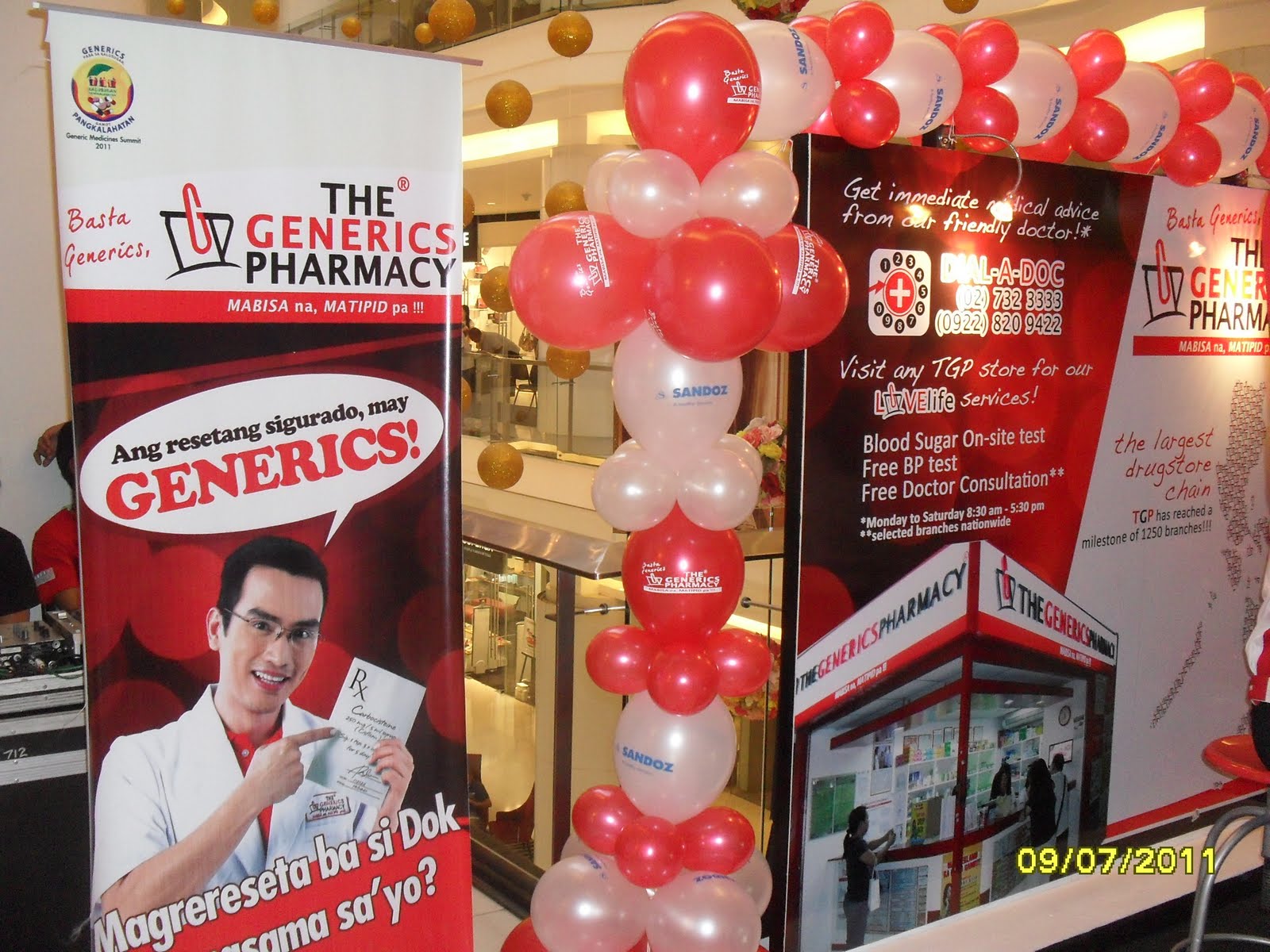
I attended the 2nd Generics Summit organized by the Department of Health (DOH) and one of DOH's big office, NCPAM. It was held the past two days, September 7-8, at the Richmonde Hotel in Eastwood, Libis, Quezon City.

Day 1 morning session was about welcome messages from top officials of key players in the generics industry in the country -- DOH Secretary Enrique Ona, FDA Director Suzette Lazo, WHO Philippine Office Soe Nyunt-U, PCPI Beau Agana, and PHAP Eufe Tantia (in behalf of Reiner Gloor who followed later). Then generics exhibit at the Eastwood Mall.

Then a generics expo exhibit was formally opened late morning that day, at the 2nd floor of the Eastwood Mall. I had the chance to have a photo here with Beau Agana, President of the Philippine Chamber of Pharmaceutical Industry (PCPI) and CEO of Pharex Pharma, and Reiner Gloor, President of the Pharmaceutical and Healthcare Association of the Philippines (PHAP). PCPI is composed of mostly if not entirely Filipino companies (manufacturers, drugstores, more than 120 member-companies) while PHAP is composed of mostly multinational and innovator pharma manufacturers, also some local drugstores).

Afternoon session was packed with many discussions and some debates. First session was on Improved Healthcare Access and the four speakers were:
1. Oscar Picazo of PIDS who spoke about access to cheaper medicines via the Botika ng Barangay (BnB), Botika ng Bayan (BNB), DOH treatment pack and other programs.
2. Ruth Natividad of IMS Health who spoke on impact of the Cheaper Medicines Law with their survey of both physicians and patients, their knowledge of the drug price control policy and related provisions,
3. Romeo "Al" Castro also of IMS Health who spoke on the overall generics picture in the country, and
4. Catherina Timmermans, Technical Director of WHO, spoke on the global picture of generics.

(From left: Picazo, Natividad, Castro and Timmermans) Here's one twist. I went to the Summit as an ordinary participant, not a speaker nor a reactor. While the last speaker, Ms. Timmermans, was delivering her talk, I was asked by a friend at the DOH if I can be one of the reactors as two scheduled reactors from the consumers and civil society were not around.

Perhaps being used to spontaneous writing and thinking as a blogger, I said YES, even if I have just about 10 minutes to compose my thoughts, write comments and draft questions, to the four speakers. Tough job eh.

In those roughly 10 minutes (or less) from the time I was informed to be an instant reactor to the time I went to the reactors' table, this is what I said.

I speak here as a consumer and as a taxpayer. As consumers, our interest is simple: more choices, more options, from more competition among more players, from innovator and generic manufacturers, from more drugstores. Getting subsidies is not much a major concern.

Thus, government policies that inhibit if not kill competition among players, like the drug price control policy, is wrong and against our interest.

As taxpayers, it is unfair for us if we pay plenty of taxes so that government will have more money to subsidize those who over-drink, over-smoke, over-eat, over-sit, over-fight, over-sex, and when they have frequent stab wounds, have AIDS, have fat bodies, etc. they run to government to demand that "health is a right."

Now to my questions.

For Mr. Picazo of PIDS, you know the bad fiscal situation of the government, the high annual budget deficit, the high public debt burden and the high interest payment to pay for those public debt. Consider for instance, interest payment alone, principal amortization not included yet, of the national government: P294 B in 2010, P357 B this year, and P333 B in 2012. Would you recommend that government should limit, if not get out of the Botika ng Barangay (BnB) since many of them are not performing well financially, in order not to further bloat the spending and the public debt? There are many private generic drugstores now that are entering more and more small municipalities and even poor barangays, like The Generics Pharmacy, independent and non-chain drugstores.

For Ms. Natividad and Al Castro, since IMS data show that the current drug price control policy did not achieve its main goal, and IMS data are for subscribers only and its rather expensive to get subscription, would you be wiling to show your data to Congress, especially on the deliberation of Cong. Biron's bill to expand the price control and an idiotic and wrong policy of creating a new government bureaucracy called the Drug Price Regulations Board?

For the WHO, while promoting generic drugs which is a good policy, but aren't you spearheading some anti-innovation and IPR-busting policies like compulsory licensing, early working, parallel importation?


Their reply were, as far as I can remember them, as follows:

1. Picazo: Yes, the fiscal burden is big, so I recommend that for those BnBs that are going under, they should be allowed to close and not be subsidized further.

2. Castro: Yes, we are willing to show our data if it will help promote good public health. Provided also that we will not be cited for contempt or be harassed.

3. Timmermans: No, we are not advocating IPR-busting policies, it's just that some policies to enable governments to deal with health emergencies should be on hand.

After the panel speakers and reactors went to their seats, I was approached by some friends and other participants in the audience, saying that they liked my reaction, yeah! One of those who approached me was the President of The Generics Pharmacy. I think people appreciate it when I emphasize the personal responsibility aspect of healthcare, it's not all about government responsibility, or pharma manufacturers and drugstores responsibility.

The next panel that afternoon was on Private Sector Efforts in Improving Access to Generic Medicines. The speakers were the respective heads of Reiner of PHAP, Beau of PCPI, and the Philippine Medical Association (PMA), Dr. Oscar Tinio.

This is one slide shown by Reiner. I think this will help people realize the role of drug innovation, that without innovator drugs, there will be no generic drugs. Or without innovator companies, there will be no generic companies. Thus, continued efforts, explicit or implicit, to bust the patent and IPR system, will have both short- and long-term negative impact on drug innovation.

And here is one of the many slides that Beau showed, showing an important point that even prior to the drug price control policy of the government, the average price of drugs for co-amoxiclav molecule (anti-biotics, anti-infection), simvastatin (anti-high cholesterol), amlodipine, and other important molecules, have been going down.

What the drug price control policy has done is to force, to coerce, further price reduction of the innovator drugs, but several generic drugs were also eased out of the market as they have little leeway for major price reduction. Beau said he will send me his presentation, so I can write more about the subject.

The next panel was on the Retail Landscape and Intellectual Property Landscape. The speakers were Janet Estranero of The Generics Pharmacy, Epifanio Evasco of the Bureau of Patents, Intellectual Property Office (IPO), and Catherina Timmermans of WHO. I would have wanted to be a reactor in this panel as IPR and medicines is among my favorite topics. But the reactors that afternoon were also great minds, like FDA Director Suzette Lazo, from the Philippine Pharmacists Association (PPhA), others.

. Mr. Evasco showed this among his many slides. He said that while compulsory licensing (CL) is clearly in the Cheaper Medicines Law, they have not accepted any CL application yet from any of the local pharma companies. They received one CL application in 1998, and there was no successor application then.

I think this is good. All the big and blockbuster drugs like amlodipine, clopidogrel and atorvastatine already lost their patents. There are now plenty of branded generic drugs on these molecules sold at much lower price than the innovator brands, so consumers and patients have more choices now. There are a few remaining patented drugs in the Philippine market but these are not blockbuster drugs, like anti _____ cancer. Any CL applicant will spend huge money anyway in legal battles, so why spend big on lawyers and PR guys when you can spend your money developing and marketing new and more branded generics of the blockbuster off-patent drugs. Or wait for those patents to expire in a few years and spend your savings and resources developing new generic drugs.

The WHO recently is going almost full throttle on the campaign to control non-communic-able diseases (NCDs) or lifestyle-related diseases. The infectious diseases are now generally under control except for some disease outbreaks like SARS and H1N1.

My position on the matter is simple: If people will over-drink (have liver cancer, intestinal disorder, etc.), over-smoke (have lung cancer, throat cancer, etc.), over-eat and over-sit (have hypertension, high cholesterol, diabetes, etc.), is it other taxpayers' problem via governments and the WHO? Self-inflicted diseases should be addressed by self-financed healthcare, with assistance from friends, family, private and charity foundations. Government assistance and subsidy may be expected -- no one can stop now those politicians and legislators if they will coerce getting more of our money via more and high taxes to spend on things that whet their political appetites -- but this should be limited.

More stories and pictures later.

Wednesday, September 07, 2011

IPR and medicines 11: When blockbusters' patent expires

Two weeks ago, the President of the Philippine Chamber of Pharmaceutical Industry (PCPI), Mr. Beau Agana, invited me to attend their general assembly at Astoria Plaza, Ortigas. Mr. Agana liked the position paper that I submitted to the House Committee on Trade and Industry regarding Cong. Biron's bill creating another government bureaucracy, the Drug Price Regulations Board. PCPI and many of its members, mostly the local generic pharma companies, also do not like the drug price control policy and the creation of a new price control bureaucracy in government, but they were still drafting their position paper at that time.

In his talk, Beau shared that PCPI is now the head of an ASEAN body on pharma, I don't remember its exact name something like ASEAN Pharmaceutical Confederation. That's a good achievement. ASEAN member countries want a pharma harmonization plan.

Personally, I am not in favor of government-initiated "harmonization" plans. Businesses thrive on competition, consumers benefit from competition. Harmonization generally mellows if not kills competition because wide price differences among competing players for instance, are discouraged if not eliminated. Another example is the EU Tax Harmonization Program. Europe is known for high taxes to sustain their expensive welfare states. Some countries however, initiated low taxes, and it set off a "tax competition" trend, at least among the smaller economies like former Eastern European countries. EU did not like tax competition and thus, it introduced tax harmonization.

Anyway, I digress and I have not read much about the ASEAN pharma harmonization plan. I will write about it in the future.

One of the two guest speakers that evening was Mr. Romeo "Al" Castro, Jr., head of IMS Health Philippines and IMS Thailand. IMS Health has a rich database about the pharma market, global, regional, national. If one wants to know for instance, what are the leading and most saleable drugs, who are the biggest pharma companies (overall and in each product category) and so on, one must get the services of IMS, or officially ask data from them.

Among the points made by Al that evening, was how off-patent drugs have mushroomed after the patent of the innovator drugs have expired. He mentioned the case of three blockbuster drug molecules.

1. Amlodipine, an anti-hypertension drug. In 2007, before the patent of Norvasc (made by Pfizer) expired, there were only two brands. Then it became 12 by 2008, 23 by 2009, 29 by 2010, and this year, there are 35 different brands from different pharma companies, mostly generic. The price differential among those brands, say at the 10mg tablet, can range from P7-8 to around P33. And the 5mg tablet, from as low as P3.50 to around P22 per tablet. Wide consumer choices.

2. Clopidogrel, anti-blood clot. In 2007, there was only one brand, the innovator drug Plavix by Sanofi. After its patent expiry in 2008 or 2009, the number of brands expanded: 2 in 2008, 7 in 2009, 13 in 2010, and this year, there are 21 different brands from different manufacturers, mostly generic. Prices range from P19 to P73 per tablet. Wide consumer choices.

3. Atorvastatin, anti-high blood, anti-cardiovascular diseases. In 2007, there was only one brand, the innovator drug Lipitor made by Pfizer. Patent expired last year I think, this year there are 6 brands already.

The lesson is clear. The patent and IPR system benefits both the innovator and generic pharma companies. The innovators get the temporary product (but not industry) monopoly via patent for their newly-invented drug, make high profit from that limited period to recoup its high R&D costs. Patients buy the newly-invented drug despite its high price compared to existing drugs against the same disease, because the newly invented one has more or better disease-killing capacity than the older drugs.

When the patent expires, generic manufacturers come in to produce their own brand, their own marketing, and the competition for the same drug molecule among many producers benefit the public and the patients. The manufacturer of the now off-patent drug may or may not bring down its price immediately in the presence of more competitors. The point is that patients and the public now have more options of what brands from different pharma manufacturers at different prices -- assuming that all those new brands are of good and safe quality -- choose.

There are a few patented drugs in the market now, but they are not as popular or as blockbuster as the 3 mentioned above. Co-amoxiclav molecule (anti-infection, anti-biotics) is also a famous drug, innovator brand was Augmentin by GSK. Now there are many other branded generics from different generic manufacturers.
------

See also Part 9, about declining death from AIDS, and drugs in development in the US, June 08, 2011, and
Part 10, about the WaPo article on physicians' prescription of branded vs. generics, July 13, 2011.