Wednesday, January 31, 2018

BWorld 182, Asia Liberty Forum 2018 in Jakarta

* This is my column in BusinessWorld last January 22, 2018.


“There is no evidence that fuel and electricity subsidies benefited the poor. There is no evidence that trade protection benefited the poor. Elimination of subsidies if compensated by reduction of cost doing business (corruption) will help the poor.”

— Muhamad Chatib Basri,
presentation about Indonesia energy and food subsidies,
EFN Asia conference September 2004, Hong Kong

Those conclusions were made by Dr. Chatib “Dede” Basri in his presentation, “Can subsidy and protection do any good for the poor?” at the Economic Freedom Network (EFN) Asia conference in 2004. At that time, he was a faculty member of the University of Indonesia and individual member of EFN. He used an econometric model and the Grosman and Helpman (G-H) model (trade protection is the result of bargaining between government and various lobby groups). The inevitable conclusion of his paper was that market reforms and the reduction, if not removal of dependence by the poor on the state will actually help them and taxpayers over the long term.

Dr. Basri later became Minister of Finance from May 2013 to October 2014 when the administration of Indonesian President Susilo Bambang Yudhoyono ended. Dr. Basri will be among the keynote speakers in the Asia Liberty Forum (ALF) this coming Feb. 10-11 at Mandarin Hotel Jakarta, Indonesia. The event is sponsored by the Atlas Foundation and co-hosted by the Center for Indonesian Policy Studies (CIPS).

Aside from Dr. Basri, other important speakers in this year’s conference will be the following:

1. Saidah Sakwan, chairwoman, CIPS; also a commissioner of the Indonesian Business Competition Commission (KPPU).

2. Brad Lips, CEO of Atlas Network, Washington DC, USA.

3. KH Yahya Cholil Staquf, general secretary of Nahdlatul Ulama (NU) Supreme Council, world’s largest Muslim organization with 50+ million members.

4. Siegfried Herzog, Regional director for Southeast and East Asia, Friedrich Naumann Foundation for Freedom (FNF), Thailand.

5. Suraj Vaidya, chairman of SAARC Chamber of Commerce and also chairman of Samriddhi Foundation, Nepal.

6. Rainer Heufers, executive director of CIPS.

7. Razeen Sally, Prof. at Lee Kuan Yew School of Public Policy, National University of Singapore.

8. Ronald Meinardus, Regional director, FNF South Asia, India.

9. Parth Shah, president of the Centre for Civil Society, India.

10. Lorenzo Montanari, exec. director of Property Rights Alliance (PRA), Washington DC, USA.

11. Barun Mitra, founder and Director of Liberty Institute, India.

12. Junjie Ma of Unirule Institute, Beijing, China.

There are many other interesting speakers to talk on many topics — policy reforms to broaden support for classical liberal principles, education policy, Ease of Doing Business Index, Protection of private property rights, Intellectual Property Rights (IPR), micro-enterprises, entrepreneurship in e-commerce, state-owned enterprises (SOEs).

Are Asian economies getting more market-oriented or state-distorted? Is there greater rule of law now or greater rule of men? Are public institutions more protective or more confiscatory of private property rights?

There are many studies and annual reports that track and monitor various indicators and parameters to help answer these and related questions. Among the important annual reports are Fraser Institute’s Economic Freedom of the World (EFW) reports, Heritage Foundation’s Economic Freedom Index (EFI), PRA’s International Property Rights Index (IPRI), World Bank’s Doing Business, and World Economic Forum’s (WEF) Global Competitiveness Index (GCI).

The GCI is composed of 12 pillars and the first pillar are Institutions. These are composed of 21 sub-pillars like property rights, IPR protection, diversion of public funds, public trust in politicians, irregular payments and bribes, judicial independence, favoritism in decisions of government officials, burden of government regulation, efficiency of legal framework in settling disputes and challenging regulations, transparency of government policy making, and reliability of police services.

I checked the latest WEF 2017-2018 report for East Asian economies and compared with the report two years ago for pillar #1, Institutions (see table).


So for Institutions, the numbers above show three important results: One, out of the 144 countries and economies covered, many East Asian nations land in the first half (i.e., 1st to 72nd), 11 of the 15 economies mentioned above. Singapore and Hong Kong are in the top 10.

Two, the biggest gainers in global ranking are India (+21!), South Korea, China, and Laos. And three, the biggest loser in ranking is the Philippines, dropping 17 places or notches.

In the WEF Executive Opinion Survey 2017, the most problematic factors for doing business in the Philippines were: (1) inefficient government bureaucracy, (2) inadequate supply of infrastructure, (3) corruption, (4) tax regulations, and (5) tax rates.

For Asian countries outside the first half like Thailand, Vietnam, Philippines and Cambodia, there is an immediate need to improve the rule of law and further debureaucratize, deregulate and depoliticize the economy.
-------------

See also:

China Watch 25, Benham Rise/ Philippine Rise and Chinese exploration

These were some of the news last January 22-24, 2018.


So President Duterte would keep his kow-tow humiliation to China?

Last January 24, these are just two of the many news reports on the subject.


This irked Prof. Jay Batongbacal of UP College of Law and a friend from UP Sapul student org. So last January 24, Jay posted this in his fb wall, it was shared by 8,000+ people.
------------

by Jay Batongbacal
January 24, 2017.


[Fair warning: for the first time, i am about to really rant about something]

I was going to write on this MSR brouhaha again and try to do something that could actually help this government clarify some things they just don't get, but then I am outraged by a huge hollow-block thrown against the entire FIlipino nation.

Pres sPox Roque's claim that Filipinos cannot afford to explore Benham Rise, that "no one can do it", that the Philippines "needs China" to do it, and "only China qualifies" is completely wrong, based on ignorance, a serious disservice to Filipino scientists in particular and the Filipino people in general, and an over-exaggeration of China's potential role in Philippine ocean sciences.

In the first place, FIlipinos have been exploring the Benham Rise Region for years now:

1) From 2004-2008, then again in 2010, the DENR's National Mapping and Resource Information Authority sent BRP Hydrographer Presbitero on multiple bathymetric and hydrographic surveys of the Benham Rise Region, producing a highly detailed 3D digital bathymetric model (resolution of 1 meter for an area covering 30 million hectares) of the entire region compliant with the highest quality standards of the International Hydrographic Organization. That was a Philippine vessel with full Filipino crew (mariners of the Coast and Geodetic Survey Division) funded completely by the Philippine government. That batheymetric model was absolutely necessary for the Philippines to support its claim to the continental shelf beyond 200 nautical miles with 2D and 3D geomorphological analysis.

2) For the past decade, the DA's Bureau of FIsheries and Aquatic Resources has been annually conducting fisheries research and experimental fishing expeditions in the Benham Rise Region, particularly in areas between the coast of Luzon and Benham Bank, to determine the tuna fishery potential of its waters. This has been undertaken by the M/V DA-BFAR multi-mission research vessel for so long, that BFAR has confidence in promoting and opening the region as the country's new tuna fishing ground.

3) Two oceanographic research cruises have been organized, funded by the DOST, supported by DA-BFAR, and with the participation of the University of the Philippines, De la Salle University, Silliman University, and other academic institutions (apologies as I forget), which gave the Philippines its initial glimpse of Benham Bank, the shallowest portion of Benham Rise. These were done in 2014 and 2016. A third cruise is being planned for this summer 2018 (fingers crossed). All are crewed by Filipino scientists, marine science students, Navy and Coast Guard technical divers, and mariners. Supplementary support/assistance so far was provided by Oceana, a non-government organization advocating marine resources conservation, in the form only of a remotely-operated vehicle unit and technicians to control it, and additional scientists and technical divers to augment the 2nd expedition's personnel. Both previous expeditions were Philippine-funded, the same goes for the planned third cruise. The first people to actually descend and "touch" Benham Bank 50m below the Pacific, were Filipino technical divers. That's our "Neil Armstrong setting foot on the moon" historical moment.

4) Since 2016, the UP National Institute for Geological Sciences and UP Marine Science Institute have been collaborating with counterpart institutions from Korea and Japan, namely the Korea Institute for Ocean Science and Technology, and the Japan Agency for Marine-Earth Science and Technology, to begin initial exploration of the seabed in Benham Rise itself under separate memoranda of agreements. As I understand it, among other things, the Philippines intends to get seabed core samples through this arrangement, which push forward the resource assessment and exploration efforts for the Rise.

5) Geologists of the UP NIGS have acquired and reviewed available public domain data from multiple scientific research cruises by multiple nations that have passed through the Benham Rise Region, and produced academic papers and analysis of their own, which were used as evidence to support the claim to Benham Rise. The detailed tectonic history, geological characteristics, and underwater topography have been determined and analyzed by these Filipino scientists, and their findings tested and and papers validated by foreign scientific advisors as well as the scientific community through the continental shelf claim process and the academic press.

6) Marine biologists of UP MSI, UP SESAM, and other schools have been analyzing the many samples and observations that they gathered from the two research cruises, and making some interesting findings and potential discoveries on their own. These are Filipino researchers, earning salaries and wages from Philippine sources, and working in accordance with stringent scientific standards and procedures on par with anyone else in the world.

Monday, January 22, 2018

BWorld 181, Effects of Supreme Court TRO on RCOA

* This is my column in BusinessWorld last January 18.


“The real bosses, in the capitalist system of market economy, are the consumers… The entrepreneur profits to the extent he has succeeded in serving the consumers better than other people have done.”

— Ludwig von Mises, Bureaucracy

Geographical monopolies in electricity distribution are among the last remaining state-created monopolies in the country via congressional franchises because electricity distribution is considered a “public utility.”

As a result, factories, hotels, malls, or hospitals have no choice but to source their energy requirements from electric cooperatives (EC) or privately run distribution utilities (DU) which were given the franchise to serve these particular locations.

However, Rule 12 of the Electric Power Industry Reform Act (EPIRA) of 2001 (RA 9136) has changed this constitutional and legal guarantee of monopoly through the Retail Competition and Open Access (RCOA) provision.

RCOA breaks the geographical monopoly and allows retail competition in electricity to a contestable market composed of medium to big-ticket electricity consumers. Open access allows any qualified person or entity to use the transmission and/or distribution system and related facilities subject to payment of retail wheeling rates.

With rising power capacity addition yearly and RCOA implementation, average prices in the Wholesale Electricity Spot Market (WESM) have been declining.

In 2010, the cost of electricity in pesos per kWh was at 6.43. In 2011, it was 3.80; in 2012, 4.87; in 2013, 3.85; in 2014, 4.40; in 2015, 3.47; and in 2016, 2.84.

However, in early 2017, the implementation of the RCOA was suspended by a Supreme Court temporary restraining order (TRO). In effect, five resolutions issued by the Energy Regulatory Commission (ERC) from June 2015 to November 2016 were likewise suspended. Besides affecting the voluntary participation of contestable customers (CCs) for 750-999 kW, the suspension also reduced potential competition because many retail electricity suppliers (RES) — especially those whose licenses were expiring — were unable to renew them.

This decline in competition resulted in lower capacity demand by the contestable customers, from 3,456 MW in end-2016 to only 862 MW in November 2017 for the 1MW and higher customers, and from 351 MW end-2016 to only 78 MW in November 2017 for the 750-999 kW customers (see table).


A BusinessWorld report last Jan. 8 entitled “DoE to seek SC guidance on retail competition” said that the department issued a new circular allowing the switching from captive to contestable consumers to allow greater participation from new players. It also allowed the ERC to continue issuing licenses to RES and renew the licenses of RES with expiring licenses.

Here is a summary of the benefits of RCOA to consumers and the Philippine economy in general. Many of these were discussed at the EPDP presentation last September.

1. Contestable customers will have more choices in pricing and power supply contracting — privileges that are not available to small and captive customers.

2. Small customers can aggregate their demand or allow an aggregator to pool their combined demand to become contestable customers.

3. Contestable customers can choose the type or source of power they want. Some simply want cheaper prices, others want stable 24/7 electricity even if costs are higher than those offered by their previous ECs or DUs, whose services may be unreliable. For their part, other consumers who wish to source all of their energy needs from renewables can also do so — as long as they are willing to fork out more money for the privilege.

4. Contestable customers can have full control of their generation costs and are not required to subsidize small and/or off-grid consumers, unlike traditional end-users. They can choose to have flatter load factors by using more baseload, an arrangement that is ideal for companies, especially those that use power 24/7 like manufacturing plants, big hotels, hospitals, and BPO centers.

5. Customers can shift demand to off-peak hours and can “peak shave” to reduce their electricity price. Consumers have big leeway and choices based on their needs and corporate philosophy and branding.

6. There are more than 50 RES to choose from, shown in the table above. Contestable customers can also engage in financial hedging or enter into contracts with any financial provider to hedge its existing contact structure and they need not necessarily be an RES.

7. More investments in power generation can be expected as power companies can contract directly with customers and bypass ECs, a number of which have issues with paying generation companies on time.

The SC TRO has therefore resulted in the following unintended consequences:

1) It disallowed many contestable customers in the 750-999 kW demand category to enjoy RCOA, forcing them to stay with their ECs or DUs and depriving them of the benefits discussed above.

2) Other eligible customers have been discouraged from availing the RCOA due to lingering uncertainties.

3) DUs also face uncertainties whether to get additional generation contracts or not for contestable customers because the latter can leave them anytime once the TRO is lifted.

4) New RES players and existing RES with expiring licenses cannot get new ERC licenses. This means lesser competition among RES, DUs, and ECs. Less competition means lesser choice for customers.

The SC therefore, should resolve this uncertainty soon — either lift the TRO and allow the various ERC resolutions to be implemented again, or strike down those resolutions so that the ERC can issue new resolutions and regulations to implement RCOA. RCOA has to be implemented because it is pro-choice, pro-consumers, and abandons monopolization and unreasonable subsidies.
-------------

See also:

Sunday, January 21, 2018

WHO must go back to basics

I am reposting this good article by a friend, Philip Stevens, published in BusinessWorld last Thursday, January 18.
-------


AS one of 34 executive board members of the World Health Organization (WHO) meeting in Geneva next week, the Philippines shares a pivotal role in setting the global health agenda for the next year.

The WHO’s work has never been more important to address serious and evolving international health threats. It is only a matter of time before there is another global influenza pandemic to match the devastating outbreak of 1918, and, as recent outbreaks of Ebola and Zika have shown, new and deadly diseases can emerge at any time.

As a UN organization to which almost every country in the world belongs, the WHO should make strengthening national health systems and coordinating defenses against transnational disease its priority. But it’s often hard to know if the organization has any priority.

Superficial involvement in a ballooning number of health areas has made it a directionless, ineffective, and inward-looking player in an increasingly crowded global health scene.

The WHO’s tendency to do a lot poorly has seen it fail in its core business of leading international action on transnational disease outbreaks.

Take the organization’s response to the West African Ebola crisis of 2014.

An expert panel convened by Harvard Global Health Institute and the London School of Tropical Medicine criticized the WHO for its “catastrophic” delay in declaring a public health emergency.

The worry is that WHO will fail to handle the next inevitable global pandemic, leading to needless loss of life.

Funding is part of the problem: The WHO spent just 5.7% of its 2014-2015 budget on disease outbreaks, a 50% drop on the previous two years.

The WHO’s core budget, paid by member governments, fell from $579 million in 1990 to a feeble $465 million this year. To put this in context, this is considerably less than the Philippines receives each year in foreign aid earmarked for health.

The WHO has topped up its budget with project-based donations from countries and big charities, which now constitute 80% of its overall income. But that has cost the WHO its strategic independence.

Alongside global health staples like tropical diseases and immunization, the WHO now publishes recommendations on subjects from adolescent health and headaches to traffic safety and prisons.

Jeremy Farrar, director of the UK-based global health research charity the Wellcome Trust, argues the WHO is being undermined by its inability to focus on a few core issues.

“It’s so thinly stretched,” he told Reuters. “There’s arguably no organization on earth that could cover all those (topics) at sufficient depth to be authoritative.”

This lack of focus and mission creep will be on full display at next week’s WHO executive board meeting. Bizarrely, large parts of the agenda are dedicated to discussion of how to dilute the intellectual property (IP) protections that drive discovery of new health technologies.

Given the scale of today’s global health challenges, it’s not clear how repeating a tired and long discredited debate about IP and access to medicines will help. The vast majority of treatments prescribed in both developing and developed countries are off-patent and therefore unaffected by IP rules, yet far too many still do not have reliable access to them.

The real reasons for this have been well known for decades. There are too few doctors and clinics, and a lack of social and health insurance to protect people from the cost of health care expenditures (something WHO itself implicitly recognizes in its efforts to promote universal health care). In many places, weak supply chains and poor infrastructure separate people from the treatments they need.

A narrow and divisive focus by WHO on IP may tick political boxes, but it does nothing to improve health and will only lead to more unproductive debate. It looks like a power grab by WHO staff to intervene in areas that are best left to national governments.

In 2017, former Ethiopian foreign minister Tedros Adhanom was elected as new director general on a mandate to reform and consolidate the WHO. Almost immediately, he appointed no fewer than 14 assistant director generals to oversee a huge number of program areas. This is not the work of a reformer.

Next week is the first executive board meeting under Tedros’s leadership. The Philippines and other member states need to steady the ship. To maintain its relevance, WHO must get back to basics and do a few things well, not many things poorly. It must therefore unite nations around practical solutions, not divide them in pointless debates.


Philip Stevens is director of Geneva Network, a UK-based research organization focusing on international trade and health issues.

Friday, January 19, 2018

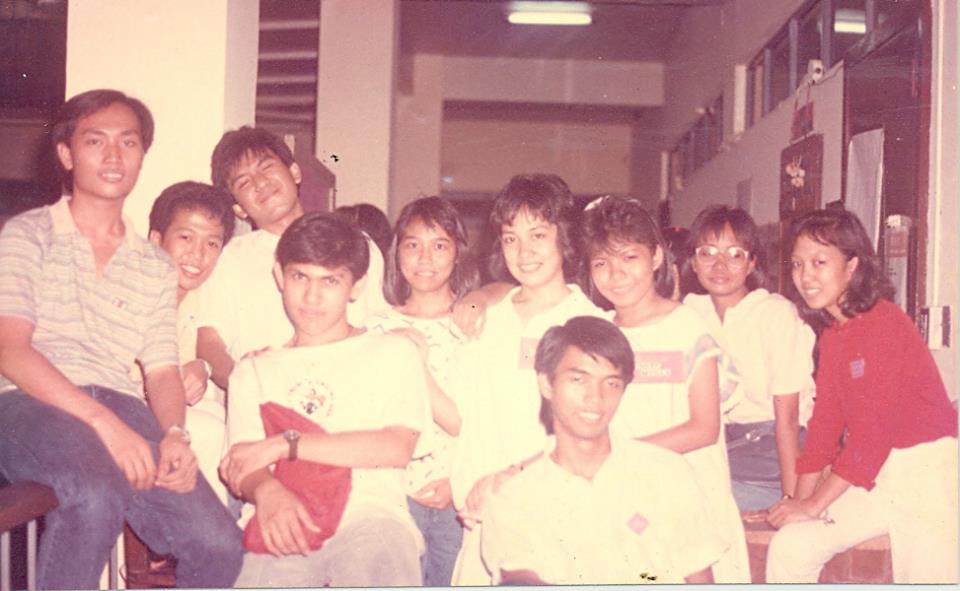
Pictures from UP Diliman, 1985-1987

Mula sa baul ni Fidel Nemenzo at ibang mga friends sa UP, these photos strike nostalgia and happy memories. Below, in one of the group photos of the Independent Student Alliance (ISA) student party during the UP University Student Council (USC) elections. Among the people here: Agnes Camacho, Rowena Alvarez, Alan Ortiz, Marie Sharon Guerrero, Sheila Espine Villaluz, Doby Pineda, Jay Batongbacal, Alex Lacson, Ariel Nepomuceno, Bjay Angeles, Doyet Sevilla, Bong Belaro, Francisco Magno, Dulce Natividad, Sharon Dauz, Gilbert Caloza... 


ISA was formed around 1986 or 1987 as a 'third force" against the dominant student parties in UP Diliman. The nat-dems SAMASA and soc-dems TUGON. Many of the original members of ISA were former SAMASA member-organizations like UP Sapul, Alpha Phi Beta fraternity. Not sure if UP Buklod Isip was also former SAMASA member but they joined ISA. UP SURGE was a new organization, formed 1985 or 86 and also joined ISA.


Fidel Nemenzo, Dulce Natividad, Doyet Sevilla, Berting Garlitos (RIP), Kiko Magno, Ruben Coprado, Cresma Somera Reotutar, Lorenzo Ziga,  Ruena Bernardo, BJay Angeles, Jomar Oligario.


With Tess Ujano-Batangan (RIP), Mil Millora (RIP), Ted Te, Oggie Arcenas, Lisa Punongbayan, Dada Santos,...


Jay, Norman Roxas, Choy Libron. Norman and Choy were my roommates in Narra dormitory for one semester.


Sapul tambayan.


In one of the Kamia dorm "open house", non-dorm residents can visit and enter the rooms of residents who invite them.


Those were the days. We were young, wild and free :-)
Thank you for these photos Fidel, Winnie, other friends.

BWorld 180, Has East Asia liberalized its trade enough?

* This is my column in BusinessWorld last January 11.


Under a system of perfectly free commerce, each country naturally devotes its capital and labour to such employments as are most beneficial to each. By rewarding ingenuity… it distributes labour most effectively and most economically: while, by increasing the general mass of productions, it diffuses general benefit, and binds together by one common tie of interest and intercourse, the universal society of nations throughout the civilized world.

— David Ricardo, Principles of Political Economy and Taxation (1817)

Classical British philosophers and political economists were the pioneer thinkers in articulating the net benefits and advantages of free trade over autarky and protectionism. These include David Ricardo, Adam Smith (“A nation may import to a greater value than it exports for half a century… and yet its real wealth, the exchangeable value of the annual produce of its lands and labor, may, during the same period, have been increasing in a much greater proportion,”) and David Hume (“the increase of riches and commerce in any one nation, instead of hurting, commonly promotes the riches and commerce of all its neighbors.”)

Perhaps it is no coincidence that former British protectorates and colonies in Asia are among the most rabid free traders in the world such as Hong Kong, Singapore, and Brunei.

Among the important indicators of how free an economy to global trade and commerce are (a) the mean and average tariff rates, and (b) standard deviation of tariff rates, which show how wide the variations among tariffs are that indicate high protectionism of certain sectors compared to other sectors.

Hong Kong, Singapore, and Brunei have impressive numbers: zero or very low tariff rates and standard deviation is also zero or very low. This means that there is little or no favoritism and protectionism of certain sectors. As a result, consumers and local producers are given the greatest freedom to choose various products and commodities available from around the world to come into their shores.

Japan, Malaysia, and Taiwan have low tariffs but their standard deviations are in double digits. For their part, the Philippines, Myanmar, and Indonesia have declining tariffs and single-digit variations, which are good.

Thailand, Vietnam, and South Korea seem to have not liberalized fast enough because of their relatively high mean tariffs and high tariff variations (see table).


David Ricardo has articulated the classical definition and theory of “comparative advantage.”

This theory has a beautiful application for developing economies like the Philippines to avoid concentrating their resources — human, financial, and land, among others — on few goals like food “self-sufficiency” when they can diversify their resources and earn higher income from manufacturing, tourism, and other sectors.

These economies can then use surplus and savings to purchase food and other commodities from abroad, especially from neighbors that have better natural endowment in bigger food production.

From the numbers above, there is a mixture of results in trade liberalization by East Asian economies. Overall tariff rates have declined through time but tariff variations have also increased in some countries and economies.

We go back to choosing three pathways to trade liberalization: multilateral like World Trade Organization (WTO), Asia-Pacific Economic Cooperation (APEC), Regional Comprehensive Economic Partnership (RCEP) negotiations; bilateral like Japan-Philippines Economic Partnership Agreement (JPEPA); or unilateral like what Hong Kong, Singapore, and Brunei have done.

The best outcome would be via global and multilateral liberalization under the WTO but this is also the most difficult, most complicated, and most bureaucratic.

After 22 years (1995-2017) of regular global negotiations, there were no major achievements except the Trade Facilitation Agreement (TFA) which needs legislative ratification by all signatory countries.

Unilateral liberalization is the simplest and fastest route to take. Just consider the interests of local consumers and producers in general — to have the widest choices possible in terms of prices and product quality. More choices means more freedom, more savings and by extension, higher incomes.


Bienvenido S. Oplas, Jr. is President of Minimal Government Thinkers, a member-institute of Economic Freedom Network (EFN) Asia.
-------------

See also:
BWorld 175, Trends in global and Philippine trade, January 05, 2018

Thursday, January 18, 2018

Interaksyon shutting down

Interaksyon's "Fat-Free Economics" column was my other home for two years, early 2012 to mid-2014. I wrote several dozen articles there with the support of my editor and friend, Arnold Tenorio. Am sad with this news... 


My first article in interaksyon, March 2012, Fat-Free Econ 1: Macroeconomics for Micro Concerns
My concluding paragraph:
"Main lesson: BIG government is bad for the economy. More taxation, more regulations and more bureaucracies often inhibit rather than encourage micro and corporate entrepreneurship and higher economic growth."

My last energy article there, January 2014, Fat Free Econ 53: WESM, Myths and Realities.
I debunked the claims that the big electricity price hike in December 2013 was caused by "collusion" by several power companies (hence, fake news).

Seems this was my last column in interaksyon, July 31, 2014, Fat Free Econ 55: The President's 5th SONA and Market-Oriented Reforms.

I concluded here, "The President is a Liberal, not a socialist like Bayan Muna or Akbayan, nor a populist like the other political parties. Let us expect more liberal and market-oriented policies from him and his team in his remaining year."

Goodbye interaksyon and thank you for the opportunity to spread the philosophy of limited/minimal government on those two years.

Tuesday, January 16, 2018

IPR and innovation 40, WHO health alarmism and IPR tinkering

Seven years ago, I briefly surveyed the various offices under the UN and I was surprised to see about 100+ different agencies. See UN bureaucracies -- too many! (December 20, 2010).

Among the huge and wide UN offices and bureaucracies is the World Health Organization (WHO). On its website, Media Center, News Releases 2017, these stories seem like we are still in the 90s or even the 80s, or the 70s -- there are many scary and alarmist stories in public health around the world until now.


It is already 2018 -- when illiteracy is already zero in many developing countries, when smoke signal and animal whistles are no longer used to communicate as hundreds of millions of poor people in developing and emerging countries now use smart phones with access to emails, facebook, twitter, youtube and other social media.

And the WHO and WB still declare that "half the world lack access to essential health services"? That measles "still kills 90,000 per year"?

Going back a few decades ago, the WHO was known for various health alarmism worldwide. Like the HIV/AIDS alarmism in the 80s to 90s and more recently, about NCDs (non-communicable diseases) alarmism.

Then the usual fare of the WHO -- blame directly or indirectly IPR and drug patents by innovator pharma and biotech R&D. Also blame free trade and FTAs for expensive medicines.

And I was surprised to see this.


http://www.who.int/medicines/EB142_13_shortage_and_access_medicines_vaccines.pdf?ua=1

"Global shortage of medicines and vaccines", wow. Since about 95-99% of WHO's essential medicines list (EML) are already off-patent, what stops the WHO and member-governments from mass-producing these drugs, directly or indirectly?

The WHO needs to shrink, both in size of bureaucracy and governments' funding. It has lots of health and economic global central planners that they want to plan-and-control many things and policies, forgetting that it was the private sectors and corporations' risk-taking that gave the world plenty of life-saving medicines since many decades ago.
----------------

See also: