Thursday, August 24, 2023

BWorld 628, Inflation deceleration, G7 deindustrialization, and deficit reduction

Inflation deceleration, G7 deindustrialization, and deficit reduction
August 8, 2023

My Cup Of Liberty
By Bienvenido S. Oplas, Jr.
https://www.bworldonline.com/opinion/2023/08/08/538237/inflation-deceleration-g7-deindustrialization-and-deficit-reduction/

Last week, there was a piece of good news reported by the Philippine Statistics Authority — the inflation rate has significantly declined, from 8.7% last January down to 5.1% last June, and only 4.7% in July. The Inter-Agency Committee on Inflation and Market Outlook (IAC-IMO), headed by the Secretaries of Finance, the National Economic and Development Authority (NEDA), and Budget, is working.

Continuing this column’s inflation monitoring of major economies of the world and Asia, I note that the average inflation rate of the Philippines in January-July 2023 is 6.8%, still high but not as bad as that in the UK, Italy, and Germany which range between 7-9%.

I checked food inflation in particular and saw that a surprising trend is that all the G7 countries (group A) have very high food inflation, with averages of 3.5% to 9% in January-July 2022, and 8% to 18% in January-June 2023. Group B (other big Asian economies) and group C (ASEAN-6) countries had food inflation of only 2.5% to 8.8% in January-June 2023 (see Table 1).

This column has suggested since last year that the G7 countries, the Europeans especially, are on the slow path to deindustrialization and degrowth, driven mainly by their climate, energy, and trade policies. Industrialized countries are supposed to have low inflation because they can mass produce and have efficient storage and transportation of a huge amount of food and other commodities — now this is not happening.

The Philippines’ economic and infrastructure teams should note this slow deindustrialization in the west and further modernize our energy, seaports, and airports, toll roads, water and other infrastructure, to attract many companies that are slowly leaving the west.

THE BUDGET

Also last week, Budget Secretary Amenah Pangandaman and the Office of the President submitted the budget proposals for 2024 to Congress. Below is a summary of the fiscal program from the Budget of Expenditures and Sources of Financing (BESF). I extended the data to 2020 and 2021 to further provide context. Here are the trends.

1. Disbursements have jumped from P3.8 trillion in 2019 to P4.23 trillion in 2020, and P5.16 trillion in 2022. Consequently, the deficit has more than doubled, from P0.66 trillion in 2019 to P1.55 trillion/year average in 2020-2022.

2. Net borrowings (new gross borrowings minus amortization) have nearly tripled, from P0.88 trillion in 2019 to P2.24 trillion/year average in 2020-2022, which is huge and really unsustainable.

3. The Deficit/GDP ratio has expanded from -3.4% in 2019 to -7.8% yearly average in 2020-2022 (see Table 2). This was irresponsible and very dangerous damage done by the lockdown dictatorship of the previous administration in 2020 and 2021.

The projected deficit/GDP ratio this year is still high at 6.1%. The main problem is not in the revenue side, because they keep rising even without new tax measures as many businesses and households are still recovering from the “kill business” philosophy of the horrible lockdowns. The problem is in the expenditure side, and I want to highlight three sources of spending distortion.

1. The salaries, allowances and bonuses of government personnel — from the National Government down to barangay staff — were given intact in 2020-2021 even if millions of people became jobless in the private sector and many taxpaying businesses were closed by the government. Revenues declined from P3.14 trillion in 2019 to only P2.86 trillion in 2020 and P3 trillion in 2021.

2. Endless subsidies with no timetable — like free tuition in all state universities, free irrigation, free healthcare, and free monthly cash for millions of households, and so on. If you reward poverty, then many people will declare themselves poor even if their actual incomes are rising. And many social welfare agencies plus their consultants will demand that their budget should keep rising by tens of billions yearly.

3. The continuing fiscal bleeding from irresponsible pensions for the military and uniformed personnel (MUP). I say irresponsible because the active and retired MUPs contribute zero for their generous current and future pensions, and the pensions are funded 100% from taxes — yet they are not even taxed. The proposed reforms in MUP pension have been submitted to Congress — new entrants will contribute, which is good. But current retirees and pensioners will keep getting tax-free pensions, up to about P180,000/month, tax free. Congress should tax this.

My minimal government hat says I should not support the continuing expansion of the budget while revenues keep lagging. But the economist in me recognizes the constraints faced by the economic team, so I support their target of sustained reduction in the deficit/GDP ratio to only -3.5% by 2026. And hopefully down to only -2.8% or less by 2028 when the Marcos Jr. administration steps down.
-------------

See also: 
BWorld 625, SONA 2023: investments, revenues and climate, August 17, 2023
BWorld 626, Debt service, sustained growth, and the PDE alumni homecoming, August 18, 2023
BWorld 627, Energy at SONA 2023 and electric cooperatives, August 23, 2024.

The UPSE PDE lecture and homecoming 2023

A great lecture then homecoming of graduates of the UP School of Economics, Program in Development Economics (PDE) last Saturday, August 19 at the school auditorium.


After the lecture, conversation and open forum that ended around 5:30pm, early dinner, then the PDE alumni homecoming program. 

It was a Saturday afternoon of a 3-days weekend (Monday Aug 21 a holiday) yet many alumni came. This group photo already around 7pm, many still staying.


Good to see old and new friends, fellow graduates of PDE from different batches, the 1970s to 2020s.

Thanks Dean Joy, Rose, Chelle, other UPSE staff.
----------------

See also:
BWorld 580, Ten themes in development economics (and the Ruperto Alonzo lectures), February 03, 2023
BWorld 626, Debt service, sustained growth, and the PDE alumni homecoming, August 18, 2023.


Wednesday, August 23, 2023

BWorld 627, Energy at SONA 2023 and electric cooperatives

Energy at SONA 2023 and electric cooperatives
August 3, 2023

My Cup Of Liberty
By Bienvenido S. Oplas, Jr.
https://www.bworldonline.com/opinion/2023/08/03/537440/energy-at-sona-2023-and-electric-cooperatives/

At his second State of the Nation Address (SONA) last week, President Ferdinand Marcos, Jr. said, “We finally have a Unified National Grid, with the interconnection of the Luzon, Visayas, and Mindanao grids… However, 68 grid connection projects are much delayed, according to the ERC’s count. We are conducting a performance review of our private concessionaire, the National Grid Corp. of the Philippines (NGCP). We look to NGCP to complete all of its deliverables, starting with the vital Mindanao-Visayas and the Cebu-Negros-Panay interconnections.”

Good points, Mr. President.

The NGCP is the only remaining private monopoly nationwide. All other existing monopolies are geography or province-based, like electric cooperatives (ECs) and private distribution utilities (DUs). NGCP is the transfer of a state monopoly to a private monopoly and should be subject to public audit and oversight.

Below are four reports showing that the NGCP has evaded such audit and disobeyed a number of its franchise responsibilities.

First are reports from the BusinessWorld archives, 2017-2019: “NGCP now expects unified power grid by 2020” (July 5, 2018), “NGCP seeks ERC approval to procure ancillary services from power firms” (July 25, 2018), “NGCP reveals reasons for delayed IPO” (April 4, 2019), “Energy chief slams NGCP for refusing inspection of control center” (Nov. 29, 2019), and, “NGCP a step closer to backdoor listing” (Dec. 23, 2019).

Second are these reports from the Philippine Daily Inquirer archives, 2012-2015: “NGCP lines up 6 major transmission projects” (Feb. 27, 2012), “NGCP still up for IPO; preparations ongoing” (Aug. 4, 2013), “OsmeƱa: NGCP failed to detect power supply problem” (Jan. 23, 2014), and “ERC orders audit of NGCP performance” (Feb. 6, 2015).

Third is a column by former Finance Undersecretary Romeo Bernardo, “The way forward for the power industry,” BusinessWorld, Jan. 26, 2014: He wrote, “… the systems operator National Grid Corp. of the Philippines fully contracts what the system requires. The establishment of a reserve market has been long delayed.”

Fourth, the Energy department’s Department Circular (DC) 2017-12-0016, “Adopting the guidelines for the performance assessment and audit of all power generation, transmission and distribution systems and facilities” (Dec. 28, 2017), and DC 2019-12-0018, “Adapting a general framework governing the provision and utilization of ancillary services in the grid” (Dec. 4, 2019).

From the above titles alone, it is clear that the NGCP has disobeyed or delayed implementation of key projects like early nationwide interconnection of the grid, doing an initial public offering (IPO), the procurement of firm contracts for ancillary services (AS), and not heeding the call for audit by the Energy department.

Former Energy Secretary Alfonso Cusi persisted on calling for an NGCP audit but his boss, former President Rodrigo Duterte, did not back him up, so nothing happened. Current Energy Secretary Raphael Perpetuo Lotilla has called for an NGCP audit, and he is lucky that his boss, President Marcos Jr., is backing him up, and even mentioned it in his SONA, so audit results should be available in a few months.

I have made my own assessment to see if NGCP has helped or hindered the fast expansion of Philippines power generation. I made a table looking at electricity generation in Asia. Group A are those countries with 2,000+ kWh/capita in 2008, and group B are those with below 1,000 kWh/capita. I chose 2008 as the baseline pre-NGCP because its franchise operation started in January 2009. Then I computed the percent change in power generation from 2008 to 2022.

Group B countries have a low base or a low level of power generation and, hence, percent changes over a decade or more are usually high compared to Group A countries which came in with a high base. The Philippines has had an expansion of 88%, the second lowest out of six countries after Pakistan with just 56% expansion.

From the numbers, I would say that the NGCP has hindered faster expansion of power generation in the Philippines. Being a big nationwide monopoly with lots of fiscal incentives and other privileges that are not available to other sub-sectors of the energy sector, it should have wide leeway to encourage more power generation. But in the absence of a firm contract in AS, there has been delayed transmission for power plants already in operation, plus hesitancy to build new plants for fear of non-available transmission lines.

PROBLEMATIC ELECTRIC COOPERATIVES

Recently I saw reports of municipal mayors and their people complaining about their electric cooperatives (EC) giving them lousy service — high electricity prices, occasional or frequent power interruptions. Among these ECs are Batangas Electric Cooperative (Batelec I), and First Laguna Electric Cooperative, Inc. (Fleco).

Nasugbu, Batangas Mayor Tony Barcelon, and 10 out of 11 municipal mayors in Laguna under Fleco, led by Pakil, Laguna Mayor Vince Soriano, are very vocal about the expensive electricity and bad services of these two ECs. Some mayors and residents want their municipalities to be served by Meralco and not their ECs.

In previous columns about ECs, I have argued for consolidation and corporatization of all ECs in the country. Many ECs have little financial discipline because they are under monitoring by the National Electrification Administration (NEA), a political body. Private and corporate DUs on the other hand, are monitored by the Securities and Exchange Commission, along with all other corporations in various sectors and sub-sectors of the economy. Because the NEA is a political body, politics usually prevail, not the financial stability and customer service of the ECs.

The NEA was established in 1969 or 54 years ago. More than half century and it still pampers many ECs that still ask for subsidies and some government support, like forever children in need of adult political supervision. We invite private businesses to invest in the countryside but many ECs themselves cannot finance their own investments in robust distribution systems.

In my province alone, Negros Occidental, there are three ECs — Noneco, Ceneco and Noceco — plus there are two ECs in Negros Oriental — Noreco I and Noreco II. One island and five entities, five separate boards, five presidents and general managers. I checked the Facebook page of Noneco and saw there were lots of “emergency power interruption in…” postings and advisories. Not good.

The Energy Regulatory Commission (ERC) requires ECs and distribution utilities (DUs) to undergo a confirmation process of pass-through charges every three years, because of its heavy workload with about 140 different entities to monitor.

With consolidation and corporatization of ECs nationwide, like having only one DU in Negros, the ERC can do more with fewer regulated companies. The cost of regulation, cost of capitalization, and operating costs can go down, which can translate to lower electricity prices, less service interruptions, and a more stable business environment.
-------------

See also:
BWorld 624, First year of Marcos: Assessing energy policies, July 30, 2023
BWorld 625, SONA 2023: investments, revenues and climate, August 17, 2023
BWorld 626, Debt service, sustained growth, and the PDE alumni homecoming, August 18, 2023.

De-dollarization 2: BRICS heading out

Some articles on the subject. Enjoy.
----------

Biden Budget Deficits Look Like Those Normally Seen In Recessions
BY MICHAEL MAHARREY AUGUST 14, 2023 
https://schiffgold.com/key-gold-news/biden-budget-deficits-look-like-those-normally-seen-in-recessions/

De-Dollarization: What Is It, and Is It Happening?
By MICHAEL BROMBERG Updated August 16, 2023
Reviewed by KATIE MILLER
Fact checked by SUZANNE KVILHAUG
https://www.investopedia.com/what-is-de-dollarization-7559514#

The Real Cost of De-Dollarization
BENN STEIL Aug 16, 2023
https://www.project-syndicate.org/commentary/no-alternative-to-the-us-dollar-by-benn-steil-2023-08?barrier=accesspaylog

Efforts To Protect US Intensify Amid Global Shift From Dollar
Alex Newman Aug 22, 2023
https://www.theepochtimes.com/article/efforts-to-protect-us-intensify-amid-global-shift-from-dollar-5451294
https://www.zerohedge.com/political/efforts-protect-us-intensify-amid-global-shift-dollar

Gold snatched up by central banks at fastest pace in 55 years
China and Turkey among big buyers as dollar's dominance fades
Many central banks bought gold to counter sanctions-related risks and as an inflation hedge.
MUNEMASA HORIO, February 1, 2023
https://asia.nikkei.com/Business/Markets/Commodities/Gold-snatched-up-by-central-banks-at-fastest-pace-in-55-years

How Inflation Destroys Civilization… and What You Can Do About It
Nick Giambruno Aug. 22, 2023
https://internationalman.com/articles/how-inflation-destroys-civilization/

https://internationalman.com/articles/authors/nick-giambruno/

https://financialunderground.com/

Is the US dollar on its way out?
Michael G Plummer 21 August 2023
https://www.eastasiaforum.org/2023/08/21/is-the-us-dollar-on-its-way-out/

The Earthquake Starts Tomorrow
JAMES RICKARDS AUGUST 21, 2023

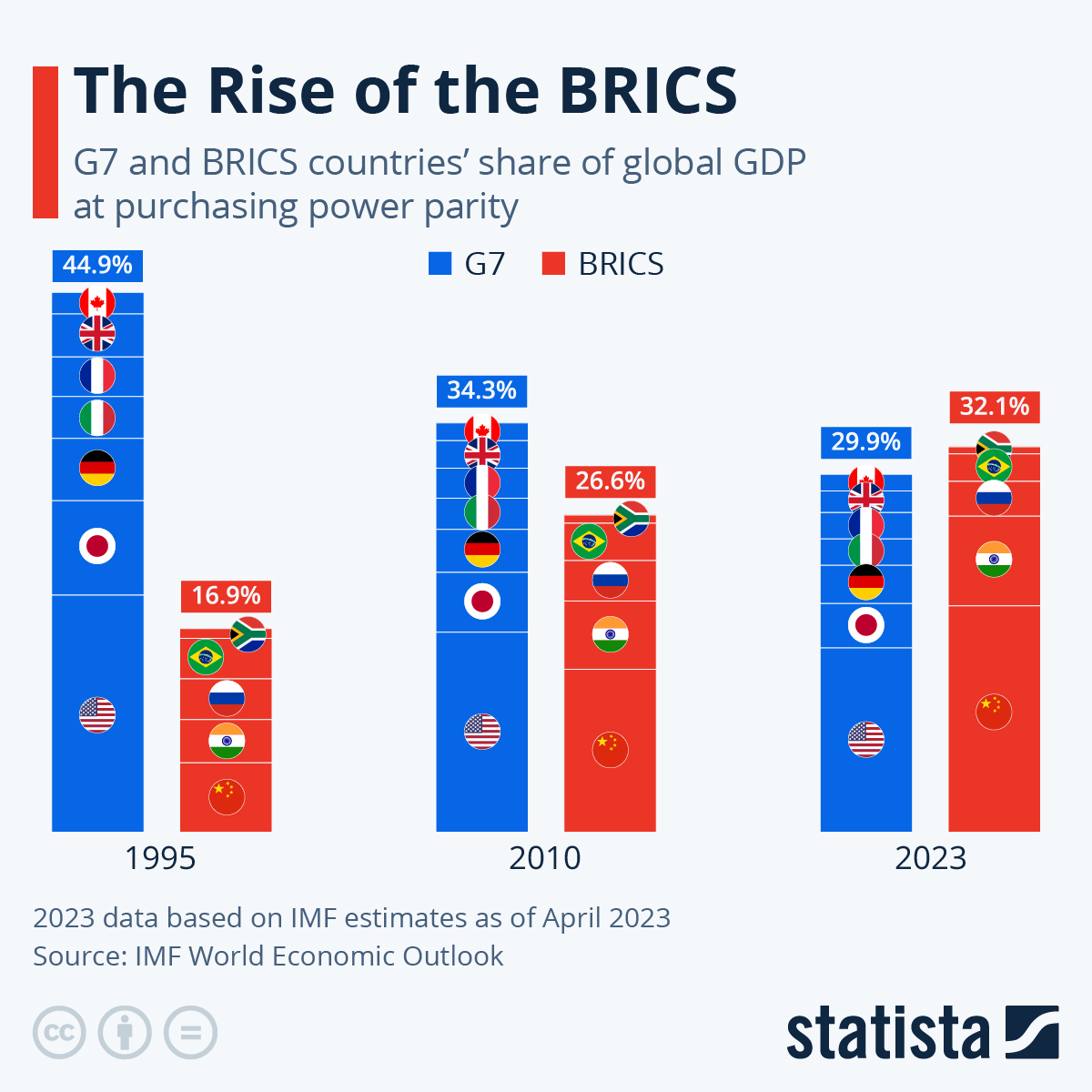
The Rise of the BRICS
BRICS VS. G7
Felix Richter, Aug 22, 2023


S&P Joins Moody’s in Cutting US Banks Amid ‘Tough’ Climate
Bank stocks are down in August with higher funding costs seen
‘Decline in deposits has squeezed liquidity,’ S&P says in note
David Scheer 22 August 2023

See also: 
De-dollarization 1: trend among countries, April 24, 2023
Gold reserves, Russia and China stockpiling, December 14, 2019.

Friday, August 18, 2023

BWorld 626, Debt service, sustained growth, and the PDE alumni homecoming

Debt service, sustained growth, and the PDE alumni homecoming
August 1, 2023 | 12:02 am

My Cup Of Liberty
By Bienvenido S. Oplas, Jr.
https://www.bworldonline.com/opinion/2023/08/01/536872/debt-service-sustained-growth-and-the-pde-alumni-homecoming/ 

During the post-State of the Nation Address (post-SONA) Philippine Economic Briefing (PEB) last week, July 25, at the Philippine International Convention Center, Finance Secretary Benjamin Diokno expressed continued optimism saying that “Higher economic activity and increased investments will bring us to even greater heights. The policy environment for foreign direct investments is the most open and liberal it has ever been.”

On the Maharlika Investment Fund (MIF), Secretary Diokno said “the MIF is expected to widen the fiscal space and reduce reliance on official development assistance (ODA) in funding big-ticket infrastructure projects.” Right on, Sir.

Budget Secretary Amenah Pangandaman was not there as she was presenting the National Expenditure Program (NEP) to President Marcos Jr. that will be submitted to Congress. Then the President flew to Kuala Lumpur for a state visit.

Budget Undersecretary Joselito Basilio took her place at the event and discussed the priority sectors under the FY 2024 proposed budget through the NEP that is anchored on the Philippine Development Plan (PDP) 2023-2028. Economic Planning Secretary Arsenio Balisacan highlighted social services spending in the PDP 2023-2029.

Also last week, the Bureau of the Treasury released the cash operations report including debt service for June 2023. Since the results of the first half (H1) of 2023 are already reported, I have compared the H1 numbers of previous years, 2018-2022. The numbers this year on debt servicing — payment in interest plus amortization for public debt contracted and accumulated for many years under previous administrations — are not good.

One — interest payment this year is already P283 billion, amortization is P626 billion, total debt service is P908 billion or approaching P1 trillion in H1 alone. This is not good.

Two — domestic debt constitutes a rising share of total debt service, especially in fixed rate and retail treasury bonds (see Table 1).

I checked the level of indebtedness of other countries. The gross debt/GDP ratio really jumped in the 2020-2021 lockdown dictatorship period, and began to flatline, or increase/decrease mildly in 2022. For the Philippines though, the jump was steep, from 37% in 2019 to 52% in 2020 then 57% in 2021. The lockdown dictatorship of the previous Duterte administration was really harsh compared to many countries, in Asia and around the world. Recall that Philippines GDP’ contracted 9.5% in 2020 — the worst in Asia, and the worst in Philippine economic history since after World War II.

Vietnam and Taiwan practically did not raise their indebtedness in 2020, they also managed to have GDP growth, not contraction, that year. For big countries in North America and Europe, all of them except Germany experienced debt/GDP ratios of 100% and above (see Table 2).

The above numbers show that lockdowns — shutting down of tax-paying businesses while expenditures remained high, then relying heavily on debt financing — is not good. It will never be good. Economic freedom — allowing people and companies to continue working and leaving healthcare to personal and civil society responsibility, not government lockdown irresponsibility — is the key to balancing economics and healthcare.

And the Maharlika Investment Fund? It is demonized by many individuals and groups concerned with public finance but who have little to zero (sound-of-silence) positions on military and uniformed personnel pension reform, a big public finance issue.

The Maharlika Fund should help finance big infrastructure and projects that were killed by politics (or subject to future political harassment) and hence, reduce fiscal pressure and need for borrowing. Since that new body has government presence and footprint, it can help thwart political harassment from local and National Government bureaucracies, as well as invite sovereign wealth funds from other countries to put their investments here as those projects have vetting and confidence by the MIF.

PDE ALUMNI HOMECOMING

Meanwhile, the Program in Development Economics (PDE) Alumni Association of the UP School of Economics (UPSE) will hold the PDE alumni homecoming on Aug. 19, 4 p.m., at the UPSE auditorium. Before the homecoming program, there will be “A Conversation with Finance and Budget Secretaries on Financing Sustained Growth.” The guest speakers will be Finance Secretary Diokno (PDE batch 7) and Budget Secretary Pangandaman (PDE batch 33).

These two officials are responsible for revenue generation and deficit borrowing and proposing the budget for the entire government to Congress, then manage its disbursement once enacted as appropriations act by Congress. They are key leaders in financing the very important goals of high sustained growth and sustained job creation while reducing the huge public debt accumulated by previous administrations.

PDE graduates from different batches, from the late 1960s to 2023, are encouraged to attend this very important lecture and meeting with their fellow alumni Cabinet Secretaries. This is a by-invitation event only, with some media and friends who are non-PDE alumni also invited to the “Conversation” before the homecoming program starts. Dinner will be served by the Philippine Center for Economic Development (PCED).

For the homecoming program, the PDE Alumni Association officers — including this writer — have solicited donations in kind from some corporations for raffles and give aways to participants. The following firms have expressed their willingness to give: San Miguel Corp., Robinsons Retail, Meralco, Astoria Hotels and Resorts, NestlĆ© Philippines, Gallerie Joaquin, Japan Tobacco, Inc., iOptions Ventures Corp., Philip Morris Fortune Tobacco Corp., and Alas Oplas & Co. CPAs. Thank you.

Thank you, Ferdie, Robina, Joe, Jeffrey, Arlene, Jack, Robert, Pidro, Noel, and my sister Marycris and their respective companies above. They are mostly my friends and fellow alumni of UPSE plus other friends and my sister.

Last month, this column produced a four-part series on Financing Sustained Growth: MUP pension reform (part 1, June 6), Fiscal discipline and Maharlika fund (part 2, June 13), Tax reforms (part 3, June 15), and NAIA privatization (part 4, June 27).

After the talks and “Conversation” with the two Secretaries, this column will resume another series on Financing Sustained Growth. Tune in, dear readers.
-----------

See also:
BWorld 623, Year 1 of Marcos Jr.: GDP growth and agriculture, July 29, 2023
BWorld 624, First year of Marcos: Assessing energy policies, July 30, 2023
BWorld 625, SONA 2023: investments, revenues and climate, August 17, 2023.

Tax Cut 39, Tobacco tax rates and illicit trade


This is my short presentation last August 2.


-------------

See also:
Tax Cut 36, WTA's Asian Taxpayers regional forum 2022, October 06, 2022
Tax Cut 37, Marginal tax rate, June 19, 2023
Tax Cut 38, My paper in 2021 about tobacco taxes and smuggling, June 29, 2023.

Thursday, August 17, 2023

BWorld 625, SONA 2023: investments, revenues and climate

SONA 2023: investments, revenues and climate
July 27, 2023 | 12:02 am

My Cup Of Liberty
By Bienvenido S. Oplas, Jr.
https://www.bworldonline.com/opinion/2023/07/27/536090/sona-2023-investments-revenues-and-climate/

During his second State of the Nation Address (SONA) on Monday, July 24, President Ferdinand R. Marcos, Jr. highlighted economic recovery via high GDP growth, increasing the employment rate, investments, revenues, and spending on agriculture modernization; the decrease in inflation rate, other economic factors.

For this piece, three subjects will be tackled — investments, revenues, and climate change. Note also that this month, this writer has made a four-part assessment of the economic performance of the administration’ first year: budget deficit and employment (part 1), inflation and interest rates (part 2), trade and investments (part 3), and overall GDP and agriculture (part 4).

INVESTMENTS AND MAHARLIKA FUND

The President said in his SONA, “For strategic financing, some of the nation’s high-priority projects can now look to the newly established Maharlika Investment Fund, without the added debt burden…. the Maharlika Fund shall be used to make high-impact and profitable investments, such as the Build-Better-More program.

“…foreign trips… economic missions have yielded an estimated total investment value of $71 billion, or P3.9 trillion, with a potential to generate 175,000 jobs…

“BoI-approved investment projects have reached P1.2 trillion during our first year, while other strategic investments approved for processing through the newly established ‘green lanes’ amount to P230 billion.”

This is indeed a good performance, kudos should largely be given to the economic team (Finance Secretary Benjamin Diokno, Budget and Management Secretary Amenah Pangandaman, National Economic and Development Authority Secretary Arsenio Balisacan, former Central Bank Governor Felipe Medalla and now Governor Eli Remolona) and their series of Philippine Economic Briefings (PEB) with investors in some key cities in the world — Jakarta, Singapore, Washington, DC, New York, Frankfurt, London, Tokyo, and Toronto.

More aggressive investment promotions by the economic team should be done in Europe, a rich continent but many countries of which have taken the slow path to deindustrialization and degrowth economics in their climate, energy, and trade policies. One result of this is that companies there are slowly migrating to North America and Asia.

I constructed a table (Table 1) of eight charts, with trends in foreign direct investments (FDI) over the last 15 years in the four biggest economies of Europe and four ASEAN countries. The former show flatlining if not mild deceleration in FDI, the latter shows a continuing rise in FDI.

CLIMATE CHANGE

The President further stated in his SONA 2023, “…action to mitigate and adapt to the effects of climate change…. The economic agenda cannot and will not ever be incompatible with our climate change agenda.

“Climate change is now an important criterion in our integral national policies, in planning, decision-making, up to the implementation of programs…. We remain committed to global decarbonization goals.”

Mr. President, climate change is true. Climate has been changing since planet Earth was born some 4.6 billion years ago and will continue to change in the next billions of years, warming and cooling in endless and natural cycles.

Climate change as natural or nature-made — not man-made — is shown in scientific data, especially paleoclimate data. Below I show only two sets of these: a.) the number of tropical cyclones in the world is fluctuating, not ever-rising, as some years have more storms, some years have less storms; and, b.) the El NiƱo-La NiƱa cycle, with the recent La NiƱa of 2021-2022 having a triple-dip, the last time this happened was in La NiƱa 2000-2001 (Table 2).

So, we should not compromise our agriculture, energy, mining, transportation, other sectoral policies in the false and fictional hope of “fighting man-made climate change.” There is warming-cooling cycle, El NiƱo-La NiƱa cycle, wet-dry season cycle, water evaporation-condensation cycle, and so on. But there is no budget deficit-surplus cycle, there is only endless, perennial budget deficit and perennial borrowing as more public resources are spent on climate bureaucracies, climate travels, climate loans, and related wasteful spending.

We should slowly wean ourselves away from climate alarmism and move towards spending realism, non-wasteful spending focused on fast economic growth, rising productivity, industrialization and modernization.

HIGHER REVENUES, CONTROL SMUGGLING

President Marcos Jr. also said in his SONA: “Higher revenue collections will be critical in our bid to bolster public investments. Under our fiscal framework, we envision our tax and revenue efforts to further increase, to up to 16.9% and 17.3% by 2028….

“Isa sa mga dahilan ng pagtaas ng presyo ay ang mga smugglers, hoarders at nagmamanipula ng presyo ng produktong agrikultural. Hinahabol at ihahabla natin sila.” (One of the reasons for the rise in prices are smugglers, hoarders, and the manipulators of prices of agricultural products. We will go after them and charge them.)

You are correct there, Mr. President. The government needs more revenues to fund more infrastructure projects and investments, especially in the provinces. Economic sabotage via smuggling, non-payment of appropriate taxes, unfair competition with legitimate and law-abiding businesses by bringing in illicit products should be penalized.

I notice that the Bureau of Internal Revenue (BIR) under the new leadership of Commissioner Romeo D. Lumagui, Jr. is doing a good job plugging the revenue loopholes caused by smuggling and illicit trade. I saw reports of BIR regional offices nationwide holding simultaneous raids on July 13 and 14 of retailers and warehouses of suspected and actual smuggled products.

Some 747 stores, warehouses, and different establishments were raided. The amount of taxes evaded has still not been fully quantified, but the Commissioner is clearly committed to filing criminal cases against the traders and owners of the stores that are in violation of the law, and the destruction (not reselling) of the confiscated goods.

The President asked Congress in his SONA to enact five bills, four on revenues and one on spending rationalization: a.) Excise tax on single-use plastics, b.) VAT on digital services, c) Rationalization of the mining fiscal regime, d.) Motor vehicle user’s charge/road user’s tax, and, e.) Military and Uniformed Personnel (MUP) pension reform.

I must give credit to the economic team, especially the Finance department, for their many meetings and consultations with active MUP personnel and officials. MUP should contribute to their own pensions and not expect the taxpayers to pay for their huge, tax-free pensions.

Mining tax rationalization is a good move. Global prices of important metals like gold, copper, and silver remain high, the potential corporate mining sales and government tax revenues are big, we should seize the opportunities. This topic will also be discussed in the forthcoming Mining Conference 2023, on Sept. 19-20 at Shangri-La Edsa Hotel, sponsored by the Chamber of Mines of the Philippines.
--------------

See also:
BWorld 622, Year 1 of Marcos Jr.: Trade and investments, July 29, 2023
BWorld 623, Year 1 of Marcos Jr.: GDP growth and agriculture, July 29, 2023
BWorld 624, First year of Marcos: Assessing energy policies, July 30, 2023.

Deindustrialization 17, Germany recession, ESG problems

More reports here. Enjoy.
--------- 

Fears of German recession grow after sharp decline in industrial output
The automotive sector, considered the jewel of German industry, suffered the largest decline in month-over-month industrial output, down 6.5 percent
THOMAS BROOKE May 09, 2023
https://rmx.news/germany/fears-of-german-recession-grow-after-sharp-falls-in-industry-output/

E-Cars Prone To Rapidly Losing Their Charge, Getting Stranded On German Autobahns
By P Gosselin on 20. June 2023
https://notrickszone.com/2023/06/20/e-cars-prone-to-rapidly-losing-their-charge-getting-starnded-on-german-autobahns/

Which Countries Are Most Reliant on Coal?
By Bruno Venditti.  July 11, 2023
Graphics/Design: Sabrina Lam
https://elements.visualcapitalist.com/which-countries-are-most-reliant-on-coal/

Rust belt on the Rhine
The deindustrialization of Germany: If Europe’s economic motor stalls, the Continent’s already polarized political landscape will shudder.
By MATTHEW KARNITSCHNIG JULY 13, 2023
https://www.politico.eu/article/rust-belt-on-the-rhine-the-deindustrialization-of-germany/

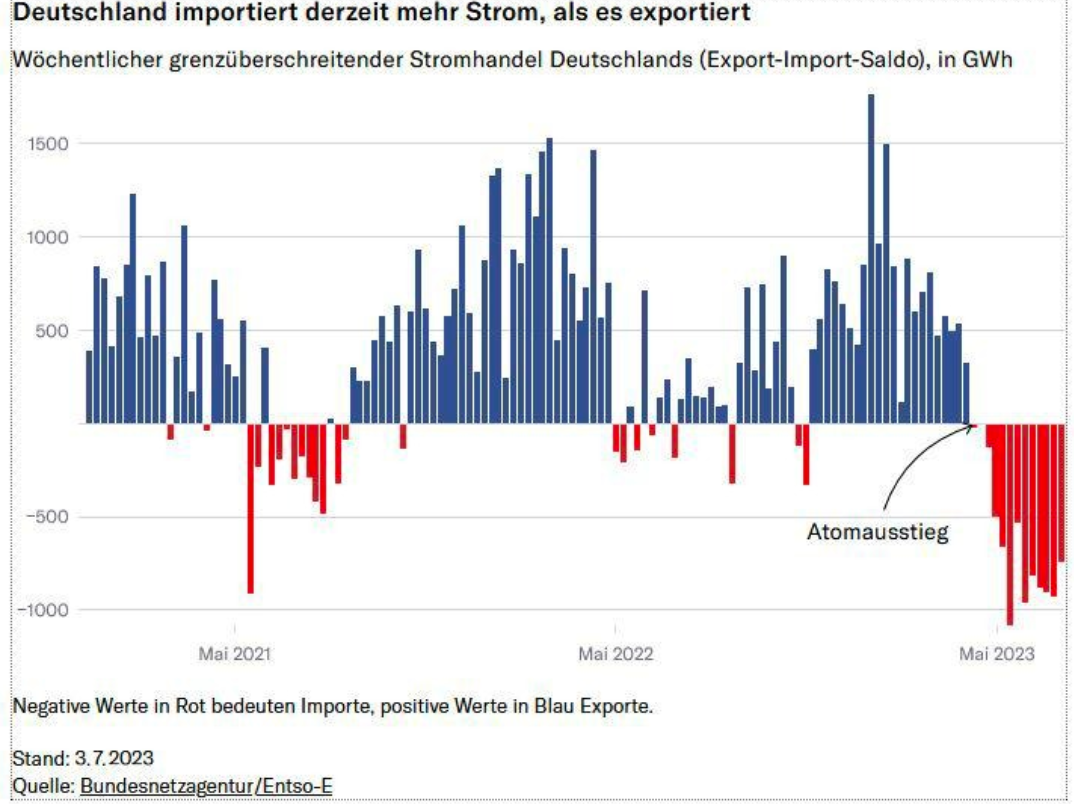
Nuclear Phaseout, Green Energy Transition Causing German Industry And Power Production To Leave
By P Gosselin on 7. July 2023
https://notrickszone.com/2023/07/07/nuclear-phaseout-green-energy-transition-causing-german-industry-power-production-to-crash/

Austrian Biochemical Engineer: “No Energy Production Method Is More Damaging Than Wind Turbines”
By P Gosselin on 14. July 2023
https://notrickszone.com/2023/07/14/austrian-biochemical-engineer-no-energy-production-method-is-more-damaging-than-wind-turbines/

Half of German medium-sized businesses want to shut down or move abroad as confidence crisis grows
Company directors are concerned about rising taxes, greater bureaucracy, and a shortage of skilled workers
THOMAS BROOKE July 17, 2023
https://rmx.news/germany/half-of-german-medium-sized-businesses-want-to-shut-down-or-move-abroad-as-confidence-crisis-grows/

Wind and Solar Are NOT Cheaper than Coal and Oil
Connor Mortell 07/18/2023
https://mises.org/wire/wind-and-solar-are-not-cheaper-coal-and-oil

Risk of German de-industrialization is ‘very great’ due to increase in red tape and ‘problematic’ energy transition, leading CEO claims
THOMAS BROOKE July 21, 2023
https://rmx.news/germany/risk-of-german-de-industrialization-is-very-great-due-to-increase-in-red-tape-and-problematic-energy-transition-leading-ceo-claims/

ESG Is Dying Its Inevitable Death
Lance Roberts | July 21, 2023
https://realinvestmentadvice.com/esg-is-dying-its-inevitable-death/


World’s Biggest Wind Power Projects Are in Crisis Just When World Needs Them Most
William Mathis July 22, 2023
https://news.yahoo.com/world-biggest-wind-power-projects-140000749.html

Energy Giant Vattenfall Puts Gigantic Offshore Wind Project On Ice, “Threatening UK Climate Targets”
By P Gosselin on 23. July 2023
https://notrickszone.com/2023/07/23/energy-giant-vattenfall-puts-gigantic-offshore-wind-project-on-ice-threatening-uk-climate-targets/

A Silent Threat to the Energy Transition: America’s Broken Infrastructure Policy
By Joshua TrottJuly 27, 2023
https://realclearwire.com/articles/2023/07/27/a_silent_threat_to_energy_transition_americas_broken_infrastructure_policy_969191.html

Global Coal Demand Broke Records in 2022, More Growth Expected in 2023
Andrzej Rostek July 27, 2023
https://www.supplychainbrain.com/articles/37776-global-coal-demand-hit-record-levels-in-2022-expected-to-grow-again-in-2023

NatGas, Coal, Nuclear Power Save Largest US Grid As Emergency Alert Declared For Second Day
Tyler Durden JUL 29, 2023
https://www.zerohedge.com/weather/prepare-generators-largest-us-power-grid-declares-emergency-alert-second-day

South Africa blackouts caused by West paying us to cut coal, says electricity minister
Country is enduring blackouts because it agreed to be a 'guinea pig' and close coal-fired power stations, claims government official
Ben Farmer 28 July 2023
https://www.telegraph.co.uk/world-news/2023/07/28/south-africa-green-finance-pact-kgosientsho-ramokgopa/

EUROPE’S ENERGY CRISIS IS FAR FROM OVER [LNG2023]
BY: NGW Aug 1, 2023
https://www.naturalgasworld.com/europes-energy-crisis-is-far-from-over-106389

Europe Faces Backlash as Climate Goals Clash with Economic and Political Realities
Daniel Hall AUG 6, 2023
https://www.energyportal.eu/news/europe-blinks-in-its-commitment-to-a-great-green-transition/127150/

Siemens Energy Sees €4.5 Billion Hit, Wind Losses Prompt Review
Manufacturer identifies charges of €2.2 billion in wind unit
Company to present result of strategic review in November
By Wilfried Eckl-Dorna 7 August 2023
https://www.bloomberg.com/news/articles/2023-08-07/siemens-energy-reviews-wind-business-on-seeing-4-5-billion-loss

Germany’s Economic Woes Intensify As Production Slumps “Much More Than Expected”
By P Gosselin on 13. August 2023
https://notrickszone.com/2023/08/13/germanys-economic-woes-intensify-as-production-slumps-much-more-than-expected/

Not enough wind deals costly blow for Renewables Infrastructure Group
Emily Gosden, Energy Editor August 05 2023
https://www.thetimes.co.uk/article/not-enough-wind-deals-costly-blow-for-renewables-infrastructure-group-vggvttbfv

More Fuel…For Inflation! German Government Doubles Planned CO2 Price Increase
By P Gosselin on 16. August 2023
https://notrickszone.com/2023/08/16/more-fuel-for-inflation-german-government-doubles-planned-co2-price-increase/
-----------

See also:
Deindustrialization 14, Net Zero slowly on the retreat in Europe, May 25, 2023
Deindustrialization 15, Germany turning from Greens to AfD, June 22, 2023
Deindustrialization 16, UK expensive electricity, coal to avoid blackout, July 08, 2023.