Showing posts with label ASEAN Voices. Show all posts

Wednesday, February 18, 2015

ASEAN Voices 3: Gaming and Casino Tourism in Asia

* This is my article for ASEAN Voices, a new Jakarta-based magazine, February 2015 issue.
----------
Tourism is a major economic player and job creator in many developing countries including in Southeast Asia. The region places next to China as being the most dynamic and fastest-growing area in  the  world, as it offers thousands of beach resorts, mountain resorts, and city centers that cater to visitors from other countries.

The main destinations for foreigners visiting East Asia are  China, Thailand, Malaysia, Hong Kong, and Macau, which is especially interesting because while its visitor-arrivals in 2013 was only one-quarter of that seen on mainland China, its tourism receipts were similar to those from the entire country.

Table 1.
source: http://dtxtq4w60xqpw.cloudfront.net/sites/all/files/pdf/unwto_highlights14_en.pdf

What explains for such enormous tourism receipts from Macau? It is, of course gaming and casino tourism. Macau is No 1 on the planet in gaming revenues. In 2013 it reaped US$45.1 billion, followed by Las Vegas with US$6.5 billion; Singapore with US$6.1 billion; Atlantic City at US$2.9 billion; and the Philippines, which took in US$2.2 billion.

It is only logical then, that other Asian economies seek to duplicate the fantastic performance of gaming and casino tourism in Macau, and have launched various casino projects. Among them, according to Asia Awakens: The Growth of Casino Tourism, are the following:

·         Singapore’s integrated resorts in Marina Bay and Sentosa Island, with a combined value of approximately US$9 billion.
·         Philippines’integrated resort project, Entertainment City at Manila Bay, with a projected value of US$15 billion.
·         Vietnam’s integrated resort projects in Ho Tram, Danang and Phu Quoc, each involving investments of more than US$4.5 billion.
·         Cambodia’s projects in Koh Rong island, costing some US$2 billion, along with an integrated resort at Angkor Wat.
·          Malaysia’s Resorts World.
·         South Korea’s integrated resort development in Jejuisland, valued at some US$3.6 billion.

These casino developments are evidence of the dynamic and growing competition among countries in the Asean region, as well as in the gaming tourism sector.

However, one only has to look at the Las Vegas model, being a once-derelict patch of dry land that has become a multi-faceted entertainment venue centered upon frivolity. It is crucial to note that Las Vegas has never depended entirely upon casinos to bring the cash in.

According to the World Trade and Tourism Council, the city’s Disney-style hotels, boasting some 133.000 rooms, along with attractions, shows and recreational activities, account for half of the casinos’ revenue streams, meaning that wider tourism development and casino construction merely go hand-in-hand with one another.

Meanwhile, in the Philippines, the biggest player is the government-owned Philippine Amusement and Gaming Corporation with its dozen-plus casinos in Metro Manila and other major cities throughout the country.

But the country’s much-recognized and largest project is “Entertainment City” in Manila Bay, a huge 120 hectare development built on reclaimed land and hosting four huge licensees.

Table 2. 

Resorts World Manila is the sister company of Resorts World Genting, Malaysia, and Resorts World Sentosa, Singapore. From 2009 to 2013, it was the only casino resort in Metro Manila, until the opening of Solaire Resort and Casino.

Solaire is a new and large project by billionaire Enrique Razon, owner of International Container Terminal Services, Inc, which moves ships and cargo to 19 countries throughout the world. The resort includes a five-star hotel with 500 rooms and 1,000-seat ballroom.

City of Dreams casino held a soft opening last December, then a grand opening on Feb 2. The casino is a joint venture between Henry Sy, the Philippines’ richest family, Australian billionaire James Packer, and Lawrence Ho, Co-Chairman and Chief Executive Officer of Melco Crown Entertainment, and son of Macau casino mogul Stanley Ho.

Melco Crown Philippines Resorts Corporation President Clarence Chung said the new casino will provide additional choices for their customer base in Macau.

COD has three hotels: Crown Towers, Nobu and Hyatt. It is said to have attracted some 60,000 visitors during its soft opening last December, and since then has averaged 15,000 daily visitors.

The Manila Bay Resorts is owned by Japanese billionaire Kazuo Okada.

With these four resorts and casinos, the Philippines’ gaming sector is projected
to earn big, increasing from US$2 billion in 2012 to US$4 billion by 2016.

Table 3.
Sources: 2009-2013 actual, PAGCOR; 2014-2017 Forecast, The Innovation Group.


Regarding area infrastructure, there is ongoing large-scale skyway construction that connects Manila’s four airport terminals to Entertainment City. When this project is completed in 2016, it will drastically cut the travel time for visitors, local and foreign, from the airport to the resort-casinos.

But how do most Filipinos view these foreign gamblers and visitors? Generally, their opinions range from neutral to positive. Foreign gamblers do nothing to harm local residents, instead they just spend and spend, winning money if they are lucky, and in the process they provide lots of jobs and lots of tips to Filipino resort employees, officers and entertainers. Direct hires are about 5,000 jobs per casino; hotel rooms supply are expanded.

Other sectors, of course, will complain that the gambling and casino culture could permeate many Filipinos’ lives, as people seek to get rich-quick. Yet, this is not a strong argument because there are many types of gambling that Filipinos are now engaged in, from ordinary card games to bingo for charity, as well as the lotto and sweepstakes, and even cockfighting.

On the other hand, the government should see the enormous opportunities in the resorts-hotels-casino sector. There is no doubt that casinos need to always be considered in the wider tourism context—as better infrastructure leading into a casino will inevitably allow the casino to have a more positive impact on a region.

It is also a large job creator, from airlines to hotels, restaurants and entertainment, and can even evolve into medical tourism.

The government, in the meantime, collects taxes from 5%-17% based on GGR. Staring last year, casinos also pay corporate income tax.

It is therefore commended that the high taxes that actually also hound many other local businesses is slashed. At the end of the day, when people have high-paying and stable jobs, they become less dependent upon various government welfare and subsidy programs.
-------------- 

See also: 
ASEAN Voices 2: PH Multinationals in the Region, February 01, 2015 

Sunday, February 01, 2015

ASEAN Voices 2: PH Multinationals in the Region

* This is my second article for the new Jakarta-based magazine, January 2015 issue. My first article published in the maiden issue December 2014 was entitled, Is the PH power supply ready for the AEC?

Southeast Asia’s economy is largely driven by rising household consumption, and one industry that thrives on this consumption like no other is food and beverages, fueled by rising personal incomes and increased spending.

Consequently, this is also an industry where local companies have been particularly ambitious, with several evolving into successful global exporters.

On the other hand, numerous foreign companies based outside Asean have also positioned themselves inside one or more of the 10 member countries, in a region with the third largest population on the planet, next to China and India.

The large population with consumption of close to US$2 trillion is one of the largest strengths of the region—offering more people, more producers and consumers, more entrepreneurs and workers, along with low dependency ratio, since the population is generally young.

Among companies located in the Philippines,at least six have already been listed among the largest transnational companies with existing branches and subsidiaries, or as having expansion plans in Asean.

Jollibee Foods Corporation (JFC) is a perfect example, as it operates the largest fast food chain in the Philippines. As of end-September 2014—what started as an ice cream parlor in 1975—has grown to become a business with 2,121 food shops throughout the country. Its flagship and most popular chain store is Jollibee, with 800 stores nationwide, as of October 2013. It is owned by billionaire Tony Tan Caktiong.

Other JFC food shops, each with dozens of branches, are Chowking (noodles, etc), Greenwich (pizza), Red Ribbon (cakes, 250 plus stores), and Mang Inasal (chicken with unlimited rice). JFC also holds the Philippine franchise for Burger King.

Further, JFC owns more than 100 stores internationally, with a presence in the US, Middle East, China and Hong Kong. Though it has yet to enter Canada and Europe, within the region Jollibee has branches in Singapore, Vietnam and Brunei Darussalam.

In Singapore, JFC has a wholly-owned subsidiary, Golden Plate Pte Ltd, which entered into an agreement with Beeworks Inc to own and operate Jollibee stores there. GPPL will own 60% and Beeworks will hold the remaining 40% stake in the company, with an initial funding of US$1 million. JFC has 32 stores in Vietnam and 11 in Brunei, as well.

Now the company is set to enter Malaysia and return to Indonesia, in the absence of a local fast food firm available for acquisition. Its reopening in Indonesia after the Asian financial crisis in the late 1990s is largely encouraged by a very tempting market, given its large population and rapidly growing middle class.

JFC’s plan, however, is not to expand into the neighboring country alone, but to have a local partner, according to the interaksyon.com news portal.

Asia’s Biggest

In November 2013, the company declared, “Among all Asians, restaurant companies including fast-food, Jollibee can be the biggest.” Also, JFC Chief Financial Officer Ysmael Baysa said the company could become Asia’s largest restaurant chain by 2020.

JFC also has a 50% interest in joint ventures with Highlands Coffee (Vietnam, Philippines), Pho 24 (Vietnam, Indonesia, Philippinesand Japan) and Sabu (China).

Also making it big in the food sector is the Max’s Group, which owns numerous restaurant brands, with its flagship and most famous being Max’s Restaurant. Its 13 other brands include Max’s Corner Bakery, Krispy Kreme (donuts), Jamba Juice, Pancake House, Dencio’s, Kabisera ng Dencio’s, Teriyaki Boy, Sizzlin’ Pepper Steak, Le Coeur De France, The Chicken Rice Shop, Singkit, Maple and Yellow Cab (pizza).

Max’s Group President Robert Trota was quoted by interaksyon.com as saying that the company plans to open 12 locations in the US, Canada and the Middle East. In Asean, Pancake House has four stores in Malaysia, while in Brunei it recently opened its first store. “We’ve been looking at Indonesia, Singapore… We’re just assessing formats,” Trota said.

Meanwhile, San Miguel Corporation (SMC) is known as one of the Philippines’ largest corporations, with its San Miguel beer flagship product. Currently, there are six San Miguel Breweries in Asia, one in Hong Kong, two in China (Guangdong and Baoding) and three within Asean (Vietnam, Thailand and Indonesia.). San Miguel started as a brewery during Spanish colonial times in 1890, but has diversified into packing, property, petrochemicals and power generation.

However, San Miguel’s dominance in the food industry may soon be facing a serious challenge from Indonesia’s Salim Group, which through its Hong Kong-based conglomerate First Pacific Co Ltd, and in cooperation with Malaysia’s Wilmar International, acquired Australia’s Goodman Fielder for US$1.37 billion, according to an smh.com.au report.

The transaction is expected to be completed in Q1-2015.

Beating MNCs

Within the pharmaceutical and healthcare sector, a local generics manufacturer, United Laboratories (Unilab), has cornered about 25% of the market share in the Philippine pharma market and has out-performed all multinational pharma companies in the country. It also has a presence in all Asean countries, except Brunei, and will only expand its existing operations within the region.

In Indonesia, Unilab’s leading over the counter brands are Decolgen and Neozep in the cough and cold category, the multi-vitamin Enervon C and Biogesic for headache relief.

Apart from Unilab, there is also Zuellig Pharma, one of the largest multinational pharmaceutical distribution networks in Asia. It originated in the Philippines and its operations today cover all 10 Asean member countries.

Separately, Pilmico Foods Corp President Sabin Aboitiz said the food unit of the Aboitiz Group is also eyeing acquisitions as a template for expansion, capitalizing on opportunities presented by the
Asean economic integration.

Pilmico completed its first flour shipment to Vietnam last December, and is also opening an office in Indonesia. Incorporated on Aug 8, 1958, Pilmico started out as a joint venture among the Aboitiz Group, Lu Do Group, Soriano Group and the US Pillsbury Group.

At the end of the day, everything will look like a case of companies from other Asean countries entering the Philippines and Philippine companies entering other Asean economies.

However, it must also be taken into account that the region is a complex and competitive market where success is defined not only by product quality or marketing efforts, but also by the ability to deliver product to consumers using an optimal distribution strategy.

It is therefore essential for all food and drink brands, and investors looking at the Southeast Asian market, to also have a sound understanding of local distribution structures, coverage and commercial terms. Only then can an expansion drive be truly effective.

Saturday, January 17, 2015

Energy 32: Is the PH Power Supply Ready for the AEC?

* This is my article for the maiden issue December 2014 of ASEAN Voices, pages 28-31. It is a new magazine based in Jakarta scouring important news and opinions about the region. The pdf copy is also posted in slideshare.
----------

The Asean Economic Community (AEC) is to begin operations by the end of 2015, as trade, investments, tourism and cultural exchanges are expected to see further increases among the member economies. However, ensuring an adequate and stable supply of electricity at affordable or competitive rates will pose a significant challenge to Asean economies.

It is generally understood that growth in electricity production in the Philippines has been slower than that of its neighbors in the Asean countries. China, South Korea, Indonesia, Malaysia and Vietnam have expanded their electricity production by five times or more in just two decades, causing some anxiety mixed with optimism, over the potential impact of the region’s fast-approaching economic integration.

Figure 1. Electricity production in Asia, 1990 vs 2011 in billion kWh


In the Philippines, a number of reports have claimed that rotating brownouts and power outages will be inevitable in the hot months of March to May 2015, when electricity demand is high and power reserves are thin. The Department of Energy (DOE) has asked Congress to grant President Benigno Aquino the authority to deal with the projected power supply deficit in an emergency.

Figure 2. Power supply-demand in Luzon, 2014-2019, as of November 2014


Source: Department of Energy (DOE); abridged version

The above medium-term supply-demand outlook for Luzon, the largest island in the Philippines, is based on the assumption that the Required Reserve Margin is a 4% regulating reserve, as well as a contingency and dispatchable reserve requirement. It also assumes that there will be a 4.2% peak demand growth rate in 2015, compared with the current year, based on the observed 0.6 elasticity ratio of demand for electric power, with a projected GDP rate of 7% in 2015. Also, there will be a 4.8% peak demand growth rate in 2016-2020, based on a projected 8% GDP growth rate for this period, and assumed average forced outage or scheduled maintenance, while the monthly percentages of the total available capacity are as follows.

Figure 3.

However, available capacity calculations and committed projects do not deliver 100% of their rated capacity. Old conventional power plants tend to require more frequent maintenance or scheduled shutdowns, or they suffer from more unscheduled shutdowns. For new renewable sources of energy, such as wind and solar power, their dependable capacity is only some 20% of their rated capacity. Thus, a 100 MW solar or wind plant can deliver only around 20 MW, on average. When there is little to no sunlight or wind, the energy output from these plants is zero or minimal. The DOE's outlook fails to adequately reflect future dependable supply (FDPS), and so, the true gap between peak demand and available capacity/committed projects cannot be effectively addressed.

For its part, the National Grid Corporation of the Philippines issues alert levels in cases of power deficiencies. "Red Alert," for instance, means the contingency reserve is near zero, if not negative. Red alerts have already been issued a number of times between June and September 2014, well ahead of the launch of the AEC.

Here are some critical periods in 2014, they can give a preview of supply outlook in 2015.

Actual peak demand this year was 8,717 MW, made in May 21, 2014. “Red alert” have been issued on June 17 (natural gas restriction), June 25 (3 coal plants have unscheduled shutdowns, 1 has derated power), and July 12-13 (natural gas pipeline problem).

Thin reserves were also experienced last September 8-11 (natural gas restriction), last August 30 - September 28 (Sual coal unit 2 maintenance, 647 MW), September 26 - October 25 (Sual coal unit 1 maintenance, also 647 MW).

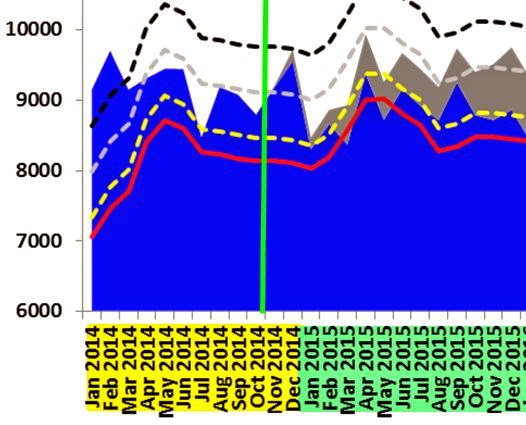
Figure 4. Detailed view of 2014 and 2015


Thin reserves, if not power supply deficit, will be most critical on April-May 2015. But big industrial and commercial consumers have back up power.

Metro Manila and Luzon provinces are heavily dependent on a number of power facilities, many of which are already more than 20 years old; hence, they either require more frequent maintenance shutdowns or are prone to unscheduled shutdowns. From 2002 to 2013, only one new power plant was commissioned: the Mariveles GN Power coal plant. The oil barge by TMO is an old power plant that had remained inactive for at least five years and was re-commissioned in late 2013, purely to help prevent brownouts during last year's Christmas season.

Figure 5. Existing major power plants in Luzon, early 2014


Source: DOE
(Smaller plants not included in this list. Marked in red are power plants that are 20 years or older.)

So, is the Philippines ready for the anticipated energy demand surge when the AEC begins operations?

If existing and committed power plants are to be relied on, then the answer is no. Many of them are old, and many new plants utilize intermittent sources, such as wind, with low dependable power capacities.

If large industrial and commercial consumers use back-up power, as part of the Interruptible Load Program, then the answer is yes.

However, the latter would drive up the price of electricity, as these large consumers would use their own generators, and the reduced demand in the national grid would have to be compensated. This would come in the form of higher “universal charges” in succeeding months or direct payments by the DOE, using taxpayers' money.

Still, there are a few solutions that could help expand the country’s power supply capacity.

First, power companies should bring in more peak-load plants, similar to mobile diesel power barges. The drastic decline in global oil prices presents an opportunity to lower the cost of fuel for these power plants and, in turn, lower their power-generation prices. Second, large industrial and commercial consumers can enter the power-generation business, as well. Third, media campaigns can be run to request the public, households and commercial offices to reduce their power demands by using more energy-efficient lights and appliances.

Further, government agencies should limit the bureaucratic red tape involved in getting the permits required to commission and build new power plants. DOE Secretary Jericho Petilla once said that for some projects, about 100 signatures are needed to launch and maintain a single large power plant.

Over the medium term, the government should reduce taxes and royalties for power generation, as these impositions significantly contribute to high electricity prices. The natural gas tax, for instance, amounts to 60% of the net price of gas.

It is equally important to ensure that the trade of liquefied natural gas, coal and oil among Asean countries is further assisted to help boost national and regional power supplies.

----------

See also: