Showing posts with label Jeffrey Sachs. Show all posts

Wednesday, August 05, 2015

Climate Tricks 42, SDGs and Jeffrey Sachs, oil and warming planet

Yesterday, Dr. Jeffrey Sachs of Columbia University and a UN Consultant on Sustainable Development, spoke at Intercon Hotel in Makati, mainly to prod more climate alarmism and "end fossil fuel" use to save the planet. (Photo from Jhezza P.)


It was the launching of the PH's sustainable development solutions network (SDSN), mainly sponsored by NEDA, DENR and USAID,  plus about 8 other minor co-sponsors. He said that Sustainable Development Goals (SDGs) 2015 is the official successor of Millennium Development Goals (MDGs, 1990-2015). The UN is not satisfied with the FCCC, it wants redundancy in spreading global ecological central planning.

I went there, not as one of the SDSN members, but to hear Jeffrey Sachs. I sat at the table reserved for UPSE Alumni Association (UPSEAA) officers and members. From left: Ronee Juanengo, current President of UPSEAA, Louie Mendoza, my batchmate in SE undergrad and PDE 1998, now a Commissioner at Tariff Commission (TC), standing behind  me is Ernie Albano, immediate Past President of UPSEAA and another Commissioner at TC,  me, _____, Tito Rodriguez, Bobby Estebanlar, and Tony Pio de Roda.


Sachs flew from the US to the PH on a plane flying on water, not fossil fuel. From the airport to his hotel, he took a solar car, not an SUV or luxury car running on fossil fuel. Sarcs :-) 

Millennium DGs (MDGs) are more gut issues like healthcare, education, etc.
Sustainable DGs (SDGs) are more hypocritical. Fossil fuel use means sustainable life. Can people ride water- or solar-powered jumbo jets from the US or Europe to Manila so they can lambast fossil fuel without any inkling of double-talk?
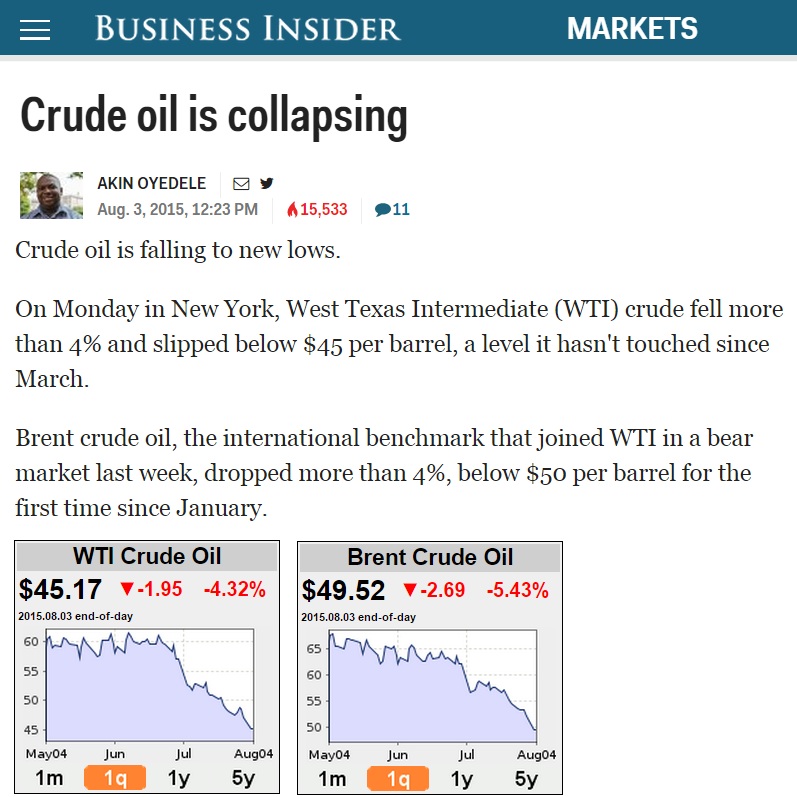
One great fear of SDGs guru like Jeff Sachs has come once again -- cheap fossil fuels like oil. Less people will ride cows and horses, they will be riding cars and motorcycles. Less people will use charcoal and firewood for cooking (hence, more trees will be saved), they will use cheaper LPGs. Isn't that wonderful? 

Meanwhile, here are some relevant climate data.

(1) Latest global air temperature data, lower troposphere, as of end-July 2015. Global temp. anomaly (or deviation from the average temp, 1979-2015) was 0.18 C. El Nino in the tropics was compensated by strong cooling in the southern hemisphere last month.

Source: http://www.drroyspencer.com/.../uah-v6-0-global.../

(2) "Mann-made" warming by Dr. Michael Mann (above) showing "unprecedented" GW for the past 1,000 years, vs. real and actual warming-cooling cycle for the past 2,000 years.

 Source: NTZ, http://notrickszone.com/2015/08/02/michael-mann-blemishes-himself-in-austria-german-scientists-can-no-longer-be-taken-seriously/#sthash.LFfejp3f.dpbs

(3) Arctic, above, and Antarctic, below, sea ice extent, 1980s to 2015.

It is true that Arctic (and Antarctic) ice is melting, but it is also true that Arctic (and Antarctic) ice is growing, each year, no exception. Part of natural sea ice melting-growing cycle yearly, for millions of years.


Source: WUWT, http://wattsupwiththat.com/reference-pages/sea-ice-page/

(4) Sea ice anomaly or deviation from the average, Northern and Southern hemisphere, 1979-2015.

(same source as above)

(5) El Nino 2014-2015, above, and El Nino - La Nina cycles, 1950-2015, Nino region 3.4, central Pacific Ocean.

It is true that there is a strong El Nino on-going now, may approach the big El Nino in 1998. But it is part of the natural or "nature-made" warming-cooling cycles in the biggest ocean in the planet.

Source: WUWT, http://wattsupwiththat.com/reference-pages/climatic-phenomena-pages/enso/

Back to Jeffrey Sachs. Based on the PH Bureau of Immigration, Philippine Coast Guard, Ports Authority and Land Transportation Office (LTO) records, Mr. Sachs came to Manila not via oil-fueled airplane but this... (h/t Jose C.)

And from the port of Manila, he was transported to his hotel in Makati not via an oil-hungry SUV but this... :-) 
-------------

See also: 

Monday, May 01, 2006

Foreign Aid 4: Easterly vs. Sachs

What do Bono (U2 band), Jeff Sachs (Kofi Anan's chief consultant on the UN Millenium Devt. Goals, MDG), Bill and Melinda Gates (multi-billion philantrophists), former US Presidents Jimmy Carter and Bill Clinton, Make poverty history (headed by former rock star Bob Geldoff) and William Easterly (of NYU) have in common? They're either Americans or Brits?

Well, they are among the nominees in the "2006 Commitment to Development Award" sponsored by the Center for Global Development (CGD, www.cgdev.org) and Foreign Policy magazine. And that's where the commonality among them ends. For these guys have varying, even opposing, ways in advancing development in the world's poorest regions and countries. For instance, while Bono, Geldoff and Sachs are campaigning hard for "more foreign aid" to Africa and other poor regions of the world (of course they cannot be as loud in campaigning as well for "more taxes please" to finance those "more foreign aid"), Easterly wrote a book, "The White Man's Burden: Why the West's Efforts to Aid the Rest HaveDone So Much Ill and So Little Good" (http://www.cgdev.org/content/article/detail/6926/ ). I voted for Easterly in the CGD survey.

Dr. Easterly by the way came to my alma mater, the University of thePhilippines, School of Economics (UPSE) January 17 this year. He spoke on "Can national policies really raise growth?". His talk was based on his other book, "The elusive quest for growth: economists'adventures and misadventures in the tropics". I was in that big conference, also attended by the Philippines' 5 past economic planning secretaries and ministers! Easterly didn't talk much about foreign aid though. I spoke briefly during the open forum, and argued that "less government and less taxes can raise economic growth".

"The white man's burden" was among the recently featured articles in Tech Central Station (www.tcsdaily.com), below. For brevity purposes, I cut some paragraphs. If interested to see the entire article, see
http://www.tcsdaily.com/article.aspx?id=042806D.
--------

Planners vs. Searchers
By Roger Bate
28 Apr 2006


The White Man's Burden is a rare book. Its author, William Easterlydistills all of his considerable knowledge and experience aboutforeign aid into it, and never pulls punches in a subject noted forstar-studded platitudes and uncritical thinking. Given how aid hasfailed so utterly in so many places to alleviate the suffering of thepoorest people, The White Man's Burden could have been a depressingread. But Easterly's natural good humor and humility -- as well as hissolid narrative abilities -- make it an inspirational work. Perhaps noone knows better than Easterly that you need a good sense of humor towork in foreign aid to begin with.


The 2005 love-fest with Africa -- G8 summit, Live8 concerts, Angelina,Bono and Brad highlighting the plight of the poor, etc. -- and theideal of making poverty history has led to an increase in aid fundingfrom private and, especially, state coffers. Easterly's conclusion,however, is that this money will not only be wasted, but it will becounterproductive.


Foreign-aid is driven by "Planners" says Easterly. Perhaps the most famous planner and a determined opponent of Easterly is Jeffrey Sachs of Columbia University and the United Nations. Planners think of development as a technical problem that can be overcome by ambitious, multi-faceted, centrally-controlled campaigns, backed up by oodles of cash. Unfortunately, planning lacks market feedback mechanisms, so cannot measure useful performance indicators. Plus, Planners are rarely held accountable for their myriad failures...


Easterly demonstrates that nearly all aid programs fail to reach individually set targets "A UN summit in 1990, for example, set a goal for the year 2000 of universal primary-school enrollment. (That is now planned for 2015). A previous summit, in 1977, set 1990 as the deadline for realizing the goal of universal access to water and sanitation. (Under theMillennium Development Goals, that target is now 2015). Nobody was held accountable for these missed goals....


While Easterly is critical of the foreign aid status quo, he cites many examples of ways in which aid has worked, such as food vouchersto poor families -- contingent upon children attending school ratherthan working in low productivity jobs. Such a scheme was pioneered inMexico and is working well there and elsewhere....
--------

Last April 20, 2006, I wrote this:

Debt-Relievers are Themselves Indebted

The G7 countries -- US, Japan, Germany, UK, France, Italy, Canada -- are among the world's largest lender countries. They set aside billions of dollars every year in foreign aid to be lent to the world's poorest economies through the multilateral institutions like the UN, World Bank (WB), and Asian Development Bank (ADB), and their respective countries' international development agencies.

Presidents and politicians of indebted poor countries always look up to the G7 and other rich countries for "debt forgiveness/write-off", debt swaps like "debt for nature", "debt for UN MDG goals", and other forms of "debt relief". But are these rich countries, the G7 in particular, still that rich to throw in more money to the indebted poor countries? Nope, many of them are not, and they themselves are highly indebted. See table below.

General government gross debt as % of GDP, G7, 2000 and 2005 respectively:

1) Japan: 142.2%, 175.5%
2) Italy: 111.3%, 106.3%
3) Canada: 101.5%, 85.0%
4) Germany: 58.7%, 67.5%
5) France: 56.6%, 67.3%
6) US: 57.1%, 62.9%
7) UK: 41.6%, 43.3%.
(source: IMF, World Economic Outlook, April 2006 database).

So how can these countries continue their practice of throwing more money into the same problem in poor countries, when they themselves are indebted? The G7 and other indebted rich countries can help the poor countries even with less foreign aid if the former will reduce their indebtedness, reduce their borrowings, which will help push world interest rates downwards. Poor countries' debt service payment (both foreign and domestic debts) will decline if interest rates (both world and national) will go down. Then poor countries can either reallocate part of their expenditures from debt payment to social services, or cut taxes to encourage entrepreneurship and job creation among the people.
-------

See also: Foreign Aid 3: Bob Geldoff and More Aid, November 10, 2005