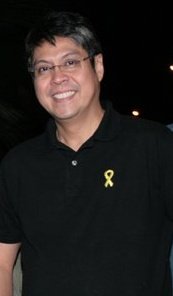
Showing posts with label Kiko Pangilinan. Show all posts

Tuesday, May 19, 2015

Agri Econ 20, On NFA-BOC Campaign for Expensive Rice

For consumers, cheap is preferred to expensive, more is preferred to less, it's a no brainer. For many Filipinos, they want cheap rice. And cheap rice is readily available from our neighbors Vietnam and Thailand, and soon, Cambodia, Laos, possibly Myanmar.

Nature, not politics and governments, determines who has better resources for growing rice. (1) Rice land area, Thailand for instance has almost 3x that of PH's. (2) Exposure to strong typhoons, TH and VN get perhaps only 5 storms a year vs. PH's 20, of which half make actual landfalls and cause direct damages; (3) Irrigation, they have the huge Mekong River, Ton le sap river, others as they are in one big landmass, vs PH's archipelago.

If politics and populism is set aside, we should be better off, a lot better off, if we have free trade in rice. The National Food Authority (NFA)  should get out of its marketing function. Doing regulatory function should already keep their hands full of work.

A friend from UP and now NFA Administrator, Renan Dalisay, posted this photo yesterday in his fb wall with this note,

Hit the ground running with the new BOC Commisioner Bert Lina discussing how to tighten coordination with NFA to curb rice smuggling. ‪#‎nfatungosapagbabago ‪#‎bantaybigas ‪#‎sulongbigas


From right: Renan, Sec. Kiko Pangilinan, new BOC Commissioner Bert Lina, don't know the 4th guy. Posting this photo without Renan's permission but I think he won't mind, he believes in transparency and freedom of information by the public.

I commented at Renan's wall that the NFA and Sec, Kiko's offices should focus their energy to liberalize rice trading as rice prices in Thailand and Vietnam can be up to 1/2 of PH prices. They should institutionalize free trade of rice and not glorify expensive rice.

Am sure the BOC and NFA will protest the title of this paper, which is understandable. But I think they should also recognize that rice smuggling happens because there is huge demand for cheap rice. The current implicit policy of the PH government is to make cheap rice from  our neighbors become expensive via rice protectionism: rice import quota, rice tariff of up  to 50 percent I think, bureaucracies to get import license, etc. Then government turns around and subsidize expensive rice to make it "cheaper" and announce it to the public.

I am not defending smuggling of rice or other imported commodities. But I am not defending or supporting the government too in its rice protectionism policy. 

IRRI's Dr. Bruce Tolentino, other Filipino economists from PIDS, UPSE, etc. have shown the numbers that protected, expensive rice is wrong and anti-poor. Rice protectionism is a 1960s or earlier medieval policy that is continued and defended by the government and some NGOs until today. Why persist on that wrong policy? Why are rice consumers disempowered to choose and buy cheap rice?

Another thing, that huge NFA debt, about P155 billion as of March 2014 I think. The DOF, DBM and NEDA have already shown that such NFA debt is unsustainable, walang pera ang NFA to pay those debts, all it does is ask money from Congress every year while further building up the debt. Soon, that huge NFA debt will be passed on to the DOF, and DOF will ask for more taxes as the debt stock has increased by a huge amount, need more taxes to pay for principal + interest, annually.

NFA should get out of endless loss-making and passing that debt to all taxpayers someday. It is a lousy arrangement. NFA should stop subsidizing rice to make it "cheap" because cheap rice from our neighbors are readily available.

Administrator Renan, Sec. Kiko, other government agri officials, ibaba nyo na ang presyo ng bigas. Remove politics from rice trade. People will remember you. thank you.
------------

Thursday, May 30, 2013

Welfarism 25: Centenarians and Populist Legislators

Being populist and highly welfarist to get high public and voters' support is a scourge of many legislators and politicians. They propose more public spending, or more anti-business policies just to say they have authored or co-authored a pro-poor bill or law.

One such law is the mandatory discount of 20 percent + 12 percent VAT-free credit for a 32 percent effective mandatory discount, for senior citizens (60 years or older) in their purchase of medicines, hospitalization and healthcare bill, plane fare, restaurants bill, and so on. The law does not distinguish rich and poor senior citizens. So that even the richest senior citizens in the country can get nearly one-third price off from various private enterprises and businesses, even if they can afford those prices without any discount, and even if certain drugstores, restaurants, bus lines or airlines, other business entities are struggling financially just to survive.

And I read yesterday stories like this (headline stories by the Inquirer and BusinessWorld, upper and lower photos, respectively.

The  Inquirer story said,

About 7,000 Filipinos aged 100 years old and above will have to hang on a little bit longer before they get additional benefits after President Aquino vetoed the proposed Centenarian Act that would have earned them each a P100,000 bonus, plus discounts on purchases. 
 Aquino vetoed the measure for being “excessive (and) unreasonable” and for being “patently oppressive.” 
 What caught the attention of the President was a provision in the bill proposing a whopping 75-percent discount on goods and services for the centenarians. 
 The 75-percent discount would not be tax deductible for business owners and the President said this “exceeds the usual mark-up rate of most businesses and will obliterate profit margins and result in capital loss.”...
Albay Rep. Edcel Lagman, the bill’s main author, was quick to assign the blame on the Senate version principally authored by Sen. Francis Pangilinan that jacked up the discount to 75 percent from the 50 percent in the House version… 
 Aquino spelled out his reasons for thumbing down the bill in his veto message to Congress dated May 15. 
 “The 75-percent discount exceeds the usual mark-up of most businesses and will obliterate profit margins and result in capital loss. The provision granting the exorbitant discount may thus be subjected to a constitutional challenge from both retailers and service providers,” Aquino said. 
 “Furthermore, the 75-percent discount is patently oppressive as it will force retailers and service providers to exclusively bear the income loss as the proposed measure does not provide for a tax deduction to recover the said discount.”

The BusinessWorld story said,

A BILL granting additional benefits to centenarians has been vetoed by President Benigno S. C. Aquino III as the proposed discounts will be a burden to establishments, a Palace aide said yesterday. Under the centenarian bill, Filipinos who reach 100 years old will receive a cash gift of ₱100,000 and value-added tax (VAT) exemption of 75% on the sale of certain goods and services. 
Deputy Presidential Spokesperson Abigail F. Valte said the Bureau of Internal Revenue (BIR) has been clear on the government’s position that the VAT exemption "may be too heavy without a tax deduction on the part of the establishment." …

Mandatory, forced and coercive price discounts by law of any amount, whether 10 or 30 or 75 percent or higher, is wrong and confiscatory. Here are some reasons why.

One, those welfarist and populist policies make government even more powerful and bigger. Government does not own private enterprises but it can dictate how owners and managers of those establishments should price their products and services. And assuming that these establishments can survive after being oppressed with forced discounts, government comes in to impose various taxes and fees.

Two, those proposals and laws only impose the full burden to the private enterprises and entrepreneurs, government is spared from burden sharing as they do not allow tax credit for those forced discounts.

Three, those proposals do not make any distinction between rich and poor people. One reason why some people become centenarians is because they or their children, grandchildren, relatives and friends are very rich, they can afford various life-extending healthcare services. This cannot be said of certain establishments that may be struggling just to survive, much less make a modest and sustainable profit to remain in business.

Four, one "law" that keeps coming up even if it is not legislated by Congress or any other government body, is the "law of unintended consequences." If there are too many privileges and price discounts given to certain sectors, some businesses will simply stop selling or producing those goods and services often demanded by those sectors. So "cheap but not available" is the new problem.

Welfarism and populism via government intervention and legislation is wrong. They invite more stupidity in government and society as a whole.
----------

See also:

Wednesday, December 15, 2010

Pol. Ideology 18: John Lennon and Liberty, Purpose of the Law

John Lennon, one of the greatest musicians of this planet, I'm a fan of him -- and The Beatles -- until now. His 30th death anniversary was last week, December 8. This post is overdue then, but I'm still posting it. Because he's my idol.

John is not a libertarian. But there are a few songs he wrote where liberty and peace are highlighted. I chose 3 of them here and posted portions of those songs.

Where there is individual freedom, where there is little or no external coercion, there is peace, peace in diversity and non-uniformity.

1. Imagine

...Imagine there's no countries
It isn't hard to do
Nothing to kill or die for
And no religion too
Imagine all the people
Living life in peace...


2. Revolution

...We all want to change the world
But when you talk about destruction
Don't you know you can count me out
Don't you know it's gonna be alright

...You ask me for a contribution
Well you know
We're doing what we can
But when you want money for people with minds that hate
All I can tell you is brother you have to wait
Don't you know it's gonna be alright...

...You tell me it's the institution
Well you know
You better free your mind instead
But if you go carrying pictures of Chairman Mao
You ain't going to make it with anyone anyhow
Don't you know know it's gonna be alright
Alright, Alright.

3. Happy Christmas (War is Over)

And so this is Xmas
For weak and for strong
For rich and the poor ones
The world is so wrong
And so happy Xmas
For black and for white
For yellow and red ones
Let's stop all the fight

A very Merry Xmas
And a happy New Year
Let's hope it's a good one
Without any fear


Merry Christmas, John and all.
----------

Posting two related papers here.

(1) Purpose of the Law


(A guest post by a friend who prefers to call himself as "FMG". Thanks buddy!)

Some say the law should also be used to provide more for those with less in life (Ramon Magsaysay Sr.).

I think, at the end of the day, laws are unavoidably made to control human behavior at varying degrees.

The question is: to what end do we craft our laws? Some like Ramon Magsaysay want to use the law to impose obligations on one group to another (more on this later). As a libertarian I believe we should maximize individual freedom.

Whenever I say this I'm sometimes accused of being an anarchist; encouraging chaos and lawlessness. But this is untrue. I too, believe in law and that the restrictions of law can and does in fact increase individual freedom.

As Nonoy said, there are laws against killing and stealing. And I support these laws because they support my values of maximizing individual freedom. We are all made freer if we all give up the freedom/right to wantonly kill and steal from each other. It allows to plan our future with less uncertainty which leads to increases in productivity and higher standards of living. This allows us to afford greater material security and freedom from hunger, deprivation, poverty, etc.

Going back to Ramon Magsaysay's penchant for using law to increase positive freedoms, notice that I emphasized all in my previous paragraph. This is another value I have: the law ought to be blind and non-discriminatory applying to all. Like Hayek, I believe when you craft laws to "help" a "disadvantaged" group, you cannot help but be discriminatory. You cannot help but provide exclusive/unique rights to one group not given to other groups.

Thus in this case, the purpose of the law is no longer to benefit the whole of society but to lobby as many privileges as one possibly can for one's group and to hell with other groups. I don't think I have to elaborate on the negative effects this has on the incentives for productive work other than: "why work if you can get paid by political fiat?"

However genuinely disadvantaged one group is, it is generally a bad idea to use the law to help them. Why? Because you create perverse incentives that attract the greedy and selfish to tilt the system in their favor (e.g. professional squatters, US farm subsidies meant to help ordinary farmers now benefit huge corporations). Eventually the process legislation becomes a sickening exercise of grabbing as many entitlements possible.

So to repeat, what sort of values do we have as a society you think we should have? One of individual freedom and equality or whatever the heck we have right now?


(2) Unity vs. Diversity of Social Vision

November 04, 2010


A senator friend, Sen. Kiko Pangilinan, posted this reflection in his facebook status:
It has been said that for lack of a vision, a nation will perish. We, as a nation and as a people, need to talk about where we want to bring this country in the next 6, 12, 18 and 20 plus years and more importantly what we ought to do, what we must focus on to get there. A vision for our nation.

It's a good reflection by the Senator. I commented in his fb status that it is natural that people and groups have various and competing visions. Some want a socialist vision, some want a populist but non-socialist vision, others want a less government, free market vision. The entity that should popularize and continiously redefine such visions will be the political parties and their respective think tanks.

The LP for instance, where the Senator belongs, should define and redefine its concept of what is liberal. LP is for liberal politics, not socialist or nationalist/monopolist and anti-globalization politics.

Modern and dynamic societies thrive on diversity, in differences and uniqueness of people. If we will have a "unified" society, most likely it will be a socialist one, where the collective will pounce upon the individual. Individual excellence will be penalized (lots of taxes and regulations) while individual irresponsibility and laziness will be subsidized, in order to have a unified and equal society.

Another friend, Joe Battad, made this well-argued comment:

What's holding down progress? - the backwardness of the socio-political system? My view is that the dominant force in society - warlordism/gang politics, is what's holding down genuine economic and political progress. Free enterprise need...s three components to surge forward - rule of law, property rights and individual freedom - all three are curtailed by the warlord/gang dominated society that the country is now in. Establish a society where free enterprise can operate properly - get rid of or minimize the influence of the warlords and the gangs in the political system. Only at the end of that stage will true democratic political parties emerge. The issues will then become the role of government in enhancing/regulating free enterprise and the lives of individuals. Right now, no political party can carry these issues because free enterprise still cannot break free from the clutches of warlordism.

Great points by Joe. Yes, just 3 important functions of the government: promulgate the rule of law (especially the law against ki, private property rights, and individual freedom. Which means govt should divest itself from so many concerns and interests (running banks, universities, casino, drugstores, forest corp., etc. etc.), or at least drastically cut its involvement on those sectors, and focus on promulgating the rule of law.

Stealing is stealing; killing is killing; no left turn is no left turn. Promulgate and implement the penalties. Government should not be the first to break laws (see this picture of Philippine highway policemen blocking the free flow of vehicles in EDSA so that some insecure high police and government officials can easily pass).

People should fear the law, and there will be very little criminals and thieves. And we will have peace of mind to focus on what we should be doing -- make money for our family, for our community, for our less privileged countrymen.
--------

See also:
Pol. Ideology 12: Lao Tzu, Cooperative Individualism, February 07, 2009
Pol. Ideology 13: Liberty and Liberty Forum, the LP, March 19, 2009 
Pol. Ideology 14: Liberalism, Democratism and Coercion, January 18, 2010
Pol. Ideology 15: Socialism, Conservatism and Liberalism, March 08, 2010
Pol. Ideology 16: Liberalism and Social Opportunity, July 29, 2010
Pol. Ideology 17: The LP and the Philippine President, November 03, 2010