Showing posts with label Ramon Magsaysay. Show all posts

Sunday, May 12, 2013

Election 7: My Candidates for Senators

My main criteria for supporting or voting candidates is who among them will be the least populist and welfarist, least interventionist and tax hungry, compared to other candidates. Almost all politicians have shades of populism and welfarism and hence, for expanding government. They just vary in the degree of populism. Thus, choosing who among them will go against the populism tide seems a difficult task.

Nonetheless, here is my short list, the Senatorial candidates that I will vote tomorrow.

1. Ramon Magsaysay, Jr. Clear and explicit in calling for reducing the size of the bureaucracy, in simplifying business procedures and regulations, in liking minimal government.

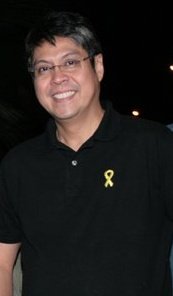
2. Koko Pimentel. Favors the privatization of PAGCOR, rather independent minded.

3. Dick Gordon. Strong presence in civil society via the Philippine National Red Cross. The Red Cross is one clear example that civil society participation in public health promotion is very potent, that it's not all government in healthcare.

4. Greco Belgica. Advocates flat income tax of 10% for both individuals and corporations. His chance of winning of course is zero, but will vote for him nonetheless.

5. Eddie Villanueva. Never sought any appointed political position after he lost in the last two Presidential elections that he joined. He stayed with his church-based and civil society organizations. 

Ouch, only five. Will think of the other seven tonight. 

A friend commented that my criteria above is like “voting for those who won’t do anything.” I replied that it is not the case. Rather, it is voting for those who will attempt to leave us to do what we think is good for ourselves, our family and our community, and not regulate and nanny us how you should conduct our own lives, while getting more money from us so the government can regulate our lives more. 


"The election this Monday will determine our future as a nation and as individuals." -- from a radio commentator. If many people will believe this statement, then we are a bunch of hopeless idiots. We cannot determine our own life and future and that of our households and communities. Everything will depend on the politicians that we will elect and the army of bureaucrats who will implement the politicians' will. If the elected politicians are angels, then our future is good. If they are devils, then our future is hellish. That is a lousy life.

Meanwhile,  I have heard Comelec Chairman Sixto Brillantes in two or three election-related fora in the past, usually at Traders Hotel. He looked cool and frank to me. But recently, he's got the habit of typical government  "prohibit and ban" thinking. Like the recent moves to ban alcohol for 5 days instead of 2, ban bank withrawals beyond P100k, ban "excessive" pol ads, etc. 

LENTE forum, November 2011. Chairman Brillanes 3rd from left.

It is good that the current Supreme Court majority realize that prohibitionist/banning thinking is so central planning and dictatorial leaning. 

In a free society, ALL actions are allowed except for a few, expressly prohibited acts like killing, stealing, rape, abduction, etc.

In an unfree society, ALL actions are not allowed except with permit from government.

We are not there yet, of a totally unfree society, but as more and more permits are required in our ordinary lives, we are moving towards a less free society. Magtayo ka lang ng barber shop or bread shop, kaliwa-kanang permits, taxes and fees kailangan mo. May penalties pa for "late registration" daw.

As government expands, stupidity expands. So it is really important to limit the power of coercion of government. Including its power to forcibly collectivize endless subsidies and their endless financing.

More nice quotes:
A government that's BIG and populist enough to give everything you want is also BIG and dictatorial enough to take everything you've got. 
Free people are not equal, and equal people are not free.
"If it moves, tax it. If it moves further, regulate it. If it stops moving, subsidize it." -- R.Reagan
--------

See also:
Election Watch 3: Defining Celebrities, Politicians and the State, August 30, 2012
Election Watch 4: Senatoriables on Healthcare, March 08, 2013 

Election Watch 5: Sin Tax Law, Hospital Over-regulation and Senatoriables, May 07, 2013 

Election Watch 6: On Political Dynasty, May 11, 2013

Friday, March 08, 2013

Election Watch 4: Senatoriables on Healthcare

Last Monday, March 04, I attended the “2013 Senatorial Elections: A Universal Health Care Forum” held at Traders Hotel, Manila. The event was jointly sponsored by the UHC Study Group, Pharmaceutical and Healthcare Association of the Philippines (PHAP), AIM-Zuellig Center for Asian Business Transformation, and the Journalism for Nation Building Foundation. There were many media people who came.

Three candidates from Team PNoy were invited (or accepted the invite?) that day, Ms. Risa Hontiveros of Akbayan Party, former Senator Ramon “Jun” Magsaysay, and Senator Francis “Chiz” Escudero. This coming Monday, March 11, three Senatorial candidates from team UNA will speak on the same topic, to be held at the same hotel.


Ms. Hontiveros said that there is need for more government involvement,  need for more regulations by the government of the health sector because “markets do not work” well for the poor patients. That Filipino health professionals like doctors and nurses should stay in the country as much as possible because of the high need for their expertise, especially in the rural areas.

During the open forum, I commented that her proposals are more socialistic and that it is not true that markets do not work. Markets do work. For instance, there are no government hotels, no government restaurants or carinderia, no government supermarkets, and yet people are eating. In health, there are thousands of barangay health centers, thousands of government-sponsored drugstores, hundreds of government hospitals, drug price control policies, a government health insurance monopoly, health budget of DOH and local governments are rising, and yet health problems are expanding.

I added that it is weird that there are socialist leaning in a liberal coalition under a liberal government. In theory, liberalism is the opposite of socialism, they are east and west or north and south apart. There is some similarity between socialism and conservatism but not with liberalism.

She replied that hotels cannot be compared with healthcare so that while there may be no government presence in hotel, there should be one in healthcare because health is a right, many poor patients cannot afford private healthcare. Her being a social democrat is not consistent with being in a liberal coalition because their goal is the same, a clean and responsive government. I did not pursue a follow up question as there were other hands that were raised at the open forum.

Next speaker was Mr. Magsaysay, who said that one problem of the government is the high overhead cost,a bloated bureaucracy, resulting in high red tape and business bureaucracies. There is need to privatize some government functions to reduce cost. There are about 500 district hospitals nationwide, and many are barely surviving, local physicians can help by banding together to run and manage the hospital themselves, ownership will still be with government.

I spoke again during the open forum, I asked if there is anyone in the PNoy coalition who raise concern about the high public debt. As of end-2012, the total public debt stood at P5.44 trillion, or nearly P57,000 for each Filipino, from babies to oldies. People normally do not owe this big and only government is capable of expanding this inefficiency and stupidity of ever-rising public debt. Then I asked if he is amenable to remove or abolish taxation of medicines.

He replied that reducing the debt is indeed an important issue, and that there should be no tax on medicines, electricity, water and other essential services. And said that he supports a minimal government principle. I like this guy.

The last speaker was Sen. Escudero, said that there are many laws already, and some P500 billion worth of unfunded laws. If one goal of the sin tax law is to discourage children and minors from smoking, there is already an existing law prohibiting this, but no one has been arrested for violating this law. He also supported the renationalization of healthcare. Preventive healthcare is more important than curative healthcare.

What he said about unfunded laws is so true. For instance, Congress creates various regional or municipal trial courts, or various drug rehabilitation centers or new secondary or vocational schools, and yet they are not funded in the annual budget. I asked him at the open forum if he is open to the possibility of limiting Congress’ appetite at drug price control and mandatory discounts like the 20 percent discount for senior citizens and persons with disability, plus non-inclusion of the 12 percent VAT on medicine prices. The result of this is that various players in the pharma sector – drugstores, wholesalers, manufacturers, hospitals – are passing the burden to each other. For some small drugstores, some close down or those surviving have stopped selling some medicines for the senior citizens because they are losing money. So what happens is that there is “cheap but not available medicines.”

He said that the discount for senior citizens should be retained but there are other measures to bring down medicine prices. For instance, medicines that have been approved by the US Food and Drugs Administration (FDA) should not be subjected to another set of regulatory approval by our FDA and this will bring down the cost for those imported medicines. What is needed only is an MOU between the country’s FDA and its counterparts abroad, no need for a new law.

I failed to clarify that any amendment to the senior citizens discount should target only the poorer ones and exclude the rich senior citizens. Many of those small drugstores are struggling financially, some have already closed, and they are forced to subsidize the rich oldies. I like his proposal on the FDA drug approval process.

Dr. Alberto "Quasi" Romualdez, former DOH Secretary and among the core group members of the UHC study group, gave the closing remarks. He emphasized the problem of health inequity in the country.

We should avoid welfare populism as much as possible. Populism often leads to despotism. If the mob and the populists want all sorts of freebies to be provided to them by government, then the productive sectors of society will be the modern slaves that must finance all those senseless freebies.
-------------

See also:
Election Watch 1: Anti Epal Photos, June 29, 2012
Election Watch 2: On Celebrities as Politicians, August 19, 2012
Election Watch 3: Defining Celebrities, Politicians and the State, August 30, 2012

Wednesday, December 15, 2010

Pol. Ideology 18: John Lennon and Liberty, Purpose of the Law

John Lennon, one of the greatest musicians of this planet, I'm a fan of him -- and The Beatles -- until now. His 30th death anniversary was last week, December 8. This post is overdue then, but I'm still posting it. Because he's my idol.

John is not a libertarian. But there are a few songs he wrote where liberty and peace are highlighted. I chose 3 of them here and posted portions of those songs.

Where there is individual freedom, where there is little or no external coercion, there is peace, peace in diversity and non-uniformity.

1. Imagine

...Imagine there's no countries
It isn't hard to do
Nothing to kill or die for
And no religion too
Imagine all the people
Living life in peace...


2. Revolution

...We all want to change the world
But when you talk about destruction
Don't you know you can count me out
Don't you know it's gonna be alright

...You ask me for a contribution
Well you know
We're doing what we can
But when you want money for people with minds that hate
All I can tell you is brother you have to wait
Don't you know it's gonna be alright...

...You tell me it's the institution
Well you know
You better free your mind instead
But if you go carrying pictures of Chairman Mao
You ain't going to make it with anyone anyhow
Don't you know know it's gonna be alright
Alright, Alright.

3. Happy Christmas (War is Over)

And so this is Xmas
For weak and for strong
For rich and the poor ones
The world is so wrong
And so happy Xmas
For black and for white
For yellow and red ones
Let's stop all the fight

A very Merry Xmas
And a happy New Year
Let's hope it's a good one
Without any fear


Merry Christmas, John and all.
----------

Posting two related papers here.

(1) Purpose of the Law


(A guest post by a friend who prefers to call himself as "FMG". Thanks buddy!)

Some say the law should also be used to provide more for those with less in life (Ramon Magsaysay Sr.).

I think, at the end of the day, laws are unavoidably made to control human behavior at varying degrees.

The question is: to what end do we craft our laws? Some like Ramon Magsaysay want to use the law to impose obligations on one group to another (more on this later). As a libertarian I believe we should maximize individual freedom.

Whenever I say this I'm sometimes accused of being an anarchist; encouraging chaos and lawlessness. But this is untrue. I too, believe in law and that the restrictions of law can and does in fact increase individual freedom.

As Nonoy said, there are laws against killing and stealing. And I support these laws because they support my values of maximizing individual freedom. We are all made freer if we all give up the freedom/right to wantonly kill and steal from each other. It allows to plan our future with less uncertainty which leads to increases in productivity and higher standards of living. This allows us to afford greater material security and freedom from hunger, deprivation, poverty, etc.

Going back to Ramon Magsaysay's penchant for using law to increase positive freedoms, notice that I emphasized all in my previous paragraph. This is another value I have: the law ought to be blind and non-discriminatory applying to all. Like Hayek, I believe when you craft laws to "help" a "disadvantaged" group, you cannot help but be discriminatory. You cannot help but provide exclusive/unique rights to one group not given to other groups.

Thus in this case, the purpose of the law is no longer to benefit the whole of society but to lobby as many privileges as one possibly can for one's group and to hell with other groups. I don't think I have to elaborate on the negative effects this has on the incentives for productive work other than: "why work if you can get paid by political fiat?"

However genuinely disadvantaged one group is, it is generally a bad idea to use the law to help them. Why? Because you create perverse incentives that attract the greedy and selfish to tilt the system in their favor (e.g. professional squatters, US farm subsidies meant to help ordinary farmers now benefit huge corporations). Eventually the process legislation becomes a sickening exercise of grabbing as many entitlements possible.

So to repeat, what sort of values do we have as a society you think we should have? One of individual freedom and equality or whatever the heck we have right now?


(2) Unity vs. Diversity of Social Vision

November 04, 2010


A senator friend, Sen. Kiko Pangilinan, posted this reflection in his facebook status:
It has been said that for lack of a vision, a nation will perish. We, as a nation and as a people, need to talk about where we want to bring this country in the next 6, 12, 18 and 20 plus years and more importantly what we ought to do, what we must focus on to get there. A vision for our nation.

It's a good reflection by the Senator. I commented in his fb status that it is natural that people and groups have various and competing visions. Some want a socialist vision, some want a populist but non-socialist vision, others want a less government, free market vision. The entity that should popularize and continiously redefine such visions will be the political parties and their respective think tanks.

The LP for instance, where the Senator belongs, should define and redefine its concept of what is liberal. LP is for liberal politics, not socialist or nationalist/monopolist and anti-globalization politics.

Modern and dynamic societies thrive on diversity, in differences and uniqueness of people. If we will have a "unified" society, most likely it will be a socialist one, where the collective will pounce upon the individual. Individual excellence will be penalized (lots of taxes and regulations) while individual irresponsibility and laziness will be subsidized, in order to have a unified and equal society.

Another friend, Joe Battad, made this well-argued comment:

What's holding down progress? - the backwardness of the socio-political system? My view is that the dominant force in society - warlordism/gang politics, is what's holding down genuine economic and political progress. Free enterprise need...s three components to surge forward - rule of law, property rights and individual freedom - all three are curtailed by the warlord/gang dominated society that the country is now in. Establish a society where free enterprise can operate properly - get rid of or minimize the influence of the warlords and the gangs in the political system. Only at the end of that stage will true democratic political parties emerge. The issues will then become the role of government in enhancing/regulating free enterprise and the lives of individuals. Right now, no political party can carry these issues because free enterprise still cannot break free from the clutches of warlordism.

Great points by Joe. Yes, just 3 important functions of the government: promulgate the rule of law (especially the law against ki, private property rights, and individual freedom. Which means govt should divest itself from so many concerns and interests (running banks, universities, casino, drugstores, forest corp., etc. etc.), or at least drastically cut its involvement on those sectors, and focus on promulgating the rule of law.

Stealing is stealing; killing is killing; no left turn is no left turn. Promulgate and implement the penalties. Government should not be the first to break laws (see this picture of Philippine highway policemen blocking the free flow of vehicles in EDSA so that some insecure high police and government officials can easily pass).

People should fear the law, and there will be very little criminals and thieves. And we will have peace of mind to focus on what we should be doing -- make money for our family, for our community, for our less privileged countrymen.
--------

See also:
Pol. Ideology 12: Lao Tzu, Cooperative Individualism, February 07, 2009
Pol. Ideology 13: Liberty and Liberty Forum, the LP, March 19, 2009 
Pol. Ideology 14: Liberalism, Democratism and Coercion, January 18, 2010
Pol. Ideology 15: Socialism, Conservatism and Liberalism, March 08, 2010
Pol. Ideology 16: Liberalism and Social Opportunity, July 29, 2010
Pol. Ideology 17: The LP and the Philippine President, November 03, 2010