Showing posts with label Sen. Jovito Salonga. Show all posts

Monday, March 21, 2016

BWorld 50, Adam Smith and Jovito Salonga

* This is my article in BusinessWorld last March 16, 2016.


Adam Smith (1723-1790) was a Scottish philosopher known for his treatise on “invisible hand” welfare effect of the market system. He was the author of two classic works, The Theory of Moral Sentiments (1759) and The Wealth of Nations (1776).
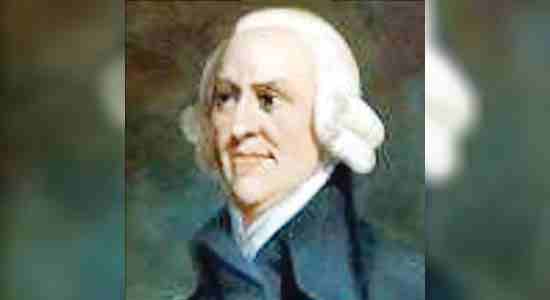

Smith and David Ricardo, along with the earlier thinker John Locke, were considered the “Fathers” of classical liberal philosophy and political economy.

Jovito R. Salonga (1920-2016) was a top-caliber Filipino lawyer, legislator, statesman, and civil society leader. With a string of law degrees (Bachelor, Masters, Doctorate) from the University of the Philippines, Harvard Law School and Yale University, and string of top notch victory in three Senatorial elections (1965, 1971, 1987).


There are some similarities in the ideas and writings of Adam Smith and Senator Salonga, especially on the role and purpose of government.

In the famous work, The Wealth of Nations (1776), Book IV, Chapter IX, Adam Smith argued towards the end that individual freedom in pursuit of personal happiness and advancement should be respected, and government should be lean and minimal, its function is focused or limited to protect such individual freedom from violence (local or foreign) and injustice, and to secure public goods like infrastructures.

In Paragraph 51 of Chapter IX, Smith wrote,

“Every man, as long as he does not violate the laws of justice, is left perfectly free to pursue his own interest his own way, and to bring both his industry and capital into competition with those of any other man, or order of men. The sovereign is completely discharged from a duty, in the attempting to perform which he must always be exposed to innumerable delusions, and for the proper performance of which no human wisdom or knowledge could ever be sufficient; the duty of superintending the industry of private people, and of directing it towards the employments most suitable to the interest of the society.

“According to the system of natural liberty, the sovereign has only three duties to attend to; three duties of great importance, indeed, but plain and intelligible to common understandings: first, the duty of protecting the society from violence and invasion of other independent societies; secondly, the duty of protecting, as far as possible, every member of the society from the injustice or oppression of every other member of it, or the duty of establishing an exact administration of justice; and, thirdly, the duty of erecting and maintaining certain public works and certain public institutions which it can never be for the interest of any individual, or small number of individuals, to erect and maintain...”

In a public lecture at UP Diliman on “Good Government,” July 3, 1962, Sen. Salonga argued that an important function of government is to guarantee a minimum standard of social without sacrificing individual freedom for personal advancement. He wrote,

“(T)he preservation of a minimal standard of order is basic in any organized society; without order, one cannot enjoy the essentials of life with some kind of assurance that someone will not deprive him by force of it. But too much stress on order may mean the dissipation of freedom -- the freedom to pursue our respective occupations, the freedom to trade and engage in business, the freedom to inquire and to know, the freedom to seek truth according to our best lights, the freedom to speak and to worship and to believe. Law, then, in a free society of tree men is a system of reconciliation -- the reconciliation of order with liberty, and it is for this reason that I defined law earlier as a system of ordered liberty, a system where there is security and where individual dignity and worth is recognized.

A Good Government, therefore, seeks to achieve order with freedom, security with human dignity. And at the very least, human dignity means a more equitable distribution of the basic values and goods of society wealth and power, knowledge and respect.”

On the rule of law and not rule of men, the good Senator wrote,

“It is often said that in a democracy the government is one of laws and not of men. The meaning is that the mighty and the weak should be under the law, with equal rights and equal protection. Justice is blind, without regard to whether one is poor or lowly. This is all fine and good, except for the fact that laws are made by men, interpreted by men, and administered by men. And as long as this is so, justice cannot be blind.”

When he retired from politics after he lost in the presidential elections in 1992, Sen. Salonga turned his sights on civil society work. In his Ramon Magsaysay Award Lecture, Aug.30, 2007, he wrote,

“After one term as a congressman and three terms as a senator, I retired from partisan politics in 1992 -- indeed I am no longer an active member of the Liberal Party, since my active involvement in civil society. I founded and organized Kilosbayan in 1993, mainly to arouse public interest and participation in important questions of public policy, in light of the right of the people to their own governance and on the basis of civilized norms of morality, justice, truth and ethics.

“On Recto Day, Feb. 8, 2000, ex-Secretary of Justice and ex-Ambassador Sedfrey A. OrdoƱez and I founded and organized Bantay Katarungan, an NGO, to help improve and modernize our system of justice in the Philippines, with the help of young students of idealism and competence from the best law schools in Metro Manila...”

The good senator was known for advancing the rule of law, of having a well-functioning administration of justice, and not for advancing populism and welfarism, entitlement and citizen-dependence on the state. He was the principal author of the Code of Conduct and Ethical Standards for Government Workers, the law defining plunder as a crime, many others.

That makes him a cut above the average or almost all current breed of politicians and legislators, even among many NGOs and civil society leaders.

There are many things, many social measures and actions that can be done by self-reliant citizens and independent civil society organizations and do not need legislation and national coercion. That is the implicit message of the Senator when he and his friends formed KilosBayan (Citizens Action) and Bantay Katarungan (Sentinel of Justice).

Adam Smith has re-ignited the ideals of citizen self-reliance, freedom and responsibility, and limited government focused on securing the rule of law, two and a half centuries ago. Senator Salonga supported those ideals half century ago. Thank you, Sir.

We still have to find that new breed of politicians in the country who can follow the intellectual persuasion and integrity stamina of the Senator. Politicians who are not using political populism and welfarism to bribe voters’ support and instead, highlight the important role of having the rule of law in protecting citizens self-reliance, entrepreneurship and innovation, their private property and their right to liberty and self-expression.

Bienvenido S. Oplas, Jr. is the head of Minimal Government Thinkers, a Fellow of the South East Asia Network for Development (SEANET), and a member of the Economic Freedom Network (EFN) Asia. All three entities support the philosophy of classical liberalism in politics and economics. 
--------------

See also:
BWorld 47, Renewable energy and the illusion of merit order effect, March 06, 2016

BWorld 48, On unilateral trade liberalization, March 17, 2016

BWorld 49, John Locke and Jovito Salonga, March 18, 2016

Adam Smith's economic morals, August 28, 2009
Pol. Ideology 46: Misunderstanding Adam Smith, July 14, 2013
Pol. Ideology 48: Hobbes, Locke, Rousseau and Social Contract Theory, September 09, 2013
D.Ricardo, JS Mill, A.Smith and Bong Mendoza on Taxes, BIR vs. Doctors, March 14, 2014
Taxes, The Beatles and Adam Smith, January 26, 2015
Pol. Ideology 61: Raison d 'Etre of Government, January 30, 2015

Friday, March 18, 2016

BWorld 49, John Locke and Jovito Salonga

* This is my article in BusinessWorld last March 15, 2016.


When classical liberalism -- more individual freedom and personal responsibility, free trade, minimal government, and rule of law -- was formulated in Europe more than three centuries ago, the philosophy was caught by some Filipino intellectuals two centuries later. Not the entire philosophy but portions of it, like the people’s freedom of expression and assembly and freedom from (Spanish) colonialism.

Politically, portions of the philosophy were adopted by some Filipino politicians when they formed the Liberal Party after World War II, coming from the “liberal faction” of the dominant Nacionalista Party. Nationalism was the natural evolution of Philippine society after experiencing Spanish and American colonialism.


On March 10, 2016, the oldest living great statesman of the Liberal Party, former Senator Jovito “Jovy” R. Salonga (1920-2016) passed away. The man was so respected by many sectors of Philippine society mainly because of his intellectual prowess and excellent academic achievements: a law degree from the University of the Philippines (UP), Bar topnotcher in 1944 (tied with his friend and ally Jose W. Diokno), a Masters in Law from Harvard Law School, a Doctorate in Law from Yale University, and a Doctor of Laws Honoris Causa from UP.

Owing to these achievements plus his integrity, Salonga topped three elections as a senatorial bet despite his lack of huge resources: in pre-Martial Law 1965, in post-Plaza Miranda bombing in 1971, and post-Edsa Revolution in 1987, where he later became a Senate President.

Nearly three centuries before Sen. Salonga was born, the recognized “Father of (classical) Liberalism,” John Locke (1632-1704), an English philosopher and one of the great thinkers of the “social contract theory” was born.


There are some similarities in the ideas and writings of John Locke and Jovy Salonga on some topics. Two topics will be discussed here.

ROLE, PURPOSE OF GOVERNMENT
In a major work, Two Treatises of Government (1680-1690), Book II, Chapter 9, “Of the Ends of Political Society and Government,” John Locke argued that the main purpose of creating a government was to protect private property and have a rule of law. He wrote: “The great and chief end, therefore, of men uniting into commonwealths, and putting themselves under government, is the preservation of their property; to which in the state of Nature there are many things wanting.

“Firstly, there wants an established, settled, known law, received and allowed by common consent to be the standard of right and wrong, and the common measure to decide all controversies between them.

“Secondly, in the state of Nature there wants a known and indifferent judge, with authority to determine all differences according to the established law.

“Thirdly, in the state of Nature there often wants power to back and support the sentence when right, and to give it due execution....

“For in the state of Nature to omit the liberty he has of innocent delights, a man has two powers...

“The first power -- viz., of doing whatsoever he thought fit for the preservation of himself and the rest of mankind, he gives up to be regulated by laws made by the society...

“Secondly, the power of punishing he wholly gives up, and engages his natural force, which he might before employ in the execution of the law of Nature, by his own single authority, as he thought fit, to assist the executive power of the society as the law thereof shall require.

On the rule of law and not rule of men, John Locke continued:

“And so, whoever has the legislative or supreme power of any commonwealth, is bound to govern by established standing laws, promulgated and known to the people, and not by extemporary decrees, by indifferent and upright judges, who are to decide controversies by those laws; and to employ the force of the community at home only in the execution of such laws, or abroad to prevent or redress foreign injuries and secure the community from inroads and invasion. And all this to be directed to no other end but the peace, safety, and public good of the people.”

Sen. Salonga wrote a similar argument.

In his lecture at UP Diliman on “Good Government,” July 3, 1962, he argued that a responsive government is more than honest and efficient administration, but more importantly, one that promotes and respects social order and individual liberty. He wrote:

“What is a good government? Is it necessarily a government where the mass of public servants are honest and efficient? To my mind, this is not enough for in Italy and Germany during the war years, the great many were honest and efficient. In fact, during the tragic days of Mussolini, the trains in Italy ran on time as never before. The Nazi concentration camp system in Germany was a model of hideous efficiency, It may well be that in Soviet Russia today, the bulk of public servants are honest, dedicated and efficient -- even more so than in many places in the free world.”

And so, when we talk about good government, we should be careful when we discuss it in the context of a free society of free people. In such a society, the law is more than just a set of rules and decrees; it is a system of ordered liberty.

Now, that would involve us, it would seem, in some kind of internal contradiction. Order and liberty are concepts that are apparently inconsistent, when you have nothing but order, you have the makings of a garrison state and may eventually achieve what has been correctly phrased as “the unanimity of the graveyard.” When you have nothing but liberty, so that everyone is free to do what he pleases, you have no more and no less than anarchy and chaos. The eventual result is the rule of the strong over the weak -- which means loss of liberty itself. One is just as bad as the other.

EDUCATION AND GOVERNMENT
In his book, Some Thoughts Concerning Education (1693), Sections 91 -- 100, John Locke suggested that good breeding of grace and politeness of the governor, the tutor and the pupil, wrote,

“To form a young gentleman as he should be, ’tis fit his governor should himself be well-bred, understanding the ways of carriage and measures of civility in all the variety of persons, times, and places; and keep his pupil, as much as his age requires, constantly to the observation of them.... Without good breeding his other accomplishments make him pass but for proud, conceited, vain, or foolish.

“Courage in an ill-bred man has the air and escapes not the opinion of brutality: Learning becomes pedantry; wit, buffoonery; plainness, rusticity; good nature, fawning.

“Wherefore it is necessary that this part should be the governor’s principal care, that an habitual gracefulness, and politeness in all his carriage, may be settled in his charge, as much as may be, before he goes out of his hands.... The tutor therefore ought in the first place to be well-bred: and a young gentleman, who gets this one qualification from his governor, sets out with great advantage.”

In his speech, “The Educated Man,” delivered at Silliman University, Dumaguete City, Aug. 28, 1964, Sen. Salonga argued that the educated man is one who has a well-bred and meaningful life. He wrote,

“The educated man lives this kind of a life, because he has opened the windows of his mind to great thoughts and ennobling ideas; because he is not imprisoned by the printed page, but chooses to make a relentless, rigorous analysis and evaluation of everything he reads; because he is less interested in the accumulation of degrees than in the stimulation of his mind and the cultivation of a generous spirit; because his interest is less in knowing who is right but more importantly, in discerning what is right and defending it with all the resources at his command; because he can express himself clearly and logically, with precision and grace; because he is not awed by authority, but is humble enough to recognize that his best judgment is imperfect and may well be tainted by error or pride; because he has a deep reverence for the inherent worth and dignity of every human being, as a creature of God; because he has a healthy sense of values, a breadth of outlook and the depth of compassion which a purposeful education generates; because whenever he talks about good government he is prepared and willing to sacrifice himself for it; and because he lives a life of relevance to the world in which we live, a sharing in the problems of his time and doing whatever he can with intelligence and fairness and understanding.”

Our public policies, laws, and legislators have long been corrupted by the convenience of populism and welfarism, which is a shortcut to bribe voters’ support and justify high and multiple taxes, fees, fines, mandatory contributions and other forms of government regulations and intervention.

The spirit of more personal and parental/guardian responsibility in raising and educating children has been corrupted by more government responsibility in this aspect of the people’s lives. Thus, a culture of state-dependence instead of self-reliance, a culture of entitlement, and social expectation instead of independent citizenship, have been molded in the minds of both parents and children.

John Locke has lighted the candle of more individual liberty and rule of law as primary function of government more than three centuries ago. Sen. Salonga has also shared the same ideals half a century ago.

Thank you, good Senator. The current generation of thinkers and individuals should take the challenge of being free, self-reliant citizens, not people seeking entitlements and dependent on the state.


Bienvenido S. Oplas, Jr. is the head of Minimal Government Thinkers, a Fellow of the South East Asia Network for Development (SEANET), and a member of the Economic Freedom Network (EFN) Asia. All three entities believe in classical liberalism philosophy. minimalgovernment@gmail.com
-----------

See also:
BWorld 46, China's debt, central planning and central crashes, February 27, 2016

BWorld 47, Renewable energy and the illusion of merit order effect, March 06, 2016

BWorld 48, On unilateral trade liberalization, March 17, 2016

Pol. Ideology 48: Hobbes, Locke, Rousseau and Social Contract Theory, September 09, 2013
Pol. Ideology 63, Alternative Economic System, May 25, 2015

Friday, March 11, 2016

Rule of law 26, RIP Sen. Jovito Salonga

Yesterday, a great statesman, former Senator Jovito Salonga died. I am reposting two comments from two friends, Ted Te, Supreme Court Spokesman, and Adora Navarro, an economist. Posting with their permission. The third paper is a portion the late Senator's lecture in UP some 52 years ago. He spoke like those classical  liberal thinkers several centuries ago, consistent with his being a Liberal Party leader. His focus was on having rule of law in the country, not welfarism, unlike current breed of politicians and legislators.

Rest in peace, Sen. Jovy.
-------------

(1) Salonga: The last of the greats enters immortality
by Ted Te, Thursday, March 10, 2016

…. Bar topnotcher in 1944 (95.3%, tied with his friend and ally Jose W. Diokno) with a law degree from the University of the Philippines, a Masters in Law from Harvard Law School, and a Doctorate in Law from Yale University with a Doctor of Laws Honoris Causa from the U.P. Topnotcher in three senate races, pre-Martial law (1965), post-Plaza Miranda (1971) and post-EDSA (1987). First PCGG Chair. Former Senate President. Principal author of the Code of Conduct and Ethical Standards for Government Workers, the law definining coup d’etat as a felony, and the law defining plunder as a crime, and many others. One of the magnificent 12 who voted to kick out the U.S. bases in 1991 (unforgettable image: Ka Jovy intoning “The treaty is defeated.”)

I am privileged to have met and worked with Jovito R. Salonga in my lifetime…. He wanted to meet to discuss his latest brainchild, Bantay Katarungan, a judiciary watchdog that would screen nominations for the judiciary; this was the concrete expression of his belief that judiciary aspirants must be a cut above the rest in terms of competence, professionalism and integrity, especially on integrity. I and the Robin-to-his-Batman Emil Capulong would meet for many hours discussing his thoughts on how to realize this dream. Much later, this dream would be realized; I would join him for some training sessions involving law students who would serve as monitors. He would later make me an offer to work full-time for Bantay but because I was then neck deep in my advocacy against the death penalty and was handling so many death penalty appeals, I had to decline the offer. I gave him some names and he did consider them, inviting some of them to work for Bantay in the days and years to come….

His human body, ravaged by injuries from the Plaza Miranda bombing and later by illness, kept him from participating for many years in public life; for practically a generation, his name drew no recall. But for those of us fortunate enough to have witnessed this giant among us, his name would always summon memories of a time when a life was a light and that light shone brightly. His passing diminishes us all.  He was the last of the greats. Today, he enters immortality.
Paalam, Ka Jovy. Mabuhay ka!

(2) Adora Navarro

RIP, ex-Senate president Jovito Salonga. A man of courage and integrity, my idol. Born of poor parents, he worked his way to get the best education possible given his circumstances, was imprisoned and tortured by the Japanese during World War II for helping his compatriots, exposed Marcos' abuses and the start of cronyism in the late 1960s, survived the Plaza Miranda bombing in 1971, survived Martial Law, ran after Marcos' ill-gotten wealth as first head of the PCGG, steered the first post-EDSA Senate through several coup attempts, and publicly opposed Cory Aquino on the US military bases issue. I remember how we rallyists danced in the rain after his last vote locked in the decision to kick out the US military bases in 1991. 

For the younger generation, if you want to know more about him and his contributions to nation-building, I suggest you read his memoir "A Journey of Struggle and Hope." Pay close attention to Chapter VIII-The Start of the Marcos Era, Chapter IX-Militarization and the Amassing of Hidden Wealth, and the tragic Chapter XI-The Plaza Miranda Bombing.

I join a grateful nation in celebrating your life, sir. May we and the succeeding generations of Filipinos always remember your words: "Independence, like freedom, is never granted; it is always asserted and affirmed. Its defense is an everyday endeavor--sometimes in the field of battle, oftentimes in the contest of conflicting wills and ideas. It is a daily struggle that may never end--for as long as we live."

(3) Jovito Salonga lecture at UP Diliman, “Good Government”, July 3, 1962.

What is a good government? Is it necessarily a government where the mass of public servants are honest and efficient? To my mind, this is not enough for in Italy and Germany during the war years, the great many were honest and efficient. In fact, during the tragic days of Mussolini, the trains in Italy ran on time as never before. The Nazi concentration camp system in Germany was a model of hideous efficiency, It may well be that in Soviet Russia today, the bulk of public servants are honest, dedicated and efficient— even more so than in many places in the free world.

And so, when we talk about Good Government, we should be careful when we discuss it in the context of a free society of free men. In such a society, the law is more than just a set of rules and decrees; it is a system of ordered liberty.

Now, that would involve us, it would seem, in some kind of internal contradiction. Order and liberty are concepts that are apparently inconsistent, when vou have nothing but order, you have the makings of a garrison state and may eventually achieve what has been correctly phrased as "the unanimity of the graveyard.” When you have nothing but liberty, so that everyone is free to do what he pleases, you have no more and no less than anarchy and chaos. The eventual result is the rule of the strong over the weak— which means loss of liberty itself. One is just as bad as the other....
------------

See also: