Showing posts with label The Wealth of Nations. Show all posts

Monday, March 21, 2016

BWorld 50, Adam Smith and Jovito Salonga

* This is my article in BusinessWorld last March 16, 2016.


Adam Smith (1723-1790) was a Scottish philosopher known for his treatise on “invisible hand” welfare effect of the market system. He was the author of two classic works, The Theory of Moral Sentiments (1759) and The Wealth of Nations (1776).
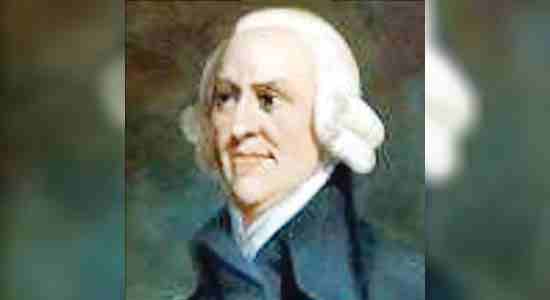

Smith and David Ricardo, along with the earlier thinker John Locke, were considered the “Fathers” of classical liberal philosophy and political economy.

Jovito R. Salonga (1920-2016) was a top-caliber Filipino lawyer, legislator, statesman, and civil society leader. With a string of law degrees (Bachelor, Masters, Doctorate) from the University of the Philippines, Harvard Law School and Yale University, and string of top notch victory in three Senatorial elections (1965, 1971, 1987).


There are some similarities in the ideas and writings of Adam Smith and Senator Salonga, especially on the role and purpose of government.

In the famous work, The Wealth of Nations (1776), Book IV, Chapter IX, Adam Smith argued towards the end that individual freedom in pursuit of personal happiness and advancement should be respected, and government should be lean and minimal, its function is focused or limited to protect such individual freedom from violence (local or foreign) and injustice, and to secure public goods like infrastructures.

In Paragraph 51 of Chapter IX, Smith wrote,

“Every man, as long as he does not violate the laws of justice, is left perfectly free to pursue his own interest his own way, and to bring both his industry and capital into competition with those of any other man, or order of men. The sovereign is completely discharged from a duty, in the attempting to perform which he must always be exposed to innumerable delusions, and for the proper performance of which no human wisdom or knowledge could ever be sufficient; the duty of superintending the industry of private people, and of directing it towards the employments most suitable to the interest of the society.

“According to the system of natural liberty, the sovereign has only three duties to attend to; three duties of great importance, indeed, but plain and intelligible to common understandings: first, the duty of protecting the society from violence and invasion of other independent societies; secondly, the duty of protecting, as far as possible, every member of the society from the injustice or oppression of every other member of it, or the duty of establishing an exact administration of justice; and, thirdly, the duty of erecting and maintaining certain public works and certain public institutions which it can never be for the interest of any individual, or small number of individuals, to erect and maintain...”

In a public lecture at UP Diliman on “Good Government,” July 3, 1962, Sen. Salonga argued that an important function of government is to guarantee a minimum standard of social without sacrificing individual freedom for personal advancement. He wrote,

“(T)he preservation of a minimal standard of order is basic in any organized society; without order, one cannot enjoy the essentials of life with some kind of assurance that someone will not deprive him by force of it. But too much stress on order may mean the dissipation of freedom -- the freedom to pursue our respective occupations, the freedom to trade and engage in business, the freedom to inquire and to know, the freedom to seek truth according to our best lights, the freedom to speak and to worship and to believe. Law, then, in a free society of tree men is a system of reconciliation -- the reconciliation of order with liberty, and it is for this reason that I defined law earlier as a system of ordered liberty, a system where there is security and where individual dignity and worth is recognized.

A Good Government, therefore, seeks to achieve order with freedom, security with human dignity. And at the very least, human dignity means a more equitable distribution of the basic values and goods of society wealth and power, knowledge and respect.”

On the rule of law and not rule of men, the good Senator wrote,

“It is often said that in a democracy the government is one of laws and not of men. The meaning is that the mighty and the weak should be under the law, with equal rights and equal protection. Justice is blind, without regard to whether one is poor or lowly. This is all fine and good, except for the fact that laws are made by men, interpreted by men, and administered by men. And as long as this is so, justice cannot be blind.”

When he retired from politics after he lost in the presidential elections in 1992, Sen. Salonga turned his sights on civil society work. In his Ramon Magsaysay Award Lecture, Aug.30, 2007, he wrote,

“After one term as a congressman and three terms as a senator, I retired from partisan politics in 1992 -- indeed I am no longer an active member of the Liberal Party, since my active involvement in civil society. I founded and organized Kilosbayan in 1993, mainly to arouse public interest and participation in important questions of public policy, in light of the right of the people to their own governance and on the basis of civilized norms of morality, justice, truth and ethics.

“On Recto Day, Feb. 8, 2000, ex-Secretary of Justice and ex-Ambassador Sedfrey A. OrdoƱez and I founded and organized Bantay Katarungan, an NGO, to help improve and modernize our system of justice in the Philippines, with the help of young students of idealism and competence from the best law schools in Metro Manila...”

The good senator was known for advancing the rule of law, of having a well-functioning administration of justice, and not for advancing populism and welfarism, entitlement and citizen-dependence on the state. He was the principal author of the Code of Conduct and Ethical Standards for Government Workers, the law defining plunder as a crime, many others.

That makes him a cut above the average or almost all current breed of politicians and legislators, even among many NGOs and civil society leaders.

There are many things, many social measures and actions that can be done by self-reliant citizens and independent civil society organizations and do not need legislation and national coercion. That is the implicit message of the Senator when he and his friends formed KilosBayan (Citizens Action) and Bantay Katarungan (Sentinel of Justice).

Adam Smith has re-ignited the ideals of citizen self-reliance, freedom and responsibility, and limited government focused on securing the rule of law, two and a half centuries ago. Senator Salonga supported those ideals half century ago. Thank you, Sir.

We still have to find that new breed of politicians in the country who can follow the intellectual persuasion and integrity stamina of the Senator. Politicians who are not using political populism and welfarism to bribe voters’ support and instead, highlight the important role of having the rule of law in protecting citizens self-reliance, entrepreneurship and innovation, their private property and their right to liberty and self-expression.

Bienvenido S. Oplas, Jr. is the head of Minimal Government Thinkers, a Fellow of the South East Asia Network for Development (SEANET), and a member of the Economic Freedom Network (EFN) Asia. All three entities support the philosophy of classical liberalism in politics and economics. 
--------------

See also:
BWorld 47, Renewable energy and the illusion of merit order effect, March 06, 2016

BWorld 48, On unilateral trade liberalization, March 17, 2016

BWorld 49, John Locke and Jovito Salonga, March 18, 2016

Adam Smith's economic morals, August 28, 2009
Pol. Ideology 46: Misunderstanding Adam Smith, July 14, 2013
Pol. Ideology 48: Hobbes, Locke, Rousseau and Social Contract Theory, September 09, 2013
D.Ricardo, JS Mill, A.Smith and Bong Mendoza on Taxes, BIR vs. Doctors, March 14, 2014
Taxes, The Beatles and Adam Smith, January 26, 2015
Pol. Ideology 61: Raison d 'Etre of Government, January 30, 2015

Sunday, July 14, 2013

Pol. Ideology 46: Misunderstanding Adam Smith

Last Monday, July 08, I posted Pol. Ideology 45: Left Intellectualism Means Abandonment of Socialism in my facebook wall. It attracted another round of long discourse. Thanks to fellow UP ETCer (younger batch) Mel, Mike, Shakaru, for that long exchange from July 08-10, 2013.

While the debate still focuses on whether we should have a BIG or small/limited government, one source of confusion is a misunderstanding of some quotes from  Adam Smith’s book, The Wealth of Nations.

This is 12 pages long, 6,100+ words, so grab a can of your favorite drinks and enjoy.


Mel Lorenzo Accad Interesting sir! I'm reading it
 cc: Sir Gerry, May I know your comment on this? 

Sir Nonoy, how sure are you that you have defined socialism accurately? as pointed out by sir Gerry in one of my previous posts. What are your sources po para naman maiwasan natin ang strawman arguments. 

Nonoy Oplas It's there. "Things should be socialized always -- education, healthcare, housing, pension, transpo, agri, etc. Including your own pockets, savings, they should be socialized. Diversity and inequality, spontaneity and innovation, should be restricted if not controlled whenever possible. Things should be harmonized, standardized, uniformized, monotonized, in order to prevent inequality, massive and scary inequality."

Mel Lorenzo Accad Sir Nonoy, here are my comments (I also posted them in the main blog):

"Let me be clear with my assumptions:
1. Every political rule is a "dictatorship" in one way or another.
-Example, democracy is dictatorship of the majority over the minority, capitalism is dictatorship of those who are economically-abled over those who are not economically-abled, socialism is the dictatorship of the "people" over all (I really hope that I defined them very well so as to avoid strawman arguments. I hate strawman arguments, BTW)

2. So if we say that socialism is machine that creates dictatorship, what then can we call capitalism?

3. I believe that capitalism and socialism have advantages and disadvantages (we should only be aware of their SIDE EFFECTS and how do we minimize them).

4. Capitalism has created so wide inequality to the extent that everyone has differing in their competitiveness, hence there's a long run possibility of rise of monopolies (even those that are not natural monopoly due to technological advantages).

5. Final question, what then are these side effects of every political rules that we should be aware of? How should we minimize them? WHAT IS OUR COMMON GOAL AT THE END OF THE DAY?

6. I don't have the monopoly of truth. There are grave consequences of assuming that we have monopoly of truth.

(COOL HEADS, WARM HEARTS)"

Nonoy Oplas Thanks Mel. First of all, I think you should start blogging. Just copy-paste those that you already posted in fb, they are long blog articles already.

To your points:
1. Yes, All forms of pol rule is dictatorship and coercion. The free market philosophy, the minarchy libertarin especially does not rule out lhaving coercion in our lives, hence the advocacy for "limited government" vs the "zero government" position of libertarian anarchy.

2. Free market capitalism is based on voluntary exchange. I sell you tomatoes at this price. If you like them, you pay and go home. If you don't like them, you just walk away and find another seller. Then I go to another buyer and offer my tomatoes. Zero coercion in a voluntary exchange set up.

3. Yes they do. It depends on what you wish to achieve. If you want to respect diversity and spontaneity, free market capitalism is the way because under capitalism, diversity is not allowed. YOu cannot be very efficient then be very rich, the state will confiscate your extra income, your extra cash, your extra car, extra land.

4. Free people are not equal, and equal people are not free. There is no limit to what the super-efficient, super-hard working, super-ambitious people can achieve. Meanwhile, some people have zero ambition, just have a party as often as possible, get subsidies from siblings or from the state. As time passes by, the inequality between these two extremes widen. Some in the middle class join the super rich later. Inequality is necessary if you want a free society.

5. Common goal at the end of the day is -- individual liberty. Individual responsibility. One's stupidity and irresponsibility should not be blamed to anyone else. One's efficiency and fruits of hard work should not be confiscated to be given to everyone else.

6. The only absolute truth in this life are change, death and government/taxes.

Sunday, February 04, 2007

Pol. Ideology 6: Quotes from Adam Smith

I stumbled on these good quotes here from Adam Smith, the father of free market economic thinking. I got these quotes from the Adam Smith Institute website, http://www.adamsmith.org/quotes.

I chose the quotes on "the invisible hand" and "the profusion of government". The quote on butcher and baker is very down to earth. The rice farmers and fisherfolks think mainly of themselves and the profit they can generate from their efforts, but in the process, society's welfare is served.

The quote on government, especially on "The whole, or almost the whole public revenue, is in most countries employed in maintaining unproductive hands..." is damning for many state bureaucrats and politicians.

enjoy!
---------------


(1) The invisible hand

Every individual...generally, indeed, neither intends to promote the public interest, nor knows how much he is promoting it. By preferring the support of domestic to that of foreign industry he intends only his own security; and by directing that industry in such a manner as its produce may be of the greatest value, he intends only his own gain, and he is in this, as in many other cases, led by an invisible hand to promote an end which was no part of his intention.

--The Wealth of Nations, Book IV Chapter II

It is not from the benevolence of the butcher, the brewer, or the baker, that we expect our dinner, but from their regard to their own interest. We address ourselves, not to their humanity but to their self-love, and never talk to them of our necessities but of their advantages.

-- The Wealth of Nations, Book I Chapter II

How selfish soever man may be supposed, there are evidently some principles in his nature, which interest him in the fortune of others, and render their happiness necessary to him, though he derives nothing from it, except the pleasure of seeing it.

-- The Theory of Moral Sentiments, Part I Section I Chapter I


(2) The profusion of government

In the midst of all the exactions of government, capital has been silently and gradually accumulated by the private frugality and good conduct of individuals, by their universal, continual, and uninterrupted effort to better their own condition. It is this effort, protected by law and allowed by liberty to exert itself in the manner that is most advantageous, which has maintained the progress of England towards opulence and improvement in almost all former times...

It is the highest impertinence and presumption, therefore, in kings and ministers, to pretend to watch over the economy of private people, and to restrain their expense... They are themselves always, and without any exception, the greatest spendthrifts in the society. Let them look well after their own expense, and they may safely trust private people with theirs. If their own extravagance does not ruin the state, that of their subjects never will.

-- The Wealth of Nations, Book II, Chapter III

The statesman who should attempt to direct private people in what manner they ought to employ their capitals, would not only load himself with a most unnecessary attention, but assume an authority which could safely be trusted, not only to no single person, but to no council or senate whatever, and which would nowhere be so dangerous as in the hands of a man who had folly and presumption enough to fancy himself fit to exercise it.

-- The Wealth Of Nations, Book IV, Chapter II.

Great nations are never impoverished by private, though they sometimes are by public prodigality and misconduct. The whole, or almost the whole public revenue, is in most countries employed in maintaining unproductive hands... Such people, as they themselves produce nothing, are all maintained by the produce of other men's labour... Those unproductive hands, who should be maintained by a part only of the spare revenue of the people, may consume so great a share of their whole revenue, and thereby oblige so great a number to encroach upon their capitals, upon the funds destined for the maintenance of productive labour, that all the frugality and good conduct of individuals may not be able to compensate the waste and degradation of produce occasioned by this violent and forced encroachment.

-- The Wealth of Nations, Book II, Chapter III

The man of system…is apt to be very wise in his own conceit; and is often so enamoured with the supposed beauty of his own ideal plan of government, that he cannot suffer the smallest deviation from any part of it… He seems to imagine that he can arrange the different members of a great society with as much ease as the hand arranges the different pieces upon a chess-board. He does not consider that in the great chess-board of human society, every single piece has a principle of motion of its own, altogether different from that which the legislature might choose to impress upon it.

-- The Theory Of Moral Sentiments, Part VI, Section II, Chapter II.invisib

* See also :

Pol. Ideology 4: Comments to Minimal Government Manifesto,  December 05, 2005
Pol. Ideology 5: Have Movements for Liberty Progressed? June 26, 2006