Showing posts with label invisible hand. Show all posts

Saturday, October 22, 2016

Weekend Fun 62, The invisible hand

I got this from an economist friend's fb wall. Brilliant humor.

“By directing that industry in such a manner as its produce may be of greatest value, he intends only his own gain, and he is in this, as in many other cases, led by an invisible hand to promote an end which was no part of his intention.” -- Adam Smith, The Wealth of Nations

This slide I got from an Indonesian friend presented at the EFN Asia conference 2004 in HK.

On another note, it will be the UPSE annual alumni homecoming later today. I will attend, as usual.


These 5 political personalities, either UPSE alumni or faculty member, will come today, except Ben Diokno whom I heard is abroad this weekend.

------------

See also:
Weekend fun 23: Economist Jokes, September 24, 2011

Monday, May 25, 2015

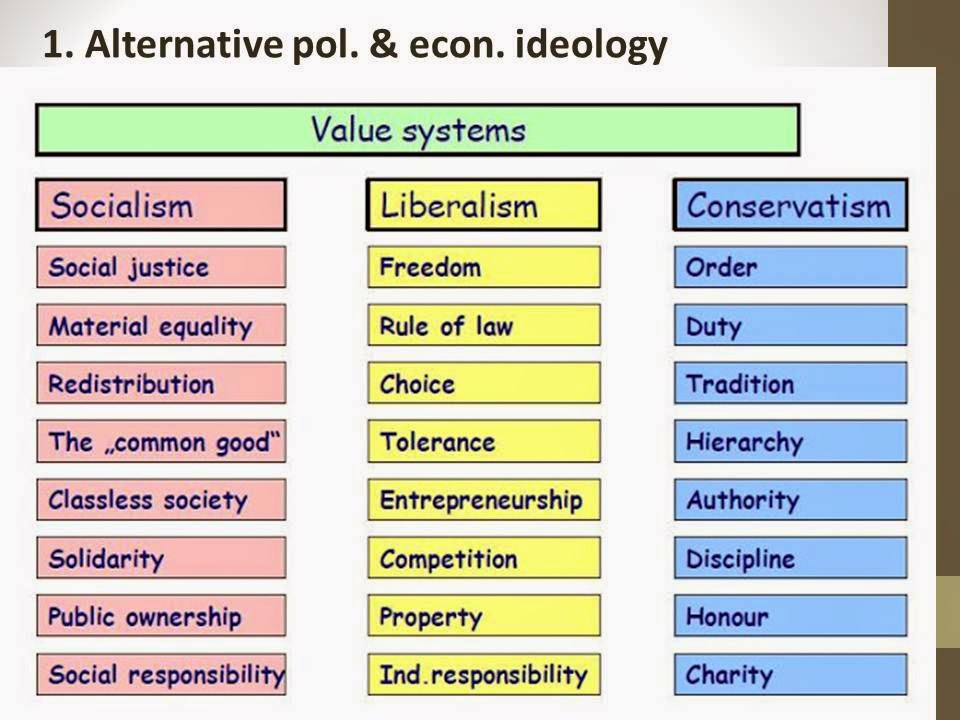
Pol. Ideology 63, Alternative Economic System

This afternoon, I was one of two reactors to a presentation of a new paper made by the Penuel Group on "Alternative Economic System." The other reactor was Men Sta. Ana of the Action for Economic Reforms (AER).


Good audience, from different Catholic religious groups and NGOs. I thanked Arcy Garcia for the  invite.


The numbered items and in italics are from the paper by the Penuel Group. Then my brief comments plus relevant quotes from various thinkers.


2. “Sovereignty. "The Sovereign agents are the freer beings.  They could exist inside and outside the law.  The sovereign could, at one time, uphold the law, and at another time limit or even suspend it their pleasure.  This description of sovereignty fits the divine; for gods are almost by definition the only ones that could exists inside and outside the law.  Such position is the ultimately seductive. “

Similar to the observation by John Locke: 

"Social contract between people and government, latter  should protect the life and property of the former. Failure to do so is breach of contract. Sovereign people have the right to rebel against abusive "servant.”


Coercion invites rebellion, today or tomorrow. Thus, failure of coercion after sometime.


The Penuel paper somehow failed to present clearly what is the "Alternative economic system" that they propose after discussing at length their critique of the market system. I mentioned four alternative areas.


Concluding Notes

1.Despite all the warts and imperfections of the planet and its people, we are living a world of rising and continuing prosperity. Rising life expectancy, fewer deaths per age bracket compared to past decades.

2. The planet is not ending soon in a collapsing-burning-flooding-submerging scenario. Climate cycle is cool.

3. Free market means free individuals. All markets are composed of individuals, young and old, men and  women, ;rich and poor, producers and consumers.

4. Alternative econ system is one away from big and intrusive government but towards small, minimal government, and maximum civil society of mature, volunteerist individuals.
--------------

The 15-slides presentation is posted in slideshare.

See also: 

Tuesday, June 19, 2012

Pol. Ideology 32: On Shrinking Government

Posting a feature article in BusinessWorld nearly six years ago, I just found in one of my computer folders. Part of this four-pages long article is an interview of me by the author. The quotes below, I just added them.  Enjoy reading.


Minimal government intervention

July 07, 2006 | Manila, Philippines
BY ERNESTO B. CALUCAG, Senior Researcher
http://www.bworldonline.com/Research/populareconomics.php?id=0011

It has been widely documented in literatures that the Philippines’ economic development continues to be hampered by its weak government, in any form it takes-entrenched government corruption, bloated bureaucracy, ballooning budget deficit, inconsistent regulations, extensive government ownership of business, etc. Yet there seems to be a void in calling out for a reduced or limited government clout in the country as a means towards achieving a better economy for the Filipinos.

"Small government and small taxes is still a losing proposition at the moment, advocated by only a few souls which are politically weak compared to the voices of statists who endlessly call for more subsidies, more government positions and offices, more foreign aid," said economist Bienvenido "Nonoy" Oplas, Jr., head of the group called Minimal Government Movement (MGM) in the Philippines, advancing the concepts of small and limited government, small and few taxes, free market and free trade, and more individual freedom and responsibility.

Not to be compared with extremes such as total anarchy and communism, proponents of minimalist government argue that government, while a necessary institution for maintaining social order, should be focused on few, limited functions, "such as the enforcement of property rights and contracts among citizens, foreign affairs and national defense, currency and monetary regulation, among others."

Sunday, February 04, 2007

Pol. Ideology 6: Quotes from Adam Smith

I stumbled on these good quotes here from Adam Smith, the father of free market economic thinking. I got these quotes from the Adam Smith Institute website, http://www.adamsmith.org/quotes.

I chose the quotes on "the invisible hand" and "the profusion of government". The quote on butcher and baker is very down to earth. The rice farmers and fisherfolks think mainly of themselves and the profit they can generate from their efforts, but in the process, society's welfare is served.

The quote on government, especially on "The whole, or almost the whole public revenue, is in most countries employed in maintaining unproductive hands..." is damning for many state bureaucrats and politicians.

enjoy!
---------------


(1) The invisible hand

Every individual...generally, indeed, neither intends to promote the public interest, nor knows how much he is promoting it. By preferring the support of domestic to that of foreign industry he intends only his own security; and by directing that industry in such a manner as its produce may be of the greatest value, he intends only his own gain, and he is in this, as in many other cases, led by an invisible hand to promote an end which was no part of his intention.

--The Wealth of Nations, Book IV Chapter II

It is not from the benevolence of the butcher, the brewer, or the baker, that we expect our dinner, but from their regard to their own interest. We address ourselves, not to their humanity but to their self-love, and never talk to them of our necessities but of their advantages.

-- The Wealth of Nations, Book I Chapter II

How selfish soever man may be supposed, there are evidently some principles in his nature, which interest him in the fortune of others, and render their happiness necessary to him, though he derives nothing from it, except the pleasure of seeing it.

-- The Theory of Moral Sentiments, Part I Section I Chapter I


(2) The profusion of government

In the midst of all the exactions of government, capital has been silently and gradually accumulated by the private frugality and good conduct of individuals, by their universal, continual, and uninterrupted effort to better their own condition. It is this effort, protected by law and allowed by liberty to exert itself in the manner that is most advantageous, which has maintained the progress of England towards opulence and improvement in almost all former times...

It is the highest impertinence and presumption, therefore, in kings and ministers, to pretend to watch over the economy of private people, and to restrain their expense... They are themselves always, and without any exception, the greatest spendthrifts in the society. Let them look well after their own expense, and they may safely trust private people with theirs. If their own extravagance does not ruin the state, that of their subjects never will.

-- The Wealth of Nations, Book II, Chapter III

The statesman who should attempt to direct private people in what manner they ought to employ their capitals, would not only load himself with a most unnecessary attention, but assume an authority which could safely be trusted, not only to no single person, but to no council or senate whatever, and which would nowhere be so dangerous as in the hands of a man who had folly and presumption enough to fancy himself fit to exercise it.

-- The Wealth Of Nations, Book IV, Chapter II.

Great nations are never impoverished by private, though they sometimes are by public prodigality and misconduct. The whole, or almost the whole public revenue, is in most countries employed in maintaining unproductive hands... Such people, as they themselves produce nothing, are all maintained by the produce of other men's labour... Those unproductive hands, who should be maintained by a part only of the spare revenue of the people, may consume so great a share of their whole revenue, and thereby oblige so great a number to encroach upon their capitals, upon the funds destined for the maintenance of productive labour, that all the frugality and good conduct of individuals may not be able to compensate the waste and degradation of produce occasioned by this violent and forced encroachment.

-- The Wealth of Nations, Book II, Chapter III

The man of system…is apt to be very wise in his own conceit; and is often so enamoured with the supposed beauty of his own ideal plan of government, that he cannot suffer the smallest deviation from any part of it… He seems to imagine that he can arrange the different members of a great society with as much ease as the hand arranges the different pieces upon a chess-board. He does not consider that in the great chess-board of human society, every single piece has a principle of motion of its own, altogether different from that which the legislature might choose to impress upon it.

-- The Theory Of Moral Sentiments, Part VI, Section II, Chapter II.invisib

* See also :

Pol. Ideology 4: Comments to Minimal Government Manifesto,  December 05, 2005
Pol. Ideology 5: Have Movements for Liberty Progressed? June 26, 2006