Saturday, December 18, 2021

Pol Ideology 82, Reflections of a former Marxist on property

I just rediscovered this, my presentation in one FNF PH event 12 years ago, September 2009, http://www.fnf.org.ph/downloadables/Reflection-of-a-former-Marxist.ppt.pdf.
Shrinking the slides and reposting here.


---------------

See also:
Pilipinas Forum 3: Is Marxism Still Relevant? August 30, 2011
Weekend Fun 36: The Karl Marx Mastercard, July 6, 2012

Pol Ideology 80, Capitalism reset, liberal democracy, September 10, 2021
Pol Ideology 81, Human rights and dangers of turning socialist, October 28, 2021.

Energy 157, Blackout-friendly RE, Europe experience and lessons for the PH

This is my presentation in an energy forum by Stratbase last month.


-------------

BWorld 518, Kill coal is kill growth agenda

* My article in BusinessWorld, December 6, 2021.
--------------

When the “phase out” of coal power became “phase down” at the recent United Nations Climate Change Conference in Glasgow (COP26), the climate alarmism movement took it as the defeat of their “last chance to save the planet” narrative. Their next move was to target individual countries.

HOUSE RESOLUTION 2361

In the Philippines, House Resolution No. 2361 was introduced on Nov. 16 by Pampanga Rep. Juan Miguel “Mikey” M. Macapagal Arroyo hastening the “Philippines’ transition to 50% renewable energy [RE] sources by 2030.” The existing target under the National Renewable Energy Program (NREP) 2020–2040 is 35% RE in the power generation mix by 2030 and 50% by 2040. So Mr. Arroyo and the kill-coal lobbyists want to hasten the transition by 10 years.

This and related proposals like the Asian Development Bank’s acquire-retire-coal scheme to be replaced by RE, especially intermittent solar and wind, are impractical and based on emotion, not reason. Below are four quantitative reasons why.

HIGH COAL GENERATION, LOW SOLAR + WIND GENERATION

One, coal provided up to 57% of total power generation in the country as of 2020, solar + wind provided only 2.4%. In the first 10 months of 2021 in the Luzon-Visayas grids, coal provided 55% while solar + wind generated only 2.9% share. If we persist in having more intermittent unstable and weather-dependent energy, we will have daily Earth Hours soon.

Two, generation capacities of other indigenous energy are limited. From 2010 to 2020, natural gas generation was flat at 19,500 gigawatt-hours (GWH); geothermal, flat at 10,000 GWH; and hydro, flat at 7,000+ GWH. The main reason the Blackout Economics agenda of the RE lobby did not happen is because coal generation has expanded big time, from 23,300 GWH in 2010 to 58,200 GWH in 2020 (see table 1).

MORE COAL, MORE GROWTH

In the next table below, I computed the decadal averages of energy consumption in Petajoules (1 PJ = 277.78 GWH) and GDP growth of selected countries.

Three, countries that expanded their coal consumption and did not significantly raise their solar + wind share have fast or high GDP growth. Examples are China, India, S. Korea, Indonesia, Taiwan, Vietnam, Malaysia, Thailand, and Philippines. Japan is the exception for some reason/s.

Four, countries that shrank their coal consumption and significantly raised their solar + wind share have slow and anemic GDP growth. Examples are the US, Germany, UK, Italy, Spain, France, and the Netherlands. Exceptions in Europe and have relatively fast growth are Kazakhstan and Turkey, they expanded their coal use instead. Russia and Poland have shrunk their coal use but they did not significantly increase their solar + wind share, they experienced modest growth (see table 2).

Of course, there are other factors that contribute to fast or slow growth of countries but for this paper, we want to see if the desire of the RE lobby will be useful or not for developing countries like the Philippines. The above numbers show that the answer is no. The RE lobby is useless in pushing the Philippines and other developing countries in their desire to have sustained growth and uplift millions of their people from poverty.

TRANSMISSION WOES IN NEGROS AND NGCP MONOPOLY

My Nov. 15 column discussed the high power prices in Negros provinces after the National Grid Corp. of the Philippines (NGCP) Negros-Cebu submarine cable was damaged this June by Department of Public Works and Highways (DPWH) dredging and re-channeling activities in Amlan, Negros Oriental. Transmission was cut by half to only 90 MW and market prices in the alternative transmission Negros-Panay shot up to P7.70/kwh in the July billing; P7.55/kwh in August; down to P3.42/kwh in September, when the submarine cable was fixed.

Both NGCP and DPWH assumed zero liability for the higher cost of electricity for two months in Negros Occidental and Oriental. All congestion costs were passed on to consumers and generation companies (gencos). The DPWH or its contractor should have liability insurance to handle these cases but the NGCP went chummy friendly with DPWH. And the Energy Regulatory Commission (ERC) did not penalize NGCP for not going after DPWH and its contractor. ERC went chummy with NGCP. Shame.

COMPETITION UNDER EPIRA IS WORKING

Updated data show that the Electric Power Industry Reform Act (EPIRA) of 2001 or RA 9136 is working for the consumers via more competition, more choices. The registered electricity players in the Luzon-Visayas grids alone as of Nov. 26, data from IEMOP:

The Wholesale Electricity Spot Market (WESM) now has 281 members: 143 gencos, 71 electric cooperatives (ECs), 47 directly connected customers, and 20 private distribution utilities (DUs) and local government utilities.

The Retail Competition and Open Access (RCOA) program has 1,970 participants: 1,834 contestable customers, 59 retail metering service providers, 37 national retail electricity suppliers (RES), 25 suppliers of last resort (SOLR), 15 local RES.

Medium to large customers can choose whether to stay with their ECs or DUs, or become contestable customers and choose their own RES with customized power supply, services and pricing.

GREEN OPTION IS AVAILABLE

Instead of pushing for mandatory transition to RE by restricting and later killing coal plants, RE advocates and lobbyists can walk the talk by joining the Green Energy Option Program (GEOP) under the Renewable Energy Act of 2008. Consumers enter into supply contracts with RE suppliers (i.e., only RE will be supplied, no fossil fuels) which are registered with the Central Registration Body (CRB). The CRB processes the GEOP switch request by the consumers and RE gencos will supply the needs of the customers.

Registration of RE suppliers started on Dec. 3 and the switch to GEOP will start by Jan. 3, 2022. More GEOP customers and participants, more RE will be supplied, less demand for fossil fuels. People walk their talk, no need for legislated RE mandates and political noise and drama.
----------------

See also:
BWorld 515, Blackout economics, COP26 and Negros’ power prices, November 24, 2021.
BWorld 516, Economic forum and COVID summit, December 14, 2021
BWorld 517, Economic forum and COVID summit (part 2), December 15, 2021.

Wednesday, December 15, 2021

Covid 62, CDC Ph longer draft for the full-page ad

This is the longer draft (2,500+ words, 5 pages) that the Concerned Doctors and Citizens of the Philippines (CDC Ph) wanted to put up as its full-page ad last week December 10, this draft made in December 8. The doctors provided the data and arguments in I. Medical Argument, the head of CDC Ph Legal Volunteer Corps provided arguments in II and III, Ethical and Legal Arguments. I provided the data and arguments in IV. Economic Argument.

Nonetheless we opted to use the 2nd, shorter draft (1,700+ words),
Enjoy.
------------

AN OPEN LETTER TO THE FILIPINO PEOPLE
The Medical, Ethical, Legal and Economic 
Arguments Against Mandatory Vaccination

    Since the start declaration of the pandemic two years ago, We, Concerned Doctors and Citizens of the Philippines (CDC Ph), have worked hard to inform and recommend to policymakers in various levels of Philippine bureaucracy reasonable measures to defeat COVID-19 scientifically without the hysteria promoted by self-styled “infectious disease experts” and certainly without assault to our individual liberties and irreparable damage to our livelihoods in particular and the economy in general. We have recommended focused protection for the vulnerable, preventive prophylaxis and early treatment protocols. We have argued against the un-scientific use of face shields, a farce and fiasco that has been proven true in its utter falsity.

Today, against even the declarations of the Secretary of Justice itself, we are seeing a creeping advent, in one form or another, of forced or mandatory vaccinations. It is, thus, our duty as to speak directly to the Filipino People and present the medical, ethical, legal and economic cases against mandatory vaccination. 

I.
THE MEDICAL ARGUMENT 

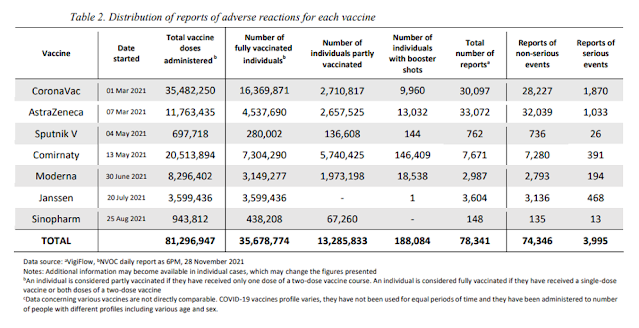
    The Philippines’ very own Food and Drug Administration (FDA) (https://www.fda.gov.ph/) published its Reports of Suspected Adverse Reaction to COVID-19 Vaccines, 01 March to 28 November 2021 (“FDA Reports”) and admitted to 74,346 non-serious events and 3,995 serious events.


    For the avoidance of doubt, “adverse reactions experienced after vaccination are considered serious when it resulted to any of the following criteria: (i) In-patient hospitalization/prolongation of existing hospitalization; (ii) Significant disability/incapacity; (iii) Life-threatening (e.g. anaphylaxis) and death; (iv) Birth defect or congenital malformations; and (v) Considered to be medically important event.” (p.7, FDA Reports)

It is comprehensive 20-page report that covers serious adverse events, to wit, 

    “Thrombosis-thrombocytopenia syndrome
        “Thrombosis-thrombocytopenia syndrome (TTS) are cases of unusual blood clots with low blood platelets. Following cases of TTS from other countries, COVID-19 Vaccine AstraZeneca and Janssen COVID-19 Vaccine revised their label to include warnings related to thrombosis with thrombocytopenia, a very rare side effect following vaccination.” (p. 8, FDA Reports)

    “Inflammation of the heart
        “Myocarditis is an inflammation of the heart muscle that may present as chest pain, palpitations, arrhythmias, and/or symptoms of heart failure while pericarditis is an inflammation of the pericardial sac that surrounds the heart and fixes it to the mediastinum. Cases of myocarditis and pericarditis on the use of mRNA vaccine, such as Comirnaty and COVID-19 Vaccine Moderna, have been reported in many countries including the US, UK, Germany, and Israel. Most of the cases are young male. 

    “Guillain-BarrĂ© syndrome
        “Guillain-BarrĂ© syndrome (GBS) is a rare, autoimmune disorder in which a person’s own immune system damages the nerves, causing muscle weakness and sometimes paralysis. An increased risk for GBS has been observed following vaccination with Janssen COVID-19 Vaccine in the US. .” (p. 10, FDA Reports)

    “Bell’s palsy 
        “Bell’s palsy is a form of temporary facial paralysis or weakness on one side of the face. It results from dysfunction of facial nerve which directs the muscles on one side of the face. Cases have been reported in a number of people in Hong Kong, Canada, and UK on the use of CoronaVac, Comirnaty, and COVID-19 Vaccine Moderna. (pp. 10-11, FDA Reports)

    “Vaccine deaths 
        “As of 28 November 2021, 1,538 fatal events were received. Reports of fatal events does not necessarily mean that the vaccine caused the events. Underlying conditions or pre-existing medical conditions causing fatal events are usually coincidental on the use of the vaccine. It is expected that reports of fatal events will rise as the vaccination program covers more people including those with undiagnosed illness, underlying comorbidities, and pre-existing medical conditions. The vaccinees reported to have fatal events were aged 13 years and above. The mean age of the fatal cases was 62.2 years. 66.32% (1,020) of the fatal cases were from age group 60 years and above, 23.15% (356) from age group of 40-59 years, 9.17% (141) from age group 18-39 years, 0.20% (3) from age group 12-17 years of age and 1.17% (18) were not identified to what age group they are classified.
 (pp. 11-12, FDA Reports)

    Our Philippine FDA is not alone in confirming this. “Established in 1990, the Vaccine Adverse Event Reporting System (VAERS) is a national early warning system to detect possible safety problems in U.S.-licensed vaccines. VAERS is co-managed by the Centers for Disease Control and Prevention (CDC) and the U.S. Food and Drug Administration (FDA). VAERS accepts and analyzes reports of adverse events (possible side effects) after a person has received a vaccination.” (https://openvaers.com/faq) As of 26 November 2021, it has reported on VAERS COVID Vaccine Adverse Event Reports ((https://openvaers.com/covid-data)), inter alia,

    • Deaths – 19,532
    • Hospitalizations – 99,943
    • Urgent Care – 102,602
    • Bell’s Palsy – 11,636
    • Miscarriages – 3,148
    • Hearth Attacks – 9,746
    • Myocarditis/Pericarditis – 15,424
    • Permanently Disabled – 31,652

    The same story is being told by data from other medical/health organizations, including the World Health Organization (WHO). 

    “VigiAccess was launched by the WHO in 2015 to provide public access to information in VigiBase, the WHO global database of reported potential side effects of medicinal products. Side effects – known technically as adverse drug reactions (ADRs) and adverse events following immunization (AEFIs) – are reported by national pharmacovigilance centres or national drug regulatory authorities that are members of the WHO Programme for International Drug Monitoring (PIDM). WHO PIDM was created in 1968 to ensure the safer and more effective use of medicinal products.” (http://www.vigiaccess.org/) A search for “Covid-19 vaccine” retrieves 2,706,410 records of adverse drug reactions (ADR).

II.
THE ETHICAL ARGUMENT 

Forcibly mandating COVID-19 vaccination, directly or through false choices, especially given the data on serious adverse events, including vaccine death, is unethical. It abrogates the fundamental medical principle of informed consent, which is both an ethical and legal obligation of medical practitioners and originates from the patient’s right to direct what happens to their body:

        “Informed consent is the process in which a health care provider educates a patient about the risks, benefits, and alternatives of a given procedure or intervention. The patient must be competent to make a voluntary decision about whether to undergo the procedure or intervention.  Informed consent is both an ethical and legal obligation of medical practitioners . . . and originates from the patient’s right to direct what happens to their body. Implicit in providing informed consent is an assessment of the patient’s understanding, rendering an actual recommendation, and documentation of the process. The Joint Commission requires documentation of all the elements of informed consent “in a form, progress notes or elsewhere in the record.” The following are the required elements for documentation of the informed consent discussion: (1) the nature of the procedure, (2) the risks and benefits and the procedure, (3) reasonable alternatives, (4) risks and benefits of alternatives, and (5) assessment of the patient's understanding of elements 1 through 4.

        “It is the obligation of the provider to make it clear that the patient is participating in the decision-making process and avoid making the patient feel forced to agree to with the provider. The provider must make a recommendation and provide their reasoning for said recommendation.” 

    The above is quoted from the National Center for the Biotechnology Information, National Library of Medicine, U.S. Health Department of Health and Human Services. (https://www.ncbi.nlm.nih.gov/books/NBK430827/)

    Moreover, although the COVID-19 vaccines are emergency use authorized, they are still experimental in use. Section 34.b.2 of the Universal Health Care Act (or R.A. No. 11223) provides that the proper determination of the safety and effectiveness of vaccines requires passing Phase IV Clinical Trial. However, to date, the COVID-19 vaccines authorized to be used have not yet even passed Phase III Clinical Trial. All the COVID-19 vaccines administered to date are merely administered under Emergency Use Authorization (EUA).  Department of Health (DOH) went on record to confirm this state of affairs. 

    To buttress this point, Food and Drug Administration (FDA) Circular No. 2020-036 defines an EUA as,

        “[A]n authorization issued for unregistered drugs and vaccines in a public health emergency. The EUA is not a Certificate of Product Registration (CPR) or a marketing authorization. The evaluation process of the product may be facilitated by reliance and recognition principles, but stricter conditions on the use and monitoring following authorization shall be imposed.”  

    Necessarily, the COVID-19 vaccines have not yet been approved for registration by the FDA. In the language of the FDA, “[s]tricter conditions on the use and monitoring” on the vaccines have yet to be implemented. Accordingly, the current regulatory status of authorized COVID-19 vaccines should moderate, temper and/or restrain any governmental measure, implementing an effectively mandatory vaccination policy.

    Without such temperance and restraint, Covid Call for Humanity’s impassioned call for forcible vaccination to be looked as “rape” cannot be more apt and the violation against The Nuremberg Code (1947) covering Permissible Medical Experiments cannot be more brazen, 

        “The voluntary consent of the human subject is absolutely essential. This means that the person involved should have legal capacity to give consent; should be so situated as to be able to exercise free power of choice, without the intervention of any element of force, fraud, deceit, duress, overreaching, or other ulterior form of constraint or coercion; and should have sufficient knowledge and comprehension of the elements of the subject matter involved as to enable him to make an understanding and enlightened decision. This latter element requires that before the acceptance of an affirmative decision by the experimental subject there should be made known to him the nature, duration, and purpose of the experiment; the method and means by which it is to be conducted; all inconveniences and hazards reasonably to be expected; and the effects upon his health or person which may possibly come from his participation in the experiment. 

        “The duty and responsibility for ascertaining the quality of the consent rests upon each individual who initiates, directs, or engages in the experiment. It is a personal duty and responsibility which may not be delegated to another with impunity.”

III.
THE LEGAL ARGUMENT 

    Forcible vaccination, especially given the medical and scientific data and the ethical issues, clearly violates the due process clause and the right to equal protection as guaranteed under Section 1, Article III of the Philippine Constitution:

            “Section 1. No person shall be deprived of life, liberty, or property without due process of law, nor shall any person be denied the equal protection of laws.”

    Mandatory vaccination would violate Section 12 of Rep. Act No. 11525, as amended or the “COVID-19 Vaccination Program Act of 2021.”  Section 12 of RA 11525 prohibits the imposition of vaccine cards as an additional mandatory requirement to employment.

        “SEC. 12. COVID-19 Vaccination Card. – Subject to the provisions of Republic Act No. 10173 or the “Data Privacy Act of 2012”, the DOH shall issue a vaccine card to all persons vaccinated. To fast track the process, the DOH may delegate the processing and issuance of vaccine cards to LGUs and private entities xxx.

x x x

            Provided, further, That the vaccine cards shall not be considered as an additional mandatory requirement for educational, employment and other similar government transaction purposes. 

    A vaccine card, which is proof of vaccination is only issued to a person once the same is vaccinated. If vaccine cards are prohibited as an additional mandatory requirement for employment, necessarily vaccination cannot be an additional mandatory requirement for employment.

    In addition to violating the constitution and being contrary to enacted legislation, forced vaccination schemes violates non-derogable rights recognized under the International Covenant on Civil and Political Rights (“ICCPR”) to which the Philippines is a Contracting State. The ICCPR provides for, among others, the right to life (Article 6), the right to freely consent to medical experimentation (Article 7), the right to thought, conscience and religion, (Article 18), as follows:

        “Article 6
            “1. Every human being has the inherent right to life. This right shall be protected by law. No one shall be arbitrarily deprived of his life.

        “Article 7
            “No one shall be subjected to torture or to cruel, inhuman or degrading treatment or punishment. In particular, no one shall be subjected without his free consent to medical or scientific experimentation.

        “Article 18

            “1. Everyone shall have the right to freedom of thought, conscience and religion. This right shall include freedom to have or to adopt a religion or belief of his choice, and freedom, either individually or in community with others and in public or private, to manifest his religion or belief in worship, observance, practice and teaching.

            “2. No one shall be subject to coercion which would impair his freedom to have or to adopt a religion or belief of his choice.”

IV.
THE ECONOMIC ARGUMENT 

    With the strict lockdown and business closures last year, the Philippines suffered its worst economic performance since World War II with a -9.6% GDP contraction in 2020. Explained another way, the country’s GDP size or level at constant 2018 prices was P18.26 Trillion in 2018, P19.38 Trillion in 2019, and shrank to P17.53 Trillion in 2020. Nearly P2 Trillion of domestic production of goods and services were lost last year.

    Government revenues declined significantly because of so many business closures and job losses in the private sector. But government spending has increased significantly partly due to huge vaccine procurement plus logistical requirements in storage, transportation and handling of those vaccines, resulting in huge borrowings. 

    Our public debt/GDP ratio of 37.0% in 2019 shot up to 51.7% in 2020, and projected to further rise to 59% this year. This is among the biggest jump in debt/GDP ratio in Asia and the world in just two years. 

    Government borrowings to finance the deficit (revenues lower than expenditures) was P2.5 Trillion in 2020 or P208 Billion a month. Borrowings from January to October 2021 already stood at P2.47 Trillion or P247 Billion a month. Again partly because of huge procurement in mass vaccination plus 3rd booster shots for certain groups of people. 

    Data from the Bureau of Treasury showed that outstanding government debt was P7.73 Trillion in 2019, jumped to P9.80 trillion in 2020, and already at P11.97 as of October 2021. Explained another way, the government debt/GDP ratio was 39.6% in 2019, rose to 54.6% in 2020, and already at 63.1% in October 2021. 

    Huge public debt will require huge and high taxes because government does not know or intend to cut spending and subsidies to its many government corporations and agencies. Philippine taxpayers are doomed in the next few years. 

    Vaccine discrimination, an implicit form of mandatory vaccination and another form of continued lockdown on people mobility has contributed to higher inflation this year as production of goods and services are restricted by such lockdown and vaccine discrimination. The Philippines’ average inflation rate from January-October 2021 is high at 4.5%. Our ASEAN neighbors Indonesia, Thailand, Vietnam and Singapore have only 1.0% to 1.8%, Malaysia at 2.3%. 

    Huge public spending in vaccine procurement plus logistical support has contributed to huge new borrowings and high public debt stock. It also contributed to high inflation today due to restricted production and mobility of goods and services caused by continued lockdown and vaccine discrimination. 

    Maraming Salamat Po! God bless the Filipino People!

CONCERNED DOCTORS AND CITIZENS 
OF THE PHILIPPINES
------------

BWorld 517, Economic forum and COVID summit (part 2)

* My column in BusinessWorld last November 29.
-----------------

This is a follow up to last week’s piece, https://www.bworldonline.com/economic-forum-and-covid-summit/, with special reference to the BusinessWorld Virtual Economic Forum 2021 last week, Nov. 24-25, with important speakers from the multilaterals, government, and corporate sectors. The keynote address was given by IMF Director for Asia and Pacific Department Changyong Rhee.

TWEETS ON ECONOMY AND ENERGY

Below are some of my tweets in the hashtag #BWVEF2021 on Nov. 24:

IMF official Changyong Rhee identified policies for countries to have #RecoveryRoadmapPH as growth crawls while inflation and govt. debt/GDP ratio increase. Absent in his proposals is to limit spending, rein in borrowings to control future high taxes.

PH GDP size or level at constant 2018 prices: P17.53 trillion in 2020, P19.38 trillion in 2019, P18.26 trillion in 2018. To reach 2019 level would be around 3rd Qtr 2022, but might be constrained by high inflation, higher taxes.

Jose Limcauco of BPI mentioned Ayala conglomerate focus on sustainability, clean energy. But core Ayala business is real estate — malls, office-resid’l condos, hotels, that require 24/7 electricity. Thermal power saves Ayala core business.

Jaime Azurin of MGen is not supportive of carbon tax unless government can show clear path to power supply stability. Good point because #RecoveryRoadmapPH is not possible if power prices are high, or there’s frequent blackout.

Joseph Sigelman of AG&P Group said that LNG is transition fuel towards RE. Please avoid that path, sir. Europe experiencing huge gas prices, bordering on blackouts bec wind power low, calm weather. They embrace coal again to avoid blackout.

BORROWINGS AND DEBT PAYMENT

The Bureau of the Treasury (BTr) released the cash operations report for January-October 2021 last week and the numbers remain bad. The averages per month: Revenues P249 billion, expenditures P369 billion, deficit P120 billion, borrowings P247 billion, debt amortization P68 billion, interest payment P37 billion (see Table 1).

Huge public debt will require huge and high taxes because government does not know how or intend to cut spending and subsidies, especially to its many government corporations. Philippine taxpayers are doomed in the next few years.

COVID SUMMIT 2021

The Concerned Doctors and Citizens of the Philippines (CDC Ph) held a very successful COVID Summit last week, on Nov. 25, at Vivere Hotel in Alabang, Muntinlupa City. About 120 people, mostly doctors, came in probably the biggest in-person conference in the Philippines this year. They either had vaccination cards or negative antigen test results to show before joining the full day conference.

The welcome speech was given by Dr. Homer Lim, President of CDC Ph. The opening remarks were given by broadcast personality Cory Quirino, and the keynote speech was given by Dr. Allan Landrito. The previous night, CDC Ph also held a fund-raising dinner called “Igniting Courage,” also at Vivere Hotel, and Doc Allan was given a Lifetime Achievement Award for the sacrifices he has made to save tens of thousands of Filipino lives with his actual and online consultations on early and home-based treatment. Vivere gave good discounts for the two-days event and PCCI-Muntinlupa donated many drinks for the dinner — thanks heaps.

Five live medical and technical lectures were delivered during the Summit: 1.) Early aggressive management of COVID in the hospital by US critical care specialist Dr. Pierre Kory (a virtual talk); 2.) Early treatment home-based protocols by US cardiologist, Dr. Peter McCullough (again, a virtual lecture); 3.) COVID and the microbiome by Morocco-US gastroenterologist, Dr. Sabine Hazan (a virtual lecture); 4.) Natural immunity vs. vaccine immunity by Filipino cardiologist Dr. Rafael Castillo; and, 5.) Early outpatient management of high-risk COVID patients by Fil-Am pulmonologist, Dr. Marivic Villa who flew in from Florida.

Then a panel discussion of experts followed, with four doctor speakers — Allan Landrito, Rafael Castillo, Marivic Villa, and Romeo Quijano. At the fund-raising dinner the previous night, Doc Marivic was given the Gabriela Silang Award for her bravery, passionate and irrepressible energy in educating doctors and patients here in the country.

VACCINATION RATES AND COVID CASES

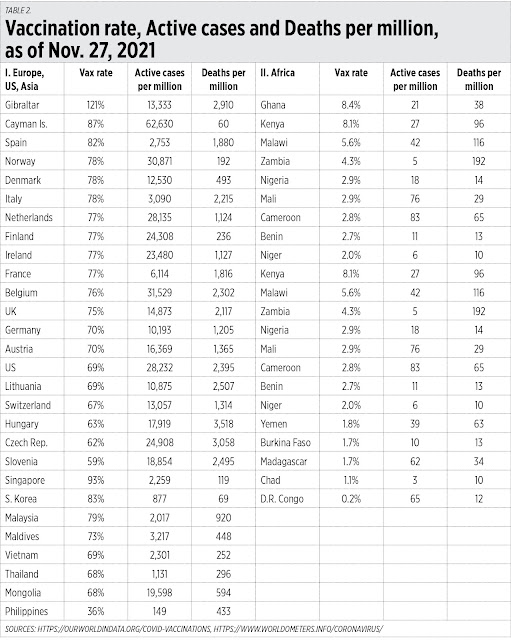
There is a disturbing trend worldwide where many countries with high vaccination rates — of 60% and above of their population — have very high active COVID cases. Europe and several Asian countries showed this trend.

In contrast, many African countries with very low vaccination rates, from 0.2% to 8% of total population, have very low COVID cases (see Table 2).

The Philippines’ rush to more vaccination, especially the on-going National Vaccination Days on Nov. 29 and Dec. 1 with these experimental vaccines is dangerous. Instead of rushing, we should pause as natural immunity has been explicitly ignored if not demonized in the altar of supposedly vaccine immunity.

PUSHBACK AGAINST IATF RESOLUTION 148B

In the CDC Ph Weekly Huddle last Saturday, Nov. 27, entitled “IATF Resolution: Hindi Solusyon!,” there were three lawyer speakers: Tanya Lat of COVID Call for Humanity (CCH) and Prof. of Legal Ethics at UP Law and Ateneo Law, Aaron Soguilon of the Juan Dakila Movement (JDM), and Lyman Manzanares of the CDC Ph Legal Volunteer Corps.

Atty. Tanya argued that IATF Resolution No. 148-B is immoral, illegal, and unconstitutional and she discussed the adverse implications of this order that has been copied and implemented by many local government units (LGUs) already.

Atty. Aaron discussed the hierarchy of laws — Constitution at the top, laws by Congress, Executive issuances, and LGU ordinances — and when to file cases of grave coercion regarding forced vaccination and other remedies on Adverse events following immunization (AEFI).

Atty. Lyman gave an update on a case he is filing by Dec. 1 — a still undisclosed court and complainant, —but he gave this short summary:

“We are filing a special civil action and praying for a TRO and preliminary injunction from the courts against IATF Resolution No. 148-B s. 2021. We have reviewed its legality and we have come to the conclusion that it is patently illegal and unconstitutional. The resolution is a measure beyond the scope of IATF’s functions. Sections A, B, C, D, F and G violate the 1987 Constitution and/or contrary to enacted legislation. In sum, we are now constrained to seek redress from the courts because the resolution openly violates all fundamental tenets of liberty, right to due process, and right to equal protection of the laws.”

Amen, Atty. Lyman and team. Hats off and my support to this important legal recourse, my support to the rule of law, not the rule by authoritarianism.
--------------

See also:
BWorld 514, Vaccination plateau and rising cases, Part 2, November 18, 2021
BWorld 515, Blackout economics, COP26 and Negros’ power prices, November 24, 2021.
BWorld 516, Economic forum and COVID summit, December 14, 2021.

Tuesday, December 14, 2021

A confused Nobel Peace Prize Committee

Nobel Peace Prize was traditionally given to leaders who contributed to preventing wars, or ending ongoing wars, and expand international cooperation, not conflagration. Very good award then.

For instance, the first Nobel Peace prize award was given in 1901 to two leaders, Henry Dunant of Switzerland "for his humanitarian efforts to help wounded soldiers and create international understanding" and Frederic Passy of France ""for his lifelong work for international peace conferences, diplomacy and arbitration."

I like these awardees and what they were working, 1950s after WW2.

Source: https://en.wikipedia.org/wiki/List_of_Nobel_Peace_Prize_laureates

Awardees in mid-70s. Like Sakharov on disarmament, Sadat and Begin on Israel-Egypt peace accord.

The late 80s awardees, fighting nuke war, peace in Central America, peaceful fight for Tibet liberation, and Gorbi, he tore down the Berlin Wall in 1989, reunification of East and West Germany, liberation of several republics from Russia. Without the use of guns and tanks.

Currently there are several potential wars. In the Middle East, Iran vs Israel. In Europe,  Russia vs Ukraine and allies. In Asia, China vs Taiwan, North vs South Korea, India vs China border. In Africa and South America, there should be huge conflict between/among some neighbor countries.

Nobel Peace nominees and awardees should be leaders, diplomats, heads of state, who contribute to preventing wars in these and other places. But in the past decade or two, awardees are based on media optics and not on contribution to preventing wars.

Take the 2007 award to Al Gore and UN IPCC headed by Mr. Rajendra Pachauri. They prevented a war, where? War to fight less rain and more rain, less cold and more cold, less snakes and more snakes? Sus ginoo. Nobel Peace award can be funny sometimes.

Then Obama in 2009. He was inaugurated January, by September or October or just 8-9 months he was announced as Peace awardee. But consider these:  Bush Jr. invaded Afghanistan in 2001, then Iraq in 2003. Obama continued and sustained the invasion with zero plan or pronouncement of US troops leaving both countries. And he got Nobel peace award. Hahaha, ok.


Another weird Nobel peace awardee was 17 yo Malala Yousafzai of Pakistan. Taliban tried to kill her for blogging against them, she survived and narrated her experience and work in international media. I think the narrative in Malala case is that US continued occupation of Afghanistan, use of military bases in Pakistan to hit Taliban, are nice and justified. So justifying and sugar-coating endless wars instead of  preventing invasion and foreign wars.

The 2021 Peace awardees are famous journalists Maria Reesa of the Philippines (founder of Rappler) and Dmitry Muratov of Russia (founder of Novaya Gazeta). Both are good journalists, have decades of experience and achievements in their profession, no question about that. But why the Nobel Committee just create a Nobel Prize for Journalism?

There are other institutions and leaders who really focus on settlement of disputes, prevent wars. I'm thinking of the UN Permanent Court of Arbitration (PCA) that ruled in July 2016 that China ownership claims of the South China Sea (aka in the PH as West Philippine Sea) 9 dash lines is not valid.

That ruling was used by the US, UK, AU, JP, etc to continue free navigation and reduced CN Navy belligerence in the area because international law is not on their side. But PCA is not cute so perhaps no one nominated the PCA or similar institutions for Nobel peace.

Last October, this is among the widely-circulated quotes in social media.

I find this funny. With facts, people or governments, multilaterals, etc. can "conquer coronavirus, conquer climate change"? Wow.

"Conquer coronavirus"... the Spanish flu 1918-19 was a coronavirus, until SARS 1 in 2002-2004, H1N1 2009-2010, MERS 2013-2014, and this SARS2 in 2019-2021, All coronavirus. They just mutate and evolve naturally, 100%. People can conquer it? How, vax vax vax?

"Conquer climate change"... there was CC since 4.6 B years ago, warming cooling warming cooling cycle. People and governments can now"conquer" it? How? By fighting less rain and more rain, less flood and more flood, less storms and more storms, less cats and more cats? 

I think Nobel Peace Committee is confused and pursuing certain narratives and political agenda. They lose the real purpose and spirit of the award -- to have peace in the world, in each region or continent, to have no wars. Nobel in Physics, Chemistry, Economics, etc, fine somehow. But Nobel Peace,... ouch.

BWorld 516, Economic forum and COVID summit

* My article in BusinessWorld, November 22, 2021.
-----------------

The year 2021 will end in six weeks and there are many business conferences and economic forums that pin their hopes for 2022. Among those events that I attended and plan to attend are the following:

1.) The Philippine Business Conference and Expo (PBC&E), Nov. 17-18. This is the Philippine Chamber of Commerce and Industry’s (PCCI) annual big event and this year’s theme was “Innovation PH: Economic Recovery for All.” The Chairman of the 47th PBC&E was Jeffrey Ng who is also the President of our UP School of Economics Alumni Association (UPSEAA).

2.) The Stratbase-ADRi Pilipinas Conference, Nov. 22-26. The theme of this five half-days conference is “Sustaining Economic Recovery Post-Pandemic Towards 2022 and Beyond.” Sessions on business and foreign policies including the continuing territorial theft by our huge bully neighbor across the sea.

3.) The BusinessWorld Virtual Economic Forum (BWVEF), Nov. 24-25. The theme is “Recovery Roadmap PH: 2022 and Beyond.” Opening sessions —about global economic growth prospects, pandemic shifts, and business resilience and sustainability — already set the recovery roadmap. See more details at https://www.bworldonline.com/bwvef2021/.

4.) The CDC Ph COVID Summit on Nov. 25, Vivere Hotel, Alabang. The Concerned Doctors and Citizens of the Philippines’ (CDC Ph) big event featuring speakers who are all doctors from the Philippines and the US who are known for successful early treatment, outpatient and home-based treatment of COVID, up to critical care inpatient cases.

ECONOMIC PROSPECTS OF THE PHILIPPINES

The country’s economic outlook is not good. With deep GDP (gross domestic product) contraction of -9.6% in 2020, we should grow at least 10.5% this year to be at 2019’s GDP size or level. This is not possible as GDP growth in the first three quarters of the year was only 5.1% so we will reach the 2019 level around the second or third quarter of 2022.

Consumer prices are unkind for the Philippines this year. The inflation rate from January-October is high at 4.5%, while our ASEAN neighbors Indonesia, Thailand, Vietnam, and Singapore had inflation rates of only 1% to 1.8%, while Malaysia’s was at 2.3%.

And when it comes to public debt, the Philippines seems to have the biggest jump in government debt/GDP ratio in Asia — from only 37% in 2019, this is projected to rise to 59% end-2021 (see table).

The Duterte administration is doing something very wasteful that succeeds only in significantly raising consumer prices and public debt but not domestic production of goods and services.

ECONOMIC PROSPECTS GLOBAL

The global outlook is not good either. High inflation has creeped into the world’s major economies like the US, the UK, Germany, France, and South Korea. Plus, they have high or rising debt/GDP levels, which will require higher taxes to pay those debts and business taxes are often passed on to the consumers.

Then there are global supply constraints due to resignations or firing of workers due to mandatory vaccinations in many countries. And steep energy price hikes as northern hemisphere countries are facing early cold blasts and a severe winter and they have downscaled or retired many of their reliable coal and nuke power plants.

COVID SUMMIT SPEAKERS

The CDC Ph event speakers are all doctors known nationally and internationally: Rafael Castillo (Philippine cardiologist, member of the Professional Regulation Commission’s Board of Medicine), Allan Landrito (Philippine community health specialist), Marivic Villa (Fil-Am pulmonologist based in Florida), Sabine-Hazan Steinberg (Morocco-US gastroenterologist, clinical trials specialist), Peter McCullough (US cardiologist), Pierre Kory (US critical care specialist), Ryan Cole (US pathologist), and Homer Lim (President of CDC Ph and an integrative oncologist).

It is a hybrid conference with in person speakers and audience, plus online speakers from the US and an online audience. Tickets are P2,000 for in-person and P500 online local attendees, $20 for online foreign attendees. Vaccination cards or a negative antigen test (available at the entrance) will be required to attend the in-person conference, following the IATF guidelines. More details can be found at https://www.facebook.com/events/423107965866240.

There will also be a fund-raising dinner on Nov. 24 also at Vivere Hotel. Hotel Manager and President of PCCI-Muntinlupa, Elvie Sanchez-Quiazon, has been very generous in supporting the two events.

SLIPPERY SLOPE IN VACCINATION PROGRAM

First, only healthcare workers, the elderly and those with comorbidities must get the COVID-19 vaccine, then this became all 18+ years old must get vaccinated.

Second, only two doses can “protect,” now a third dose will be needed after three or six months.

Soon this booster shot might become mandatory, every six months or yearly.

Third, there is no explicit mandatory vaccination yet but there is mandatory presentation of a negative PCR regularly at the individual’s cost, which will force and coerce the un-vaxxed to get the vaccination.

Fourth, children and those below 18 were initially spared, now they need to be vaxxed. There is also mandatory vaccination for faculty and students in many state universities and colleges before in-person classes resume.

COVID SURGE IN EUROPE

In particular, these countries have steep increases and they have vaccination rates of 61% to 77% of their population as of Nov. 20, meaning up to nearly 100% of adult population:

* Germany, 59-64,000 on Nov. 17-20, previous peaks were 30-32,000 in mid-April.

* The Netherlands, 20-23,000 on Nov. 17-20, previous peaks were 12-13,000 in mid-December 2020.

* Belgium, 18-21,000 on Nov. 18-20, previous peaks were 21-24,000 in Oct. 29-30, 2020.

* Austria, 14-19,000 in Nov. 17-20, previous peak was 9,000 in mid-November 2020.

* The Czech Republic, 14-23,000 in Nov. 17-20, previous peak was 17,000 in early January.

* Hungary, 5-21,000 in Nov. 15-20, previous peak was 11,000 in late March.

* Greece, 6-8,000 in Nov. 9-20, previous peak 4,600 in early April.

* The UK has sustained high daily cases of 34-51,000 from October to November.


Bienvenido S. Oplas, Jr. is the president of Minimal Government Thinkers.
minimalgovernment@gmail.com
---------------

See also:
BWorld 513, Climate and coal, PSALM, NEA and NGCP, November 14, 2021
BWorld 514, Vaccination plateau and rising cases, Part 2, November 18, 2021
BWorld 515, Blackout economics, COP26 and Negros’ power prices, November 24, 2021.

Covid 61, CCH and CDC Ph full page ads re mandatory vaccination

The Covid Call to Humanity (CCH, https://covidcalltohumanity.org/) issued a full-page ad at the Philippine Daily Inquirer (PDI) last December 1. It struck some nerves in some government agencies including the Supreme Court. CCH is headed by Nick Perlas and head of its legal team is Prof. Tanya Lat, Prof. of legal ethics in UP Law and Ateneo Law.
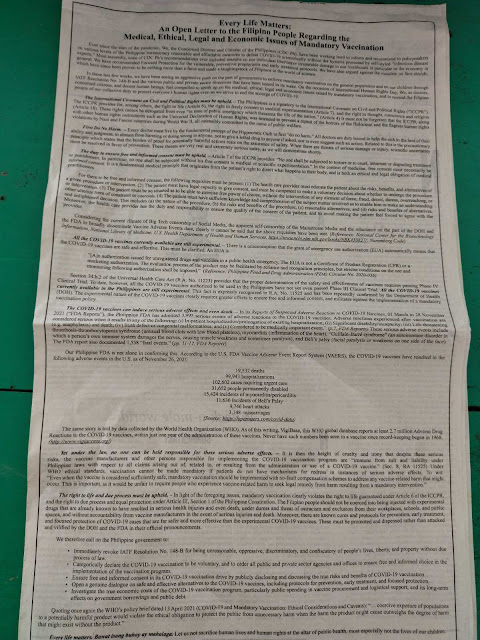
Afternoon of Dec. 1 there was also a Congress Committee on Labor public hearing re the IATF Resolution 148-B. None of the IATF officials came while there were many speakers who questioned its resolution. The Committee later ruled that the IATF should postpone implementation of its resolution.

The CCH ad was followed by another full page ad also at PDI by the Concerned Doctors and Citizens of the Philippines (CDC Ph, https://cdcph.org/) last Friday December 10, International Human Rights Day.

Enough of unconstitutional rules and resolutions, authoritarian command and order by the state.
----------------

See also:
Covid 58,CDC Ph Huddle about DOH experts, Octa, vaccine, October 17, 2021
Covid 59, Natural immunity vs vax immunity, November 04, 2021
Covid 60, The CDC Ph Covid Summit, Nov. 25, Vivere Hotel, Alabang, November 14, 2021.