Thursday, October 20, 2022

Deindustrialization 6, UK, Sept. 2022 reports

More reports, past UK government ecological central planning and energy rationing leads to current energy and economic predicament. Enjoy.
--------------- 

1. Earnings to collapse to 2003 levels as inflation batters living standards
Households facing worst hit for a century, warns Resolution Foundation
Tom Rees and Howard Mustoe  1 September 2022
https://www.telegraph.co.uk/business/2022/09/01/earnings-collapse-2003-levels-inflation-batters-living-standards/

2. Government’s green energy policy is a “national disaster”
1st September 2022
https://www.netzerowatch.com/governments-green-energy-policy-is-a-national-disaster/

3. Cost of living: Workers could be asked to layer up as bills soar
1 September 2022
https://www.bbc.com/news/uk-england-birmingham-62737686

Tony Constance runs Stockfield Metal Spinners in Birmingham and said his latest energy quote was £734K a year, up from his usual annual rate of £135K.

4. World’s Second-Largest Steelmaker Closes European Plant
Tsvetana Paraskova - Sep 02, 2022
https://oilprice.com/Latest-Energy-News/World-News/Worlds-Second-Largest-Steelmaker-Closes-European-Plant.html

5. Turn Off the Lights if the Wind Stops Blowing – Welcome to Net Zero Britain!
TOBY YOUNG 2 SEPTEMBER 2022
https://dailysceptic.org/2022/09/02/turn-off-the-lights-if-the-wind-stops-blowing-welcome-to-net-zero-britain/

6. Know why your fuel bills are soaring? 20 years of 'renewables' lies, says JOHN CONSTABLE
THE UK's energy crisis has been in the making for more than 20 years and is the result of the incompetent policies of Mr Blair, Mr Brown, Mr Cameron, Mrs May, and Mr Johnson, and all their hapless energy minsters and advisors too numerous to name.
DR JOHN CONSTABLE Sep 2, 2022
https://www.express.co.uk/comment/expresscomment/1663771/energy-bill-energy-cap-cost-of-electricity-gas-are-renewables-more-expensive-Putin-gas

7. Six in 10 British Factories at Risk of Going Under as Bills Soar
Julian Harris September 3, 2022
https://www.bloomberg.com/news/articles/2022-09-02/six-in-10-british-factories-at-risk-of-going-under-as-bills-soar#xj4y7vzkg

8. Energy crisis: Can Britain weather the winter without blackouts?
Ben Spencer and Laith Al-Khalaf  September 03 2022
https://www.thetimes.co.uk/article/energy-crisis-can-britain-weather-the-winter-without-blackouts-nwhpww6k5

9. Energy crisis may force manufacturers to cut production or even close – study
Make UK said its research showed firms were warning that their energy costs have already “spiralled out of control”.
Alan Jones Sept 3, 2022
https://www.independent.co.uk/news/uk/government-vat-italian-alan-jones-b2158821.html

10. Police fear hard winter of surging crime and civil unrest
Chiefs draw up emergency plans to maintain law and order as economic squeeze tightens
Harry Yorke, Dipesh Gadher and Tim Shipman September 04 2022, 12.01am 
https://www.thetimes.co.uk/article/07b8a936-2bb9-11ed-b39f-ae396665d39a

11. UK pubs must hike pint prices to £20 each or face closure this winter, expert warns
Running costs for pubs are set to increase by 500-600%, putting a huge number at risk of closure, says Tom Stainer, chief executive of real ale campaign group CAMRA
Harry ThompsonTrends WriterSara Odeen-Isbister. 4 Sep 2022
https://www.mirror.co.uk/money/uk-pubs-must-hike-pint-27903355

12. Energy crisis impacts Christmas celebrations as councils cancel light switch-ons
SKYROCKETING ENERGY BILLS have already impacted Christmas celebrations up and down the country as councils cancel light switch-on events.
EMMA CRABTREE Sep 4, 2022
https://www.express.co.uk/news/uk/1664387/energy-crisis-Christmas-light-switch-on-ont

13. Six in 10 UK manufacturers at risk of closure, lobby group warns as energy prices soar
The MakeUK lobby group proposed a 100-day plan for the incoming prime minister
THOMAS BROOKE  September 05, 2022
https://rmx.news/united-kingdom/six-in-10-uk-manufacturers-at-risk-of-closure-lobby-group-warns-as-energy-prices-soar/

14. British energy firms brace for ANOTHER big spike in wholesale gas prices of up to 50 PER CENT today after Russians refuse to reopen the Nord Stream 1 pipeline to Europe

* Gas prices could surge by as much as 50 per cent today after key pipeline closes
* The Nord Stream 1 pipeline is the biggest gas link from Russia to Europe
* The UK receives only 4 per cent of its gas from Nord Stream 1
* But other countries such as Germany are much more reliant on the pipeline
DAILY MAIL REPORTER 5 September 2022
https://www.dailymail.co.uk/news/article-11179745/Power-firms-fear-new-spike-European-nations-announce-raft-measures.html

15. GB News viewer calls on next PM to scrap 'mad dash' to net zero and frack for Britain's 'energy independence'
Linda in Cheshire told Breakfast with Isabel and Stephen that Boris Johnson's successor must tackle the cost-of-living crisis "first thing"
Max Parry 05 September 2022 
https://www.gbnews.uk/news/gb-news-viewer-calls-on-next-pm-to-scrap-mad-dash-to-net-zero-and-frack-for-britains-energy-independence/361640

16. UK faces recession as energy prices hammer factories and hospitality
UK's economic contraction led by the manufacturing industry which is heavily exposed to soaring bills
Tim Wallace. 5 September 2022
https://www.telegraph.co.uk/business/2022/09/05/uk-faces-recession-energy-prices-hammer-factories-hospitality/

17. Liz Truss to the British Rescue
Britain’s new leader faces an energy crisis and failing economy.
By The Editorial Board Sept. 5, 2022
https://www.wsj.com/articles/liz-truss-to-the-british-rescue-u-k-prime-minister-boris-johnson-election-economy-conservative-party-11662388952

18. ‘Apocalyptic’: 500 per cent energy price hikes plunge schools into winter crisis
Skyrocketing prices force school leaders into 'unpalatable' choices to keep classrooms open this winter
Tom Belger. 6 Sep 2022
https://schoolsweek.co.uk/school-energy-bills-government-help-apocalyptic-rises/

19. The great wind farm rip off: greedy energy giants sell us wind electricity at wholesale gas price
The UK is facing an unprecedented energy crisis with a £100billion bailout set to blow the country's bank balance – and all the while renewables firms are finding huge profits literally blowing in the wind
Ben Borland  7 SEP 2022
https://www.scottishdailyexpress.co.uk/news/uk-news/great-wind-farm-rip-off-27889339

20. Britain Goes the Wrong Way on Energy Bailout
Truss price freeze ignores critical questions on conservation, funding
Javier Blas. September 9, 2022
https://www.bloomberg.com/opinion/articles/2022-09-09/britain-goes-the-wrong-way-on-energy-bailout

21. Thatcher would be turning in her grave: how the Tories embraced state intervention
After bank bailouts and furlough, we now expect the government to wade in when times get tough. But we may be storing up trouble for later down the line
11 September 2022
https://www.thetimes.co.uk/article/thatcher-would-be-turning-in-her-grave-how-the-tories-embraced-state-intervention-hh03pb09f

22. The U.K. Can Slash Energy Prices – But Only If We Stop Sending All Our Electricity to Europe
ANDREW MONTFORD AND GORDON HUGHES 13 SEPTEMBER 2022
https://dailysceptic.org/2022/09/13/the-u-k-can-slash-energy-prices-but-only-if-we-stop-sending-all-our-electricity-to-europe/

23. UK Extends Life of Third Coal Plant to Secure Winter Electricity
Todd Gillespie. September 14, 2022
https://www.bloomberg.com/news/articles/2022-09-13/uniper-extends-life-of-uk-coal-unit-to-secure-winter-electricity#xj4y7vzkg

24. Truss energy bills freeze hands suppliers up to £1.6bn in taxpayer-funded profit
Companies' margin of 1.9pc preserved under bailout plan
Rachel Millard 14 September 2022
https://www.telegraph.co.uk/business/2022/09/14/energy-bill-freeze-hand-suppliers-16bn-profit/

25. HALF of Britons are finding it 'difficult' to pay their energy bills as Kwasi Kwarteng thrashes out tax-cutting 'Emergency Budget' for next Friday
ONS research finds 48 per cent are finding it difficult to pay their energy bills
Government has already acted to prevent energy bills soaring again in October
Chancellor Kwasi Kwarteng is drawing up an 'Emergency Budget' for next Friday
JAMES TAPSFIELD, 16 September 2022
https://www.dailymail.co.uk/news/article-11219231/HALF-Britons-finding-difficult-pay-energy-bills.html

26. Truss dismantles the eco ‘axis of evil’
Steerpike 16 September 2022
https://www.spectator.co.uk/article/truss-dismantles-the-axis-of-evil-

27. Patagonia Billionaire Who Gave Up Company Skirts $700 Million Tax Hit
Devon Pendleton and Ben Steverman. September 16, 2022
https://www.bloomberg.com/news/articles/2022-09-15/patagonia-billionaire-who-gave-up-company-skirts-700-million-tax-hit

28. We just paid Belgium 50 times the going rate to keep London's lights on – how did it come to this?
We need a public enquiry to get to the bottom of Britain's energy humiliation
TONY LODGE  17 September 2022
https://www.telegraph.co.uk/business/2022/09/17/just-paid-belgium-50-times-going-rate-keep-londons-lights/

29. Jacob Rees-Mogg claims fracking opponents are funded by the Kremlin
Business Secretary accused those who oppose fracking of 'hysteria' and 'ludditery' and said drilling is in the 'national interest'
Rachel Millard and Tony Diver,  23 September 2022 
https://www.telegraph.co.uk/business/2022/09/22/jacob-rees-mogg-lifts-fracking-ban-bet-shale-gas-revolution/

30. Blindly pursuing Net Zero threatens to hasten the decline of the West and therefore poses an existential threat to the free world, says Mark Dolan
Sir Patrick Vallance, a man who in my view all but bankrupted this country with the disastrous and failed experiment of lockdown, is at it again
Mark Dolan  22 September 2022
https://www.gbnews.uk/news/blindly-pursuing-net-zero-threatens-to-hasten-the-decline-of-the-west-and-therefore-poses-an-existential-threat-to-the-free-world-says-mark-dolan/369952

31. UK motor groups call for more energy help as rising costs hit investment 
29 September 2022
https://www.ft.com/content/1f364365-2136-44d4-adbc-70f1ca9f946b

32. Shock therapy: turmoil engulfs Britishvolt’s £3.8bn battery factory
Future of company hailed by Boris Johnson as key to green industrial revolution hangs in the balance, as the first in our Electric Dreams series on Britain’s fledgling battery industry reveals
Jasper Jolly  29 September 2022
https://www.theguardian.com/business/2022/sep/29/britishvolt-38bn-battery-factory-green-industry

33. UK weighs plan to drive down energy demand as winter looms
Ministers are concerned about browbeating Brits with energy demands so soon after tough COVID measures.
CHARLIE COOPER. SEPTEMBER 29, 2022 
https://www.politico.eu/article/uk-mulls-energy-demand-reduction-plan/

34. The Headlong Rush to ‘Net Zero’ Makes a New Great Depression a Racing Certainty
ANDREW MONTFORD 29 SEPTEMBER 2022
https://dailysceptic.org/2022/09/29/the-headlong-rush-to-net-zero-makes-a-new-great-depression-a-racing-certainty/

35. Energy prices: Households turning to coal ahead of 'hard winter'
29 September 2022
https://www.bbc.com/news/uk-england-somerset-63072561

36. Cold weather puts Scottish grouse breed in danger of extinction
‘Worrying’ decline causes capercaillie numbers to drop below 1,000 for the first time, with risk the bird could die out in years ahead
Olivia Rudgard, 30 September 2022
https://www.telegraph.co.uk/environment/2022/09/30/cold-weather-puts-scottish-grouse-breed-danger-extinction/
---------------

See also:
Deindustrialization 3, United Kingdom, August 2022 reports, September 6, 2022
Deindustrialization 4, Other Europe, September 11, 2022
Deindustrialization 5, Germany, August-Sept. 2022 reports, October 03, 2022.

Thursday, October 06, 2022

BWorld 563, Economic freedom, power reserves, and declining births

* My article in BusinessWorld last Monday, October 3.
-----------------

The Asia Liberty Forum 2022 was successfully held last week Sept. 29-30 at Shangri-La The Fort, sponsored by the Atlas Network and Foundation for Economic Freedom (FEF). Among my old friends from the US who came were Simon Lee, formerly with the Lion Rock Institute-HK, Philip Thompson of the Tholos Foundation, Joe Lehman of the Mackinac Center, Kris Mauren of the Acton Institute, Fred McMahon of the Fraser Institute in Canada, and Basanta Adhikari of Bikalpa in Nepal.

The day before, Sept. 28, there was an Economic Freedom Audit of the Philippines, presenting the results from the Economic Freedom of the World (EFW) Index which is done annually by the Fraser Institute. EFW 2022 showed the Philippines’ global rank was No. 66 out of 186 countries and territories covered. It is higher than Thailand, India, Laos, Vietnam, and China.

But the impact of the COVID-19 lockdown is not included in the report. The two years of lockdown were a triumph of Big Government and saw the retreat of economic freedom. Many free market leaders themselves did not oppose the mandatory shutdown of many businesses and shops, mandatory stay-home orders, mandatory distancing, and mandatory vaccination. Mandatory means choice and individual freedom are zero or near-zero.

ECONOMIC FREEDOM DETERIORATION INDEX

I will attempt to measure and quantify the impact of mandatory shutdowns of many businesses (lockdown) and mandatory vaccination by introducing the concept of an Economic Freedom Deterioration Index (EFDI). A more direct term would be Economic Freedom Bastardized by Lockdown Index but EFDI is the more pragmatic term.

This is a rough measurement with limited components and countries covered. For this exercise, I use only four components: percent changes in mobility from the baseline period January to Feb. 6, 2020 of Google COVID-19 Community Mobility Reports’ 1.) Transit Stations (TS), and, 2.) Retail and Recreation (RR); 3.) GDP growth percentage points increase from 2019-2020, and, 4.) Gross debt/GDP ratio percentage points increase from 2019-2021 (Table 1).

I assigned scores of 1 to 5. The higher the score, the bigger the deterioration in economic freedom. For the four components, here are their respective scores:

TS: below 10 is 1; 11-20, 2; 21-30, 3; 31-40, 4; larger than 40 is 5.

RR: below 10 is 1; 11-20, 2; 21-30, 3; 31-40, 4; larger than 40 is 5.

GDP points increase: below 3 is 1; 3.1-6, 2; 6.1-9, 3; 9.1-12, 4; larger than 12 is 5.

Debt/GDP points increase: below 4 is 1; 4.1-8, 2; 8.1-12, 3; 12.1-16, 4; larger than 16 is 5.

Then the respective weights: I assigned TS with 15%, RR also 15%, GDP points decline is 40%, and Debt/GDP points increase 30%. The score multiplied by respective weights gives the respective index, shown in Table 2. The Philippines under the previous Duterte administration has the worst EFDI among eight economies covered.

Other researchers can expand on this and introduce more components and factors, assign different scores and weights, and cover more countries. I hope to do that someday.

POWER RESERVES AND TRANSMISSION ISSUES

Consider these columns and reports in BusinessWorld:

1. “The way forward for the power industry” by Romeo Bernardo (Jan. 26, 2014): “… ensuring that the systems operator National Grid Corporation of the Philippines (NGCP) fully contracts what the system requires. The establishment of a reserve market has been long delayed.”

2. “Red Alert and EPIRA” also by Romeo Bernardo (June 13, 2021): “… the transmission line operator has not fully contracted firm power reserves. Where the system operator’s role is to procure reserves, much like procuring a genset for your home, to call on in a time of power crisis… NGCP over the past 10 years has been non-compliant with the rules… in the form of a lack of transmission lines, a lack of redundancies in our network, a lack of power reserves, and not meeting the IPO requirements under the law.”

3. “NGCP power reserve compliance inadequate, key legislator claims” by Angelica Yang (June 9, 2021). She quoted Senator Sherwin Gatchalian: “The NGCP (is) not contracting the right amount of reserves. Clearly, they are violating that policy… ERC (Energy Regulatory Commission) should now implement the policy. The foundation has been laid down by the Supreme Court that DoE (Department of Energy) produces the policy and ERC enforces the policy. In this case, since NGCP is not contracting, ERC should punish them.”

4. “DoE’s Cusi urges NGCP to meet reserve contract requirement instead of seeking Palace intervention” by Marielle Lucenio (Feb. 13, 2022): “The DoE requires the grid to have reserve power, known as ancillary services (AS) on tap committed under firm contracts. The NGCP’s position is that full compliance with the firm-contract requirement will ultimately raise power prices because of the expense involved in committing reserves. It said it instead proposes to tap a network of AS providers under firm and non-firm contracts.”

5. “ERC to NGCP: Explain failure to comply with reserve power rules” by Ashley Erika Jose (Sept. 19, 2022): “The ERC cited three sections of the DoE’s department circular which it said NGCP failed to comply. Section 4.2 requires NGCP to seek approval from the DoE on its ancillary service agreement procurement plan; Sections 7.4 and 7.5 mandate NGCP to seek the approval of the DoE on the terms of reference of the ancillary service competitive selection process (AS CSP); and Sections 7.1 and 7.11 require NGCP to complete the AS CSP within six months from the effectivity of the circular.”

As shown by the continuing yellow and red alerts in the grid until this year, it is obvious that the NGCP — the only remaining private monopoly nationwide — is abusing its power and showing continued insensitivity to the power needs of Philippine businesses and households. The new ERC leadership should go after them as the previous ERC leadership was too lazy to do its job.

DECLINING BIRTHS, CAUSES OF DEATH

The Philippine Statistics Authority (PSA) released the updates on monthly vital statistics and causes of deaths of the country last Saturday. I count only data for January to April because the data from May-June are still incomplete.

Notable trends are: 1.) continued decline in births, 2.) some stabilization in deaths in 2022, 3.) continued erosion in net increase in population, 4.) big decrease in deaths from pneumonia, 5.) likely due to labeling of pneumonia deaths as COVID-19 deaths.

Among the possible explanations for the continued decline in births would be: 1.) the reduced number of marriages in 2020-2021, 2.) fewer babies planned by couples due to economic hardships, and, 3.) possible adverse effects on fertility by COVID vaccines.

Declining births is a bad and dangerous trend. This will lead to less workers and entrepreneurs, and less producers and consumers someday. Government must study in depth its causes and quickly remedy the situation.
------------------

See also:
BWorld 560, PEB Singapore, the PPP Center, transport liberalization, and IPRI 2022, September 20, 2022
BWorld 561, Power demonopolization, privatization, and smuggling, September 27, 2022
BWorld 562, PEB in NYC, UPSE homecoming, and transport liberalization, October 04, 2022.

Tax Cut 36, WTA's Asian Taxpayers regional forum 2022

This is my presentation last week. Thanks to WTA President John O'Connel (TaxPayers Alliance, TPA UK) and Cristina Berechet, WTA Sec. Gen.


----------------

Macroecon 20, Strong US dollar and how to deal with it

* This is my guest article in Philippine Star last Sept. 22.
https://www.philstar.com/business/2022/09/22/2211288/strong-us-dollar-and-how-deal-it

Strong US dollar and how to deal with it
Bienvenido Oplas Jr.  September 22, 2022 | 12:00am

MANILA, Philippines — The Philippine peso has depreciated to 57.64:$1 last Sept. 20, an all-time low. The last time we have a similar level of depreciation was in October 2004, then July to August 2005 when the peso reached 56 to the dollar.

The difference in today’s depreciation with those 17 to18 years ago is that current depreciation is rather fast, and so many other currencies around the world have similar experience of fast depreciation, see this table showing year-on-year (yoy) percent change and all-time high (ATH) exchange rates.

Asian currencies exchange rate to US$, as of Sept. 20, 2022

Source: Trading Economics; years high are author assessments

The first question is why is this happening? What is driving the fast appreciation of the dollar?

The quick answer is the series of interest rate hikes by the US Federal Reserve or its central bank, from 0.5 percent until about February this year to 2.5 percent last August, and projected to further rise to 3.25 percent soon.

Central banks and monetary authorities raise interest rates to combat high inflation, encourage people and businesses to save more rather than spend and this will hopefully cool down prices.

US inflation rate was only 1.4 percent in January 2021 but rose big time after 12 months of the Biden administration to 7.5 percent in January 2022. It further increased to 9.1 percent last June, a 41-year high, and cooled down to 8.3 percent in August, still a 40-year high.

In addition, the US government is borrowing and spending like a drunken sailor so it offers high interest rates to attract trillions of dollars of money. The US 10-year bonds was only 1.10 percent in January 2021 when Trump left the White House. After 12 months of the Biden administration, it increased to 1.81 percent in January 2022, and increased further to 3.56 percent as of Sept. 20.

So with high interest rates in the US, many dollar investments in the Philippines and other countries are pulled out and dollars fly back to the US to take advantage of higher returns. And that is how many countries’ currencies depreciated fast.

The next questions are: (1) Up to what level do we expect the Philippine peso to further depreciate, say by end-October at 59, or 60? (2) If yes, should we be too alarmed, and we should make more noise to pressure the Bangko Sentral to further raise its interest rates (already increased from 2.0 percent around February to 3.75 percent last August)  to 4.25 percent or higher?

I am not a finance or monetary economics guy but from the numbers that I see, my answer to the two questions are: Yes to #1, and No to #2. Consider the following:

One, US public debt has reached $30.9 trillion in August 2022, an all time high (ATH). It was about $28.4 trillion in August 2021. And US external debt is $23.9 trillion in the first quarter (Q1) 2022, also ATH.

US government expenditure as a percentage of GDP has reached 45.3 percent in 2020 (ATH), slightly declined to 41.4 percent in 2021. With high expenditures while revenues were falling, the US budget deficit as  a percentage of GDP has reached -14.9 percent in 2020 and -16.7 percent in 2021, ATH.

Two, a substantial amount of the heavy borrowings by the Biden administration are for unproductive spending like sending more money, arms and bombs to support Ukraine and Israel, Syria and other countries where the US continues its “endless wars” policy. Also to expand subsidies and freebies to domestic welfare dependents to win more votes for the Democrats in the coming November mid-term elections.

So high US borrowings, high Treasury bond rates, and high Fed rates, will continue to pressure currencies abroad like the Philippine peso to further depreciate. And a 60:$1 may not be far behind.

But this should not cause more alarm here because (1) we should prioritize growth and higher interest rates here will temper growth, and (2) dollar strengthening is temporary, something like built on soft sand due to heavy US government borrowings and debt financing, and not based on strong business environment there.

Very soon, some economic chaos will ensue there and those dollars will scamper out and go back to emerging markets where inflation rates are more tolerable and energy prices are more realistic and not stratospheric like what many EU countries experience now.

Will US and foreign funds come back to the Philippines stocks and equities market? From the above consideration, I believe the answer is Yes, and as soon as fourth quarter of 2022, latest by fourth quarter of 2023.

Are the projected GDP growth by the Philippine economic team of seven percent in 2022 then 6.5 to 8 percent by 2023 to 2028 achievable? My quick answer is Yes.

One, first half 2022 growth already at 7.8 percent, plus strong increase in electricity demand in July to September as proxy for GDP growth points to a seven to eight percent growth in 2022.

Two, Europe is moving towards deindustrialization, degrowth and blackout economics, so many businesses there will scamper out and go to Asia including the Philippines. These are big FDIs that will create more high-paying jobs here.

Three, the Philippines has good demographics. Big population size and consumer base, generally young age, English speaking and IT-literate.

Four, good economic liberalization laws – retail trade, FDIs, public service liberalization, CREATE laws – recently passed.

Bienvenido Oplas Jr. is an economist and a columnist in BusinessWorld. His email address is minimalgovernment@gmail.com. 
------------------ 

See also:
Macroecon 17, Germany's near half-century inflation rate, May 31, 2022
Macroecon 18, More gobal price instability, June 12, 2022 
Macroecon 19, UK and Canada inflation rates, Biden admin's 'expensive gas is beneficial', July 20, 2022

Tuesday, October 04, 2022

BWorld 562, PEB in NYC, UPSE homecoming, and transport liberalization

* My column in BusinessWorld last September 26.
--------------

Last Thursday, Sept. 22, another Philippine Economic Briefing (PEB) was held in New York, USA. This was a sequel to the successful PEB held in Jakarta and Singapore on Sept. 6 and 7 where some $14.4 billion worth of investment pledges to the Philippines were made.

President Ferdinand Marcos, Jr., his entire economic team and infrastructure team, plus representatives of local conglomerates were there and gave the audience — business leaders in various industries, from manufacturing to finance and banking, real estate, etc. in the US — details on why they should come to the Philippines and invest here.

Finance Secretary Benjamin Diokno gave a presentation on behalf of the economic team, and Trade Secretary Alfredo Pascual gave a presentation on behalf of the infrastructure team. Jaime Zobel de Ayala of Ayala Corp. and Sabin Aboitiz of Aboitiz Equity spoke at both panels.

Since the audience was composed of US-based business leaders, Secretary Diokno highlighted the fact that the US is the Philippines’ 3rd largest trade partner (merchandise exports and imports), 3rd largest source of foreign direct investments (FDIs), and main source of remittances by Overseas Filipino Workers (OFWs), professionals, and businessmen. He showed the numbers for 2016-2021. I came up with some numbers for some countries, then updated the data until 2022 (see the table). Data comes from the Bangko Sentral ng Pilipinas (BSP) and the Philippine Statistics Authority (PSA).

One implication of the numbers — given the continued strengthening of the US dollar and sustained depreciation of the peso and many other global currencies — I think is that we need to further diversify our international reserves and international payment system and use less dollars and expand more use of China’s yuan, Japan’s yen, Korea’s won, and the Hong Kong and Singapore dollars.

I am not sure how practical this is, but maybe Philippine hotels, restaurant chains, and other companies can accept those Asian currencies from our Asian visitors and business transactions, then use those currencies when we buy goods and services from them. This way, many of our trade, investment, and remittance payments can be shielded from the continued strong US dollar and continued peso depreciation.

UPSE HOMECOMING 2022

The UP School of Economics (UPSE) annually holds an alumni homecoming, led by the UPSE Alumni Association (UPSEAA). After two years of COVID-19 lockdown, Homecoming 2022 — dubbed as BTS (Balik Tayo sa SE) — was held last Saturday, Sept. 24, at the school auditorium. It was sponsored by the Silver Jubilarians, batch 1997, and Golden Jubilarians 1972.

The first part of the day featured the launching of the coffee table book, More Than: The UP School of Economics, edited by eight alumni led by Professor Oggie Arcenas. Former Dean Emmanuel de Dios gave a warm description of the book and the people featured there, former Professor Winnie Monsod gave a very inspirational talk that walked the audience from the 1960s to the present, and the various alumni who joined the government and corporate world. Her talk can be summarized as: “UPSE DNA is Honor and Excellence.” Both De Dios and Monsod were my teachers in the 1980s.

More Than contains many photos of students, faculty, and alumni. Among the prominent alumni of UPSE who served in government are:

A. Former officials: President Gloria Macapagal Arroyo (PhD 1985), Vice-President Leni Robredo (BS 1986), Supreme Court Chief Justice Lourdes Sereno (MA 1992), Ombudsman Conchita Morales (AB 1964), Executive Secretary Oscar Orbos (AB 1971), Trade and Industry Secretary Ramon Lopez (AB 1981), Tourism Secretary Bernadette Puyat (BS 1990), Bangko Sentral ng Pilipinas (BSP) Governor Nestor Espenilla (BS 1981), BSP Deputy Governor Diwa Guinigundo (AB 1976), Finance Under Secretary Romy Bernardo (BS 1974), Pag-IBIG Fund CEO Zorayda Alonzo (AB 1966), Napocor President Gladys Sta. Rita (AB 1984), and Comelec Commissioner Rowena Guanzon (AB 1979).

B. Former National Economic and Development Authority (NEDA) Secretaries: Gerardo Sicat (AB, MA 1958), Solita Monsod (AB 1959), Cayetano Paderanga and Ernesto Pernia (former faculty members), Dante Canlas (MA 1974), Emmanuel Esguerra (AB, MA 1981), Karl Chua (MA, PhD 2005), former  Undersecretaries Ruperto Alonzo (MA 1969) and Rolly Tungpalan (AB 1978), and many more.

C. Legislators in the 18th Congress, July 2019-June 2022: Senators Pia Cayetano (AB 1985) and Nancy Binay (BS Econ first two years), and Representatives Isagani Amatong (AB 1964), Peter Calderon (BS 1981), Jose “Kit” Belmonte (AB 1998), Roman Romulo (BS 1990), Stella Quimbo (BS, MA, PhD 2000), Bernadette Herrera-Dy (BS 1997), and Cyrille Zaldivar (BS 1999).

D. Current officials, Marcos Jr. administration: Finance Secretary Benjamin Diokno (MA 1974), he was also a former Budget and Management Secretary and former BSP Governor; NEDA Secretary Arsenio Balisacan (former faculty and dean), DBM Secretary Amenah Pangandaman (MDE 1999), and BSP Governor Felipe Medalla (MA 1976), he was also a former NEDA Secretary.

After the book launch, the homecoming program started. Key personalities of Batch 1997 include Edu Niala as batch convenor and Program MC, Ms. Herrera-Dy who elaborately and warmly introduced the keynote speaker, and Justice Undersecretary Nicky Ty who gave the closing remarks.

Keynote Speaker was Ms. Quimbo who is now in her second term as Representative of Marikina’s 2nd Congressional District and Vice-Chairperson of the powerful House Committee on Appropriations. She gave a partly written, partly extemporaneous, mind-tickling and humorous speech that elicited wide smiles and laughter from the audience. She particularly mentioned the UPSEAA Viber group and its dynamic exchanges, and later mentioned me and my occasional wild ideas — thanks Congresswoman Stella.

Jeffrey Ng — UPSEAA President and a big donor to many of the association’s fund-raising activities, and president of Cathay Land, Cathay Metal, and Astoria Resorts and Hotels — gave a report of the association’s major activities, scholarship grants, community service work, financial condition, and much more.

Batch 1997 performed a group song number while Batch 1972 gave a fast-paced dance number with mini-fireworks and brought the house down in admiration and appreciation. There was lots of food, lots of raffle prizes courtesy of many corporate sponsors, and a live band and professional events organizer. Really fantastic and successful homecoming event. Thank you, batches 1997 and 1972, and thank you UPSEAA.

TRANSPORTATION LIBERALIZATION AND MOTORCYCLE TAXIS

During the PEB in New York, one video showed Transportation Secretary Jaime Bautista saying that his department will launch “programs that will provide our passengers with accessible, affordable, convenient and safe public transportation.”

In the panel of the infrastructure team, Secretary Bautista discussed the six big railway projects — mostly under Public-Private Partnerships (PPP) — that are being facilitated by his department. These are good projects, they will transport hundreds of thousands of passengers daily. But most passengers do not live near train stations, they live many kilometers away from the stations and they cannot drive by car or motorbike to the stations because there are no parking spaces in those stations. They must take public transport and the cheapest would be the motorcycle taxis (MCT).

Currently there is a virtual MCT duopoly by Angkas and Joyride. A third and small player, Move It, has partnered with Grab and allies of the duopoly have launched their opposition to the partnership. These groups claim to be pro-commuter, but commuters and passengers are more interested in having more choices, more options, more competition. By limiting the competition to the virtual duopoly, commuters are penalized with less choices. There should be three, four, or five major competing players in the market and not just two.

WTA REGIONAL FORUM, ATLAS LIBERTY FORUM

This coming Wednesday, Sept. 28, the World Taxpayers Association (WTA) will hold the Asia Regional Taxpayers Forum online. It was supposed to be a face-to-face meeting and forum but was changed to a virtual meeting.

Among the speakers at the event will be John O’Connel, Chair and President of WTA. John is a young dynamic leader who used to head the Tax Payers Alliance (TPA) in the UK. Former Presidents of WTA were Bjorn Tarras-Wahlberg of the Swedish Taxpayers Alliance, and Troy Lanigan of the Canadian Taxpayers Federation.

The other speakers in the Asia regional forum will be: Liu Fengjiang of the Chinese Taxpayers Association Alliance, Raymond Ho of Hong Kong Momentum 107, Gobinda Sharma of the Nepal Taxpayers Welfare Society, Raza Ullah of the Alternate Solutions Institute (Pakistan), and this writer.

Then on Sept. 29-30, the Asia Liberty Forum will be held at Shangri-La The Fort, sponsored by the Atlas Network (US) and the Foundation for Economic Freedom (FEF). Among the speakers there are several friends from FEF like Romy Bernardo and Dindo Manhit, Basanta Adhikari of Bikalpa in Nepal, Anthea Haryoko of CIPS in Indonesia, Simon Lee of Unsubject Me and formerly with Lion Rock Institute, Hong Kong, Ali Salman of PRIME Institute in Pakistan, and Adinda Muchtar of The Indonesian Institute.

I miss old friends like Wan Saiful Wan Jan of IDEAS-Malaysia, Barun Mitra of the Liberty Institute-India, Parth Shah of CSC-India, Andrew Work and Peter Wong of LRI-HK, Xingyuan Feng of CASS-China.
---------------

See also:
BWorld 559, Build-build-build, extended welfare, vaccine discrimination, and liberty forum, September 08, 2022
BWorld 560, PEB Singapore, the PPP Center, transport liberalization, and IPRI 2022, September 20, 2022
BWorld 561, Power demonopolization, privatization, and smuggling, September 27, 2022.

Monday, October 03, 2022

Deindustrialization 5, Germany, August-Sept. 2022 reports

Deindustrialization and degrowth economics continuin in Germany. Read on.
------------

August reports

1. Germany Has Three Months to Save Itself From a Winter Gas Crisis
Now cities are cutting back on lighting and hot water in a bid to avert disaster.
Dezem, William Wilkes, and Arne Delfs  August 1, 2022

2. Germany’s Growing Energy Supply Uncertainty: Electric Heater Sales Up 1000%…In The Summertime!
By P Gosselin on 14. August 2022

3. German Households Will Foot The Bill For New Gas Tax
By Charles Kennedy - Aug 15, 2022

4. Germany U-turns on nuclear in scramble to avert winter crisis
Recession now ‘unavoidable’ as country races to replace Russian gas
Rachel Millard and Tim Wallace.  16 August 2022

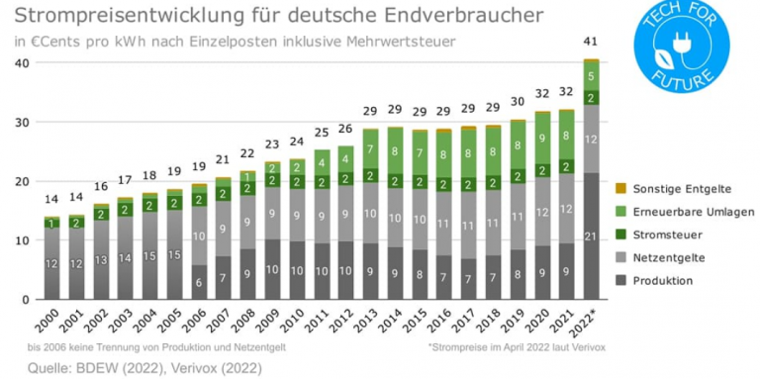
5. German Electricity Prices Spiraling Out Of Control…Tripling Since 2000… Blackouts, Unrest Loom
By P Gosselin 19. August 2022


6. Energy Prices Trigger Deindustrialization In Germany
Irina Slav - Aug 19, 2022,

7. Germany Risks a Factory Exodus as Energy Prices Bite Hard
Aug 19, 2022

Power and gas prices in Germany more than doubled in just two months, with year-ahead electricity -- a benchmark for the continent -- soaring to 570 euros ($573) per megawatt hour. Two years ago, it was 40 euros.

“Energy inflation is way more dramatic here than elsewhere,” said Ralf Stoffels, chief executive officer of BIW Isolierstoffe GmbH, a maker of silicone parts for the auto, aerospace and appliance industries. “I fear a gradual de-industrialization of the German economy.”

8. “Electricity Crisis”: German Wholesale Prices “Virtually Exploding”…2,347% Rise Over Single Year!
By P Gosselin 21. August 2022

9. Germany to Prioritize Coal Trains Over Passenger Services
ByVanessa Dezem. August 22, 2022

10. ‘Political Suicide’: Germany Will Shutter Nuclear Plants Despite Looming Winter Shortages
JACK MCEVOY August 22, 2022

11. German Power Prices Smash Record as Energy Panic Engulfs Europe
ByVanessa Dezem and Anna Shiryaevskaya  August 22, 2022


12. German gas levy may be adjusted soon after implementation
August 23, 2022

13. Germany and France have driven eurozone into recession, economists warn
August 23, 2022

14. German government approves energy-saving measures to rein in gas usage
August 24, 2022

15. ‘Don’t sacrifice Germany for Ukraine’ – German trade association asks Chancellor Scholz to end sanctions against Russia to save economy
Signatories of the open letter say Ukraine is one of the most corrupt countries in the world
DENES ALBERT August 22, 2022

16. German Experts Warn Of Grid Instability…”Conventional Power Plants Needed For A Long Time To Come”
By P Gosselin on 27. August 2022

17. Tough choices for Germany as coal power stations return to keep people warm this winter
Germany is turning back to the world's dirtiest fuel to overcome its dependence on Russian gas, but the environment isn't its only concern.
Siobhan Robbins 30 August 2022
https://news.sky.com/story/tough-choices-for-germany-as-coal-power-stations-return-to-keep-people-warm-this-winter-12685534

18. German factories shut down as energy costs spiral out of control
James Warrington 31 August 2022
https://www.telegraph.co.uk/business/2022/08/31/eurozone-inflation-hits-new-record-energy-costs-spiral-control/

19. German factories shut down as energy costs spiral out of control
James Warrington. 31 August 2022
https://www.telegraph.co.uk/business/2022/08/31/eurozone-inflation-hits-new-record-energy-costs-spiral-control/

September reports

1. High energy prices: ArcelorMittal shuts down two plants in Germany
9/02/2022 | ArcelorMittal Germany
https://germany.arcelormittal.com/icc/arcelor/broker.jsp?uMen=7a770135-5051-5e71-9945-be470aa06ac3&uCon=b611ba70-782e-2810-a61e-481f0ad3a7b3&uTem=aaaaaaaa-aaaa-aaaa-aaaa-000000000042

2. "Exorbitant Rise In Energy Prices" Forces Europe's Top Steelmaker To Close Plants
TYLER DURDEN  SATURDAY, SEP 03, 2022
https://www.zerohedge.com/commodities/exorbitant-rise-energy-prices-forces-europes-top-steelmaker-close-plants

3. German blackout fears force JP Morgan to plan London move
American bank will shift work to the City if power outages affect EU's biggest economy
Simon Foy and Rachel Millard. 5 September 2022
https://www.telegraph.co.uk/business/2022/09/05/jp-morgan-prepares-move-workers-germany-london-amid-threat-blackouts/

4. Energy supply in Germany: bad luck for consumers
September 5, 2022
https://blackout-news.de/aktuelles/energieversorgung-in-deutschland-pech-fuer-die-verbraucher/

5. 21 Million German Households, Industry Suffer Body Blow As Green Energy Scheme Disintegrates
By P Gosselin on 6. September 2022
https://notrickszone.com/2022/09/06/21-million-german-households-industry-suffer-body-blow-as-green-energy-scheme-disintegrates/

6. Germany’s energy suicide: an autopsy
Pepe Escobar September 08, 2022
https://thesaker.is/germanys-energy-suicide-an-autopsy/

There is a so-called EU Electricity Market Reform in progress. According to it, producers of electricity – from solar or wind – automatically receive “the same price for their ‘renewable’ electricity they sell to the power companies for the grid as the highest cost, i.e. natural gas.” No wonder the cost of electricity in Germany for 2022 increased by 860% – and rising.

7. ‘Without energy, no economy can run’ – German companies warn of disaster as electricity and gas tap are ‘turned off’
“Every day we receive emergency calls from companies that are about to stop production,” said the president of the Central Association of German Crafts
JOHN CODY September 08, 2022
https://rmx.news/article/without-energy-no-economy-can-run-german-companies-warning-they-have-no-electricity-contract-could-signal-disaster/

8. Wave Of German Insolvencies Picks Up Speed…”Tenfold Increase In Gas, Electricity Prices”
By P Gosselin on 11. September 2022
https://notrickszone.com/2022/09/11/wave-of-german-insolvencies-picks-up-speed-tenfold-increase-in-gas-electricity-prices/

9. How Millions Of ‘Cheap’ Electric Heaters Could Crush Germany’s Power Grid
By ZeroHedge - Sep 13, 2022
https://oilprice.com/Energy/Energy-General/How-Millions-Of-Cheap-Electric-Heaters-Could-Crush-Germanys-Power-Grid.html

10. High energy prices: Stadtwerke are getting into financial difficulties
September 16, 2022
https://blackout-news.de/aktuelles/hohe-energiepreise-stadtwerke-geraten-in-zahlungsschwierigkeiten/

11. Power Grid Expert: “99.9% Chance” Germany Will See Blackout… “Civil War” Unless People Prepare
By P Gosselin on 17. September 2022
https://notrickszone.com/2022/09/17/power-grid-expert-99-9-chance-germany-will-see-blackout-civil-war-unless-people-prepare/

12. Germany Seizes Rosneft Refineries, But Doesn’t Solve Its Oil Problem
By Alex Kimani - Sep 19, 2022
https://oilprice.com/Energy/Crude-Oil/Germany-Seizes-Rosneft-Refineries-But-Doesnt-Solve-Its-Oil-Problem.html

13. German industry suffers worst energy shock since 1949
Tim Wallace. 20 September 2022
https://www.telegraph.co.uk/business/2022/09/20/german-industry-suffers-worst-shock-since-1949-putins-energy/

14. Germany’s “Tenfold Increase In Gas And Electricity Prices” Is Driving Out Industry
By P Gosselin on 23. September 2022
https://notrickszone.com/2022/09/23/germanys-tenfold-increase-in-gas-and-electricity-prices-is-driving-out-industry/

15. German Industry Collapse: Companies Leaving In Droves…”Can No Longer Bear Cost Explosion”!
By P Gosselin on 25. September 2022
https://notrickszone.com/2022/09/25/german-industry-collapse-companies-leaving-in-droves-can-no-longer-bear-cost-explosion/

16. German Manufacturers Struggle As Energy Crisis Persists
The country is already facing toilet paper shortages as manufacturers struggle to keep their doors open, and things are likely to get worse before they get better.
By Ag Metal Miner - Sep 28, 2022
https://oilprice.com/Energy/Energy-General/German-Manufacturers-Struggle-As-Energy-Crisis-Persists.html

17. Germany to Cap Energy Prices as Industry Is Pushed to the Brink
Rising costs are bringing the country’s energy-hungry manufacturers and small businesses close to breaking point
Tom Fairless. Sept. 29, 2022 
https://www.wsj.com/articles/energy-crisis-pushes-german-industry-to-the-brink-11664443801

18. Germany Unveils €200 Billion Package To Cap Soaring Energy Costs
By Alex Kimani - Sep 29, 2022
https://oilprice.com/Energy/Energy-General/Germany-Unveils-200-Billion-Package-To-Cap-Soaring-Energy-Costs.html

19. Germany agrees 200 bln euro package to shield against surging energy prices
Holger Hansen and Kirsti Knolle  September 30, 2022
https://www.reuters.com/business/energy/german-govt-agrees-relief-package-response-soaring-energy-prices-sources-2022-09-29/

20. Colder, Wetter Than Normal September Pushes German Gas Consumption +14.5%, Winter Gas Outage Looms!
By P Gosselin on 30. September 2022
https://notrickszone.com/2022/09/30/colder-wetter-than-normal-september-pushes-german-gas-consumption-14-5-winter-gas-outage-looms/
----------------

See also:
Deindustrialization 2, Germany, June-July 2022 reports, September 4, 2022
Deindustrialization 3, United Kingdom, August 2022 reports, September 6, 2022
Deindustrialization 4, Other Europe, September 11, 2022.

Tuesday, September 27, 2022

BWorld 561, Power demonopolization, privatization, and smuggling

* My article in BusinessWorld last September 19.
----------------

Last week, on Sept. 12, the National Grid Corp. of the Philippines (NGCP) made a big announcement of red and yellow alerts in the Luzon grid. It was a bad situation for three reasons.

One, it came just five days after a successful business roadshow by the Marcos Jr. administration in Jakarta and Singapore where some $14.4 billion of pledged investments to the Philippines were announced. When those big foreign investments come, they will need a huge power supply and yet the Philippines still experiences yellow-red alerts of thin power reserves and potential blackouts until now.

Two, the main reason was not power generation deficiency but the tripping of transmission lines of the NGCP — two 500 kilovolt (kv) lines connecting Kaampat (Bolo) to San Manuel (Nagsaag) tripped on the morning of Sept. 11, but the NGCP and some sectors blamed the affected power plants. Two big coal plants, Sual (1,294 megawatts or MW) and Masinloc units 2 and 3 (679 MW) tripped because there was no transmission line or “highway” to deliver the power they generated. In addition, three plants — Masinloc 1, GMEC 2, SLTEC 2 — experienced derating or below-capacity generation of 226 MW.

There were three other plants that were already out prior to the grid tripping incident — Calaca 2, Dinginin, and Quezon Power — with a combined 1,428 MW.

And, three, it highlighted once again NGCP’s non-compliance with Department of Energy (DoE) Circulars on contracting ancillary services (AS) to help ensure grid stability when there are unforeseen generation or transmission problems.

See these reports in BusinessWorld: “DoE to investigate forced outages that raised red alert over Luzon” (Sept. 12), and “NGCP ‘in discussions’ with DoE to ensure adequate power supply” (Sept. 14).

The NGCP is the only remaining national private monopoly in the country. It is a very privileged and pampered company. From 2017-2021, its average net income was P21 billion/year from gross revenues of P48 billion/year (see this column’s piece, “Electrifying profit and penalties, the case of NGCP, DUs, and ERC,” Feb. 7, 2022). The other national monopolies are government-owned corporations like SSS, PhilHealth, and Pag-IBIG.

Transmission should be demonopolized but this will require legislation. Meantime the monopoly should be strictly monitored by the Energy Regulatory Commission (ERC), penalized for acts or inaction that lead to frequent yellow-red alerts due to transmission line defects, and/or expensive transmission charges. The previous ERC leadership failed to do this job.

Also last week, the Independent Electricity Market Operator of the Philippines (IEMOP) held a media briefing on power supply demand and pricing in the Wholesale Electricity Spot Market (WESM). There are three things I want to highlight from the IEMOP data.

One, there were many instances or periods from Aug. 25 to Sept. 10 when the secondary price cap of P6.25/kwh was imposed. Price control is said to protect the consumers but the opposite really happens. At forced low prices, someday the power supply will not be there when people need it most — blackout. Damaged appliances, darkness and heat, use of candles or gensets are more expensive than temporary price hikes if there is no price control.

Two, there was huge uptick in peak demand — the average increase in July-September 2022 over July-September 2021 was 6.6%. This shows consumer demand is high, investment optimism is high — this is good news. And since growth in power demand is a good proxy for GDP growth, my estimate of third quarter 2022 GDP growth would be about 8%, +/- 0.5%. In the second quarter of 2022, peak demand growth was 5.7% while GDP growth in Q2 was 7.4%.

And, three, intermittent, unstable and unreliable wind, solar, and biomass continue to generate very low power until today, only about 3% of total power generation in June-August 2022, 13 years after the Renewable Energy (RE) law of 2008 (RA 9513) was enacted. (see Table 1)

But we frequently hear and read about the strong lobby by intermittent RE. See these recent reports in BusinessWorld:

• “IFC mobilizes financing for PHL firms’ green projects” (Sept. 8),

• “PHL urged to decentralize power generation with more solar plants” (Sept. 11),

• “RE firms want reform of competitive selection” (Sept. 11).

In many countries in Europe, the inconvenient fact is that as more wind and solar are added to the grid, overall power generation declines, and GDP growth is low and anemic. This is because many non-intermittent and reliable fossil fuel and nuclear plants exit the market as they are not a priority in the grid and are being demonized regularly.

The opposite occurs in East Asia. In the ASEAN-5 especially, wind-solar share remains low in the total generation mix and countries grow fast (see Table 2). We should keep business as usual, have more fossil fuel plants and limit the share of intermittent sources in the grid.

And then there are these two related reports in BusinessWorld: “DoE’s Lotilla says gov’t involvement in power will not bring rates down” (Sept. 8), and “Consistent application sought for key ERC ruling” (Sept. 15). I express my support for the positions taken by Energy Secretary Raphael Lotilla, and by ACEN Corp. that any ERC ruling on the SMC power companies’ petition for a rate hike must apply to all other players that will seek similar petitions.

On the budget, taxes, and borrowings for 2023, there is one important revenue source to pay the P2+ trillion/year of net borrowings from 2020 to around 2024: privatize many government corporations and other assets. I propose three state enterprises that must be prioritized for privatization, and nearly 20 others over the long-term (see Table 3). Government-owned power plants and gambling companies should be at the top of the list. There is zero market failure being addressed by these state enterprises, they remain simply due to politics.

Finally, related to a recent piece in this column, “Motorcycle taxis, illicit tobacco, and electric cooperatives” (Aug. 8) where I noted that the estimated value of foregone tobacco taxes due to smuggling is P24-49 billion/year, House Bill (HB) 3917 was filed amending the Anti-Agricultural Smuggling Act of 2016 to classify cigarette smuggling as “economic sabotage” and imposing higher fines and penalties, and imprisonment.

This is a good bill authored by Ilocos Norte Representative Ferdinand “Sandro” Marcos and Party-list Representative Margarita “Migs” Nograles. The anti-smoking NGOs and activists should support moves to fight illicit tobacco because smuggled cigarettes are so cheap — the retail prices are lower than the tax alone of P55/pack this year — that they encourage more smoking, not less.

When tax avoidance and smuggling are controlled, there will be less need to raise taxes elsewhere.
------------------

See also:
BWorld 558, ABS-TV5 Partnership, SMC rate hike petition, and Budget 2023, September 06, 2022
BWorld 559, Build-build-build, extended welfare, vaccine discrimination, and liberty forum, September 08, 2022
BWorld 560, PEB Singapore, the PPP Center, transport liberalization, and IPRI 2022, September 20, 2022.

Conservatives and rightists fighting back in Europe

Some good things happening in Europe this month.

1. Italy, Brothers of Italy party won. "Yes to the natural family. No to the LGBT lobbies. No to the violence of Islam, yes to safer borders, no to mass immigration, yes to work for our people, and no to major international finance.”

2. Autocrat, non-elected EU bureaucrat Ursula von der Leyen tried to blackmail Italians not to support Meloni's party, and she failed. https://rmx.news/article/shock-eu-commission-president-threatens-italy-on-eve-of-election-says-brussels-has-tools-if-wrong-parties-win/

3. Sweden, Sweden Democrats party won. Anti-illegal immigrants, anti-mass migration, "deport all foreign criminals, no discussion." 

Sweden's Conservative Right Opposition Bloc Takes Lead In General Election
TYLER DURDEN, SEP 12, 2022
https://www.zerohedge.com/political/deport-foreign-criminals-no-discussion-swedish-far-right-party-surges-ahead-tomorrows.

4. Hungary, some MPs pushing back against EU lefties who are angry that a conservative party, anti leftism party won in elections early this year. 

‘Nothing to do with Reality’: Hungarian MEP Slams Leftists After EU Declares His Country is ‘No Longer a Democracy’
PETER CADDLE. 20 Sep 2022
https://www.breitbart.com/europe/2022/09/20/nothing-to-do-with-reality-hungarian-mep-slams-leftists-after-eu-declares-his-country-is-no-longer-a-democracy/

And here's a good victory speech by Georgia Meloni, Italy's newly elected "right wing" prime minister: https://twitter.com/zenarchyandtea/status/1574425503749967872

"I can't define myself as Italian, Christian, woman, mother. No.
I must be citizen x, gender x, parent 1, parent 2. I must be a number.
Because when I am only a number, when I no longer have an identity or roots, then I will be a perfect slave at the mercy of financial speculators."

Boom! haha. Viva Meloni. Viva "right wing". The lefties are angry.
Gender is male or female, period. A man might be effeminate but he's still male.

On migration, the really "rightist" position is -- zero restriction on migration, zero visa needed. But zero welfare to migrants, no free or subsidized healthcare, housing, education, none. When immigrants who speak or understand nothing about their country destination, very little skills, when they cannot find a job, they starve, they die. If they steal, they go to jail.
This "rightist" policy on migration, I fully support.

The lefties want free migration, open borders, but they want more govt welfare, more subsidies, more freebies to those migrants. Ewww.