Sunday, October 12, 2014

Free Trade 39: Advantages of Unilateral Trade Liberalization

Free trade is part of human nature. People may oppose it philosophically but consciously or unconsciously, they are engaged in it. Even militant protectionism crusaders are still humans, they need to eat, and they want free choice where to eat.  Do not go to restaurants that are too expensive for their budget, never go back to a resto which may be cheap but the service is too annoying. They want to be served well given their budget, or they may endure bad service in exchange for really cheap food. That is the beauty of voluntary exchange, no one is forced and coerced to give his/her money to people who do not provide their specific needs. That is the beauty of free trade.

Thus, even the most authoritarian governments recognize the value of free trade. But because they are authoritarians, or semi-authoritarian protectionists, they want to limit and restrict trade because they are protecting certain sectors, like the business interests of their friends, families and campaign financiers, or a considerable block of voters.Thus, multilateral trade negotiations towards free trade has become too bureaucratic and time consuming. 

Some countries and economies have taken the unilateral trade liberalization route -- Hong Kong, Singapore, Dubai, Chile, among others. And have good results. Chart below shows that as of 2001, average tariff in S. America was around 12 percent vs around 4 percent in East Asia, zero already in Singapore. East Asians are more receptive to unilateral trade liberalization than their counterparts in S. America or Africa.

Applied Most Favoured Nation (MFN) Tariff Liberalization in Latin America and East Asia.


source: Richard Baldwin, 'Unilateral Trade Liberalization", Center for Trade and Economic Integration, CTEI 2011-04,  http://graduateinstitute.ch/.../working.../CTEI-2011-04.pdf

When it comes to agricultural products though, economies in general are more protectionist even if they may be relatively free traders in non-agri products. Stark cases are Korea, Turkey, Egypt and Thailand.

The exceptions to this agricultural protectionism are the unilateral Asian free traders HK and Singapore, and some countries in S. America, Argentina and Brazil. Data also from R. Baldwin.

In this working paper at the WB, Nogues argued that "Developing countries would gain far more from unilateral than multilateral trade liberalization negotiations over many years." 

(Julio Nogues, 1989. "The Choice Between Unilateral and Multilateral Trade Liberalization Strategies", 24 pages),  http://wwwwds.worldbank.org/.../Rendered/PDF/multi0page.pdf

Chile experience is fantastic, from 220 percent tariff in 1973 to only 11 percent in 1991 (only 18 years after.) 


Source: Sebastian Edwards and Daniel Lederman, 1998. "The Political Economy of Unilateral Trade Liberalization: The Case of Chile", NBER working paper, http://www.nber.org/papers/w6510.pdf

A Cato paper, A Cautionary Tale on Negotiated vs. Unilateral TradeLiberalization (November 21, 2012), author Sallie James wrote,

But since the 1950s...trade theory has pretty-much consistently shown a hierarchy of mechanisms for increasing commerce across borders: unilateral trade liberalization is best, followed by multilateral trade liberalization (although the current WTO round of trade negotiations is dead), and then regional or bilateral agreements.
Two groups of people dislike unilateral trade liberalization. The first is the group of some local business (like cronies) and political  interests (trade unions, big farmer organizations). The second is the group of government trade negotiators and consultants (including academics), they do not want to lose their perks of frequent global junkets flying to many countries and flashing or exotic cities doing all sorts of trade bargaining that last for many decades. Consultants get huge amount of money justifying restrictions to trade, explicit or implicit; economic or social or environmental.

Ordinary consumers and independent researchers, them who are not corrupted by government and foreign aid money and consulting, should push the logic of unilateral trade liberalization. Ordinary consumers benefit from more choices, more options, where to buy and whom to sell.
------------

See also:
Free Trade 35: EU-FNF Forum on 'FDI Engine for Job Growth', May 15, 2014

Free Trade 36: Taxation, Regulations, Trade and Rule of Law in ASEAN, August 05, 2014

Free Trade 37: Multiple Concerns and Regulations in the ASEAN, September 11, 2014

Free Trade 38: Liberalize Rice Imports and Demonopolize NFA, September 28, 2014

Friday, October 10, 2014

Korea Unification Soon?

Is the North Korea dictatorship crumbling further? Is the N-S. Korea unification happening soon? I really wish so.

Famous investor Jim Rogers, a rich American businessman who moved to Singapore since 2007 as he believed that this is the Asian century, said in 2013 during the Jeju Forum that he believed that a North-South Korea unification is possible by 2018 (+/- one year), and that it will be the "most exciting economy in the world." Yes, about 70 M people, with huge resources rechanneled from military to global trade.

Below are some encouraging news reports from various sources that point to the imminent collapse of the  N. Korea dictatorship.

(1) News from The Diplomat, October 1, 2014

K1) “Kim Yo-jong, the younger sister of North Korean leader Kim Jong-un, might be leading the hermit kingdom instead of her brother, a recent report from Seoul-based think tank, North Korea Intellectuals Solidarity (NKIS) revealed.

According to NKIS on October 1, Kim Jong-un — who has failed to appear at official events since early September — is getting medical treatment at Bonghwa Clinic from both domestic and foreign medical teams. Meanwhile, in his absence,  Kim Yo-jong is charged with handling important government decisions.”

(2) From Vice News, October 2, 2014

“An elite group of exiles from North Korea gathered in September in the Netherlands to discuss the state of the regime they used to serve. The conference included top diplomats, an ex-senior official of the Ministry of Security, and a high-ranking military officer, but the keynote address was given by Jang Jin-sung, formerly a key member of Kim Jong-il's propaganda machine. Included in Jang's speech was a surprising assertion: North Korea is in the midst of a civil war.

According to Jang — a former counterintelligence official and poet laureate under Kim Jong-il — members of the government's Organization and Guidance Department (OGD), a powerful group of officials that once reported only to Kim Jong-il, have stopped taking orders from his son, Kim Jong-un. The OGD, Jang says, has effectively taken control of the country, and a conflict is simmering between factions that want to maintain absolute control over the economy and others seeking to gain wealth through foreign trade and a slightly more open market.”

(3) From WaPo, October 4, 2014, is good. It was the top leaders of the North other than Kim Jong-Un, who unilaterally went to the South.

KYOTO, Japan— North and South Korea have agreed to hold another round of high-level talks after a top-level Northern delegation, including the men thought to be second and third in command behind Kim Jong Un, paid a surprise visit to the South on Saturday.

The unusual and unannounced trip — the first such high-level visit in more than five years — comes at a time of intense speculation about North Korea’s leadership, given that Kim, the third-generation leader of the communist state, has not been seen in public for a month….

“It’s a big deal, it’s really a big deal, because it’s completely unprecedented,” said Andrei Lankov, a North Korea scholar who studied in Pyongyang and now teaches in Seoul.

The 11-strong group from North Korea was led by Hwang Pyong So, widely considered Kim’s deputy. He’s the top political official in the Korean People’s Army and vice chairman of the National Defense Commission, which is led by Kim.

(4) And from The PCMD Gazette, also last October 4, is good news. 

"North Korea’s Organization and Guidance Department (OGD), the country’s most powerful group of officials, has stopped taking orders from Kim Jong-un. amid reports that the dictator has been overthrown.

Kim Jong-un has been missing for over a week and authorities originally tried to cover-up his absence by claiming he was recovering from ankle surgery."

Socialism and one-party dictatorship is destined to end wherever they may be, People are generally rationale, they want diversity, they want to be creative and spontaneous. Socialism/communism and one party dictatorship hates all that, they want uniformity, monotony, central planning and absence of spontaneity.


So Jim Rogers and other observers are correct. A unification of N-S Korea is coming soon. The dark horse will be the China commie government -- will it allow such unification and hence, stronger capitalism buffer near its backyard, or will it stage its own puppet regime and retain socialism with limited capitalism system, what it is doing now in China.
-----------

See also:
North and South Korea conflict, November 23, 2010
Criminals 11: Kim Jong Il, North Korea, December 20, 2011
Business 360 7: Jeju Forum for Peace, May 10, 2013
Chung ho Kim, Freedom Factory Ltd., May 28, 2013
EFN Asia 24: Jim Rogers talk at Jeju Forum, June 10, 2013

Thursday, October 09, 2014

Energy Econ 27: Expensive Electricity, FIT and Europe's Renewables

I am engaged in a civil debate in a fb group, Amend the Electric Power Industry Reform Act (EPIRA). Many members there are anti-EPIRA, anti-privatization, anti-fossil fuels, and highly worshiping renewables like wind, solar and biomass.

As I posted several times on this subject, I have nothing against the renewables as I support all forms of energy sources. What I do not support is expensive electricity, high energy taxes and high subsidies to renewables just to make them "viable".

The experience of some European economies like UK and Germany in their hard push to depend more  on renewables and move away from  fossil  fuels has not been exactly good and favorable.

For instance, see this story from Forbes.

"You can’t build more PV solar than the rest of the grid can ramp up/down to accept. The necessary grid storage for large-scale solar power is a “maybe someday” technology, not something viable today. Calls for 50% of power to come from solar in our lifetimes are a fantasy, and we need to be realistic about that.

You can’t force utilities to buy unneeded power just because it’s renewable. The energy and materials to build the excess capacity just goes to waste. That is the opposite of green."

Renewables like wind and solar are not only expensive (hence, the need for high subsidies to make them "viable"), they are also highly unstable. A 100 MW wind plant can possibly give 50 MW at most on windy hours, and only 5 MW or zero on non-windy hours. Thus, big consumers like industrial parks and dense residential villages need back up power plants from non-renewable sources to prevent brown outs.

See also this report from Hot Air, 

"It’s no coincidence that Germany has some of the highest rates of renewable generation as well as some of the highest energy prices in the developed world. Their and several other European countries’ ambitions to self-revolutionize their energy sectors turned out to be a recipe for the precise disaster that they were conscientiously looking to avoid — i.e., more coal. This is what happens when you let big-government delusions of “green” grandeur commandeer policy, and the Obama administration seems determined not to learn that universal lesson."

In the Philippines, the currently expensive electricity (no feed-in-tariff (FIT) yet will become even more expensive with FIT for renewables. Will people justify even more expensive electricity for the PH via FIT?

Some renewables here like geothermal and big hydro have no FIT because they were not covered by RA 9513 or the Renewable Energy (RE) Act of 2008. This RE law gives FIT to wind, solar, biomass and run-of-river (small) hydro.

Some people ask, "What to do about electricity pricing that is the highest (or 2nd  highest) in Asia despite the promise of EPIRA to bring down prices?" 

My quick answers are:

1. Drastically reduce government taxes and fees on energy,
2. Abolish the royalty (another form of energy tax) on natural gas and geothermal,
3. Amend RA 9513 and remove FIT and renewable portfolio standards (RPS) provisions. Let renewables flourish even with zero subsidies.

4. Reduce significantly government bureaucracies and permits for power developers and generators, renewable or not.

Meanwhile, from the IEA, Medium Term Renewable Energy Market Report 2014, Summary. It shows how expensive (a) solar PV, (b) concentrated solar power or CSP, (c) onshore wind, and (d) offshore wind are, compared to (i) new coal and (ii) new gas turbines. Both for 2014 and 2020 projections.


This article by Dr. Roy Spencer, Why Don’t More People Care About Global Warming? (October 1, 2014) is cool.

"most people understand that fossil fuels have been necessary for the prosperity that we all enjoy (at least those under political systems allowing people to benefit from their labors). Energy which currently is dominated by fossil fuels, and will be for decades to come.

Modern prosperity, as evidenced by increased lifespans, has depended upon access to abundant, low-cost energy — fossil fuels. I think getting an extra 40 years of life in exchange for 1 to 2 deg. of warming is a pretty good deal. Might even be a win-win."
------------

See also:

Wednesday, October 08, 2014

Lion Rock 13: LRI Position on the Hong Kong Protests

My friends at the Lion Rock Institute (LRI) issued this statement the other day. I think it is a sensible position. In particular, I like these sentences, "... We recognize that the current atmosphere in Hong Kong is highly fractious and that debate on the streets is highly inefficient in settling the issue one way or the other. We recognize that the function of the legislative debating chamber is to channel the sentiments on the streets into a venue where efficient debate and policy formulation can take place."


Street protests are effective in showing public sentiment, and I support them. But in terms of producing the proper public policy, things have to be done in debate chambers where logic and data are presented from all sides.

Meanwhile, most media reported that the protests have dissipated after an ultimatum by the HK government to disperse the huge crowd. But last night, many people converged in Mong Kok to continue the street protests.  Photo from the Harbour Times.


Last week, photos of armoured personnel carriers (APCs) were posted by the Harbour Times. There was one comment, "We locals have never seen more than one or two such vehicles at this site these past 17 years, but in the last day or so, 30 have appeared, only 15 minutes drive from the democracy demonstrations. "PLA troops will not be used to stop the demonstrations" said Chief Executive Leung Chun-ying. But what are the vehicles doing in Kowloon at this demonstration time???"


A friend from LRI, Dan Ryan, was interviewed and quoted by The Australian,

Dan Ryan, the director of Lion Rock Institute, Hong Kong’s leading liberal market think tank, says: “... Despite the changes over the last couple of decades in China, Hong Kong still retains its own unique cultural, economic and political character. The leaders in Zhongnanhai in Beijing, like the bureaucrats of Brussels in Europe, have a working assumption that the march of history requires ‘ever closer union’.

“This assumption should not go unchallenged.”

Ryan suspects that “any Hong Kong leader, elected by genuine universal suffrage, would likely behave as a leader of Taiwan or Singapore does today.

“He or she would continue to be in favour of close economic and friendly diplomatic ties with mainland China. A very loose federation or a commonwealth of independent nations ultimately seems like a much better goal for Greater China to aspire to.

Amen to Dan's proposal. A decentralized and loosely inter-connected federation of independent countries is the best set up for China and its neighbors with shared ethnicity. A heavily-centralized, allergic to democracy and freedom of voting set up is a lousy set up.
--------------

See also  

Tax Cut 20: On the Excise Tax on Gasoline, Various Regulatory Fees

Prof. Amado "Bong" Mendoza of the UP Political Science Department wrote another good article yesterday on tax policy.


Part of his paper mentioned a low tax-GDP ratio (T/GDP) of only 12 percent in 2011, in reference to other data and points raised by WB consultant and now UPSE visiting Prof. Rosa Maria Alonso  Terme. I commented that those measurements of low T/GDP ratio are wrong because such measurement counts only the collections of the BIR + BOC in computing T. It excludes other collections: 

1. Collections by local government units (LGUs) of various taxes (real prop. tax, residence tax, various business taxes) and regulatory fees (sanitation fee, fire dept fee, bldg permit fee, Mayor's permit fee,...).

2. Collectios of various regulatory fees by other agencies: DFA's passport fee, DOT/PTA's travel tax, NAIA's terminal fee, DOTC's vehicle registration tax, driver's license fee; PNP's police clearance fee, DOJ's NBI clearance fee, NSO's birth cert fee, death cert fee, marriage cert fee, and so on.

3. Collections of various fines and penalties by both national and local governments. More prohibitions in society, more violations to catch and penalize, more revenues to collect.

4. Collections of mandatory and forced monthly contributions by the SSS, GSIS, PhilHealth, PagIBIG, etc.

If these various payment to government, by hook or by hook, are included in the tax collections by BIR + BOC, a T/GDP ratio of 25 percent or higher is possible.

Singapore, Hong Kong, other governments with no or little LGUs have tax revenue that are almost equal to total revenues. In governments with many LGUs, many government corporations and financial institutions, many departments having their own collections and mandatory fees system, the total revenues are much much larger than the usual T/GDP ratio. It is an old trick by the WB, IMF, ADB, other foreign aid bodies to justify and rally a rah-rah-rah, more-taxes-rah campaign and lobbying.

Talking about government provision of public goods, the best "quality public goods" that the PH or any government can give its citizens is to have rule of law. The law rules over governors and governed, administrators and administered. The law applies equally to unequal people, no one is exempted and no one can grant an exception. Thus, the law against stealing and robbery, the law against killing and murder, the law against abduction and rape, the law protecting private property, applies to all. 

Then people will have peace of mind and have high respect for government. When there is government failure in rule of law promulgation, then one can expect government failure in many of its avowed welfarist functions. All other axation to justify multiple, endless welfarist functions lose their value.

Some sectors are proposing that taxes on petroleum products should be raised further. They are echoing the old WB and other foreign aid lobbying. They are wrong of course because petroleum is a useful product, it should not be penalized with more taxes. If people think that petroleum is a socially-bad product and hence, must be taxed as high as possible to discourage its frequent use, then they may be suggesting implicitly that we should ride carabaos, horses or bicycles to work or bring our kids to school so that we will use less or zero petroleum products. 

But petroleum is a socially-useful product. Government should in fact reduce taxes on it, and in particular, abolish the excise tax on gasoline, only VAT, import duties and related taxes should apply.

The main arguments by those advocating for more, higher petroleum tax, are: (1) Gasoline pollutes and creates traffic; increasing the tax will alleviate these twin problems; (2) Gasoline is mainly consumed by the rich and the middle class; hence a higher tax on gasoline is progressive; and (3) Petroleum products are imported, and scarce resources.

I disagree with these arguments of course.

1. Non-gasoline transportation of goods and cargo (via carabaos, horses, cows, etc.) creates more animal dung and urine pollution, creates more traffic as they move very slow. To transport Dagupan bangus or Batangas tilapia to Manila via animals will take several days, the bangus and tilapia reach Manila either rotten or in dried fish form.

2. Gasoline is used by tricycle drivers, taxi drivers, and other non-rich people. Besides, what is wrong with the middle class and rich driving a car? People work hard to have more convenience in life and this is not a bad or criminal goal. Those who demonize car ownership may consider not owning or driving one and ride bicycles only.

3. All imported products from mobile phones, laptops, flat tv, buses, boats, medicines, processed foods, etc. are also scarce. The price of a product or service is a reflection of its scarcity or non-scarcity. Gold and diamond are very scarce to find and hence, their prices are very high. Air is non-scarce, it is abundant hence, its price is zero. Unless one is into scuba diving, then air in scuba tank has a price and not free.

So government should either abolish the excsie tax on gasoline, or all other imported goods should be slapped with excise tax too.

Many environmentalists and anti-capitalism activists who demonize fossil fuel capitalism are actually car-owners too; they frequently ride planes for their meetings and activities across the country or around the world. And all airplanes use that "bad" (if not "evil") product called petroleum.

Back to the basic function of government -- yes, there is a need for government. Promulgate the rule of law. Of what use to a poor man that he gets free PhilHealth card, free education for the kids, free conditional cash monthly, subsidized train rides, etc. but his tricycle or 2nd-hand jeep or car can be easily stolen by other people; or the kids can be easily abducted and raped or murdered; the small piece of land he inherited or bought can be easily land grabbed by influential people?

Protection of private property, protection of human life, government role is needed and recognized, and taxation to allow government to do this job is needed. All other functions are secondary or unnecessary, as most functions can be provided by the private sector under a voluntary exchange system. Thus, the various taxes and mandatory fees to justify those secondary or non-necessary government functions should be significantly cut, if not abolished.
-----------

See also:
Tax Cut 16: Conserving Fishery Resources by Taxing Demersal Fish Catch?, May 27, 2013 

Tax Cut 17: BIR vs. Physicians, March 06, 2014

Tax Cut 18: On 10% Flat Tax, Greco Belgica and GDP Growth, March 27, 2014

Tax Cut 19: Letter to Sen. Sonny Angara Re. SB 2149, June 06, 2014

Tuesday, October 07, 2014

Climate Tricks 34: Watermelon Movement, Green Outside, Red Inside

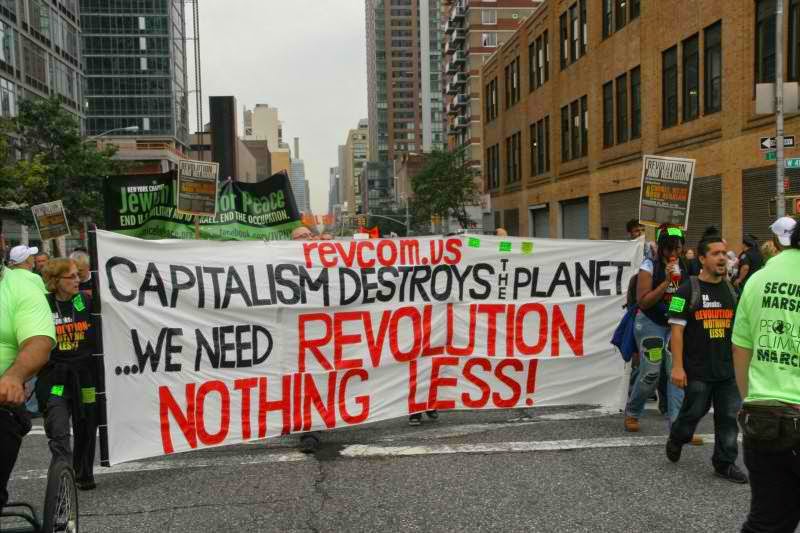
 The People’s Climate March in NYC last September 21, 2014, has further shown that the climate alarmism movement is a watermelon movement. Green outside, red inside. Well, at least some of these groups are more frank, more honest of what they really want, global ecological and economic socialism. Modernization and cheaper energy by capitalism is evil. Governments and the UN should keep expanding and regulate everything. 


Source: WUWT,  Paid volunteers’ forthe NYC climate march, September 21, 2014

And more frank calls, "Capitalism destroys the planet. We need revolution, nothing less". Among the planet saviours in the NY "climate march". wow. See more photos of the planet saviours.


Source: CFACT, Climate craziness descends on NYC, September 21, 2014

In Manila that day, a photo from ANC tweet, below. I zoomed in on the photo, some plackards say, "Capitalism is killing the planet", "Shift to Renewable Energy", "Remember Yolanda victims, ACT NOW." The climate alarmism movement is often driven by anti-capitalism sentiment and deep desire for socialism and dictatorship. The ecological dictators will dictate what power plant can be put up and which ones to over-tax or outrightly kill. They will dictate how much carbon and environmental taxes to collect, dictate how much subsidy crony energy plants will get from taxpayers, and so on.


Source: “Police block activists trying to approach US Embassy in Manila”, Sept. 22, 2014,

CFACT made a follow up article on that Climate March. It noted,

"National Geographic summed up the March this way: “Despite all the enthusiasm displayed in New York and elsewhere on a muggy September Sunday, public opinion polls consistently show that climate change is not a high priority for most Americans.”

Americans are smarter than the collection of anti-capitalism satellite groups think. They’ve seen through the rhetoric and realize, as the Climate March made clear: it is not about Climate Change, it is about system change."


World reknown climatologist, Dr. Roy Spencer, made an observation a few days before that march. He wrote, 10 Ways To TellTuesday’s UN Climate Summit Isn’t About Climate

1. There is no way with current technology to get beyond 15%-20% renewable energy in the next 20 years or so….and even that will be exceedingly expensive. No matter how much you care about where your energy originates, physics and economics trump emotions.

2. The UN doesn’t care that global warming stopped 17 years ago. It doesn’t matter. Full steam ahead.

3. The UN’s own climate models have grossly over-forecast warming. Doesn’t matter. Full steam ahead.

4. Scientists and politicians have had to resort to blaming severe weather events on climate change. Like, we never had severe weather before? Really? (Oh, BTW, severe weather hasn’t gotten worse.)

5. The UN Climate Summit participants’ “carbon footprints” far exceed those of normal people…and they don’t care. Flying jets all over the world, traveling and dining in style, and telling a billion poor they can’t have inexpensive electricity? That’s the moral high ground?

6. Leonardo DiCaprio, UN’s Messenger of Peace. Al Gore, Nobel Peace Prize and crony capitalist. ‘Nuff said.

7. The leaders of Australia, China, India, Canada, and Germany are opting out of Tuesday’s meeting. They have real problems to attend to, not manufactured ones.

8. A UN official admitted the climate goal was wealth redistribution. Naomi Klein has admitted what Obama, Kerry, and Clinton won’t admit: it’s about stopping Capitalism. Unless you are a crony capitalist friend getting green energy subsidies.

9. What they can’t admit is that global greening and increasing global crop productivity is the result of us putting some of that CO2 back where it was in the first place – in the atmosphere. I’m still predicting some day we will realize more CO2 is a good thing.

10. The UN’s climate reports exaggerate and misrepresent the science.

Ahhh, watermelons. Lots of them.

Meanwhile, Dr. Steven Koonin, former professor of theoretical physics and provost at Caltech, currently the Director of the Center for Urban Science and Progress at New York University, wrote this article at WSJ last September 19, 2014.

"My training as a computational physicist—together with a 40-year career of scientific research, advising and management in academia, government and the private sector—has afforded me an extended, up-close perspective on climate science.

"The crucial scientific question for policy isn't whether the climate is changing. That is a settled matter: The climate has always changed and always will. Geological and historical records show the occurrence of major climate shifts, sometimes over only a few decades...."
-----------

See also::
Climate Tricks 31: High Intolerance by the Alarmist Camp, May 14, 2014
Climate Tricks 32: Yeb Sano and CCC to Save the Arctic, September 16, 2014

Climate Tricks 33: UN Fooling Government Leaders to Accept Expensive Energy, September 25, 2014

Sunday, October 05, 2014

Welfarism 29: Is Poverty Government Corruption-Created or Self-Inflicted?

This photo was posted by ANC last July this year, and a friend reposted this in his fb wall. My comments below, plus some comments at the ANC fb page. This is mostly in Filipino, so sorry non-Filipino readers, this is too long to be translated. Nonetheless, the man's t-shirt says, "We are poor, because... they are thieves, Senator, Congressman, Governor, Mayor, Barangay Captain..." 
---------

Eh bakit naman hingi ng kung ano ano sa gobyerno ang marami sa inyo? Kayo mismo may sabi kawatan halos sila lahat, tapos maski condoms and pills hingi pa sa gobyerno?

Ibang mahihirap, marami naman sa kanila nagta-trabaho. Maski ambulant vendors ng buko, fishball, banana-q, or sari-sari stores, tiangge-tiangge, dumidiskarte sa buhay. Kaso lang, dami permits kailangan. Permit ni Brgy. Capt, permit nila Sanitation dept. and Fire dept, permit ni Mayor, permit ni DTI,...

Pero may iba, gusto lang hingi ng hingi, kasi yon din naman pinapangako ng mga politiko sa kanila. At may problema din madaming intellectuals and middle class. Hindi naman basta hinihingi ng mahihirap, lobby sila ng lobby na dapat daw ibigay sa mahirap. Tulad ng CCT; mga architects and lobbyists nyan mga may PhD in Econ, social welfare, etc. Palakpak naman sila ADB and WB, laki ng kita nila sa CCT loans eh, tig $450 M yata sila na loan each.
--------- 

(Some comments at the ANC page. The 2 other photos were posted by other people, I just inserted them here.)

Lui Yuri Lai Lumaki ako sa mahirap na pamilya pero hindi naging hadlang ang aming kahirapan sa aking pangarap na magkaroon ng maganda at komportableng buhay. Nag-aral akong mabuti habang nagsisikap ang aking pamilya na ako ay mapagtapos. Sa awa ng Diyos, natapos ko ang aking pag-aaral. Ngayon, ako ay isang guro sa America. Nakapagpatayo ng magandang tahanan para sa aking mga magulang at ang buhay namin ay maayos at sagana sa mga pangangailangan. Hindi hadlang ang kahirapan sa pag-asesnso sa buhay. Sigasig, tatag ng loob, tamang edukasyon at paniniwala sa Diyos at sarili ang susi.

Questions and comments to Lui and his reply:

1. ang tunay na mahirap, halos hindi makabili ng pagkain... papa ano po kau nkapag tapus ng pagaaral?
– scholarship. I worked hard and studied hard to get to where I am now. I valued my family's effort to send me to school.

2. ok lumaki ka sa hirap nakapagtapos ka nang pag aaral bakit sa America ka nag work? bakit hindi sa pilipinas?
-- Why not? Coming to US to teach is the best thing ever happened to me and my family. It changed my life and the lives of the people I love for a lot better. I taught in the Philippines for 6yrs before coming to US. I have served my country and still doing it a huge favor through my remittances. Philippines is my home and I always love to come back for a visit. But America is the land of dreams and opportunities. And I am reaping what I sow. I enjoy living here.

My family was once poor (when I was growing up) but yet I didn't see my family asked nor blame the government for the life we have. My parents told me and my siblings that "People make their lives. We are the products of our very own life's choices." My Tatang worked day and night to feed us and provide for us. We as a family worked together as a team. We cleaned houses, fetched water for rich neighbors, sold our harvests in the market... My Tatang said "Mag-aral kayong mabuti at maging matalino sa buhay dahil yan ang susi niyo sa pag-asenso. At kapag kayo ay masagana na... Manatili kayong mabuti sa inyong kapwa maging sila man ay mayaman o dukha." I can say na utang ko ang lahat sa aking pamilya na nagpalaki sa akin. Bagamat kami ay mahirap at salat sa maraming material na bagay noong ako ay bata pa, nde kailanman nagkulang ang aking pamilya sa pagmamahal at tamang paggabay sa akin at sa aking mga kapatid... Hindi ang gobyerno o kahit sino ang may hawak ng buhay ng tao... Life is what YOU make it. Your life. Your rules.

3. Batang Logan lahat ng tao may ambition! pero ang taong nagsasabing mahirap sila patunay lang walang ambition sa buhay...ang gusto nila "magic agad".pero taong may ambition sa buhay,hindi hadlang ang kahirapan para matupad ang pangarap....

desesyon ng tao kung bakit gusto nya mag abroad.iyan ay opportunidad nila,diskarte nla yun,labas na ang gobyerno dito..nasa tao naman kung gusto nya mag umasenso sa buhay na hindi umaasa sa gobyerno at hindi lahat nag abroad umasenso mayron din naghihirap pero sa daming dahilan ,kung bakit?...sa totoo lang para sa akin, Ang buhay ay parang sugal ,mapanegosyo,mapa politika,magsaka o kaya pag aabroad lahat ito may puhonan,kailangan lang sipag at tiaga para umasenso sa buhay.kaya wag natin isisi sa gobyerno kung bakit may naghihirap na pilipino sa bansa natin.cguro tamad maghanap ng trabaho o kaya marami umaasa sa palad ng politiko o kaya sa jueting lords.iyan marami hindi nila naintindihan ng mga kababayan natin mahihirap .na tao din nagdadala ng gobyerno kaya kung ang ibinoto mo ay magnanakaw na politiko natural magnakaw iyan dahil babawiin ang puhunan nila sa election .kaya ang masasabi ko mula noon pang martial law hanggang ngaun ay may magnanakaw parin sa gobyerno.pero kaya kailangan sa susunod na election bomoto ka ng tamang politiko para hindi ka magsisi sa huli.dahil ako hindi ako nagboboto after 1998 election hanggang ngaun.kahit 10yrs na wala akong trabaho noon as in tambay ,kahit halos kamag anak ko nakaupo sa pwesto sa lugar namin hindi ako himihingi ng tulong o umasa sa kanila...
-------------- 

See also:

Competition Policy 4: Paradox of Anti-Trust and Fair Competition Legislation

A good friend and academic from UP Political Science Department, Prof. Bong Mendoza, wrote this article last week.


Good article from Bong, as usual.

But there is the paradox of Fair Competition or Anti-Trust legislation.

If your price is higher than your competitors, you can be accused of price gouging the consumers.
If your price is the same as your competitors, you can be accused of price collusion and/or cartel.
And if your price is lower than your competitors, you can be accused of predatory pricing.

Any pricing that one will take can be a ground for harassment by corrupt, extortionist, or biased officials and bureaucrats of a Fair Trade Commission on the payroll of one or more of the private players that they are monitoring and regulating.

In a free and spontaneous market economy, enterprises can take various pricing for various products and services geared for different consumers and group of buyers. Thus, a can of Coke or SM Beer Pilsen is priced lower in sari sari stores compared to convenience stores (7-11, Mini Stop, Family Mart, Select, etc.), which is lower than in fancy restos, which is lower than in 5-star hotels, and so on. Same product, same volume, same packaging, same manufacturer, yet have different prices varying from P25 to P150/can or higher.

Market segmentation and price differentiation are spontaneous market reactions by players to different situations. A monopolist (No thanks to congressional franchising, or national agency or LGU franchising) can price its product or service at the highest possible rate that consumers can endure. A proposed Fair Trade Commission (FTC) cannot discipline a monopoly or duopoly if these were government-created.

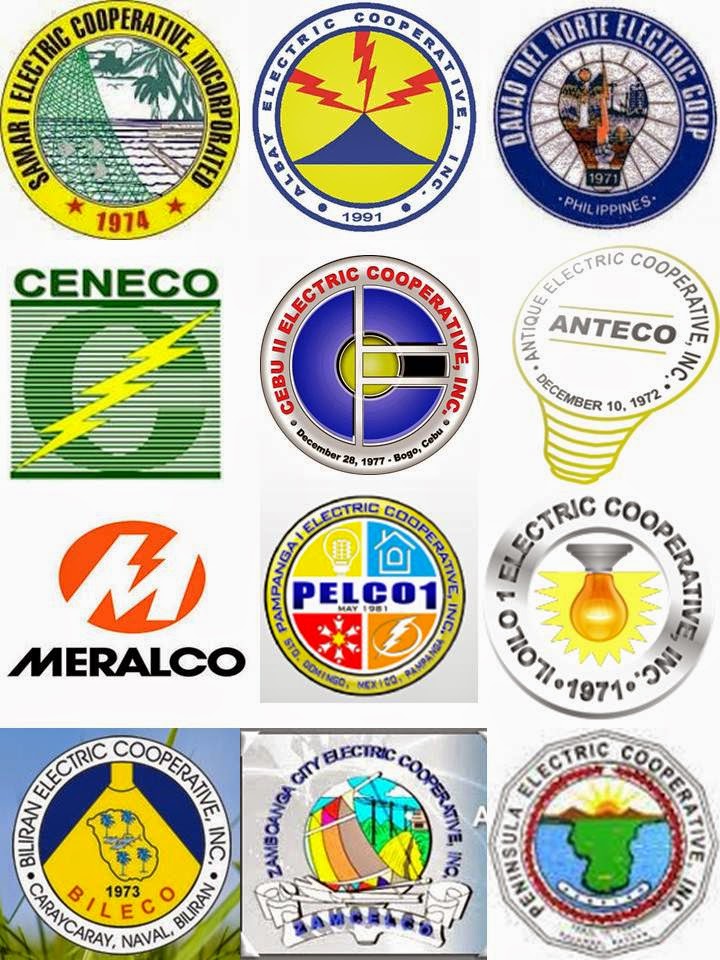
All electric coops and distribution utilities are monopolies, there are about 120 of them nationwide, the biggest is Meralco of course. Because they are utilities, electricity distribution is reserved 100% to Filipinos only, but not all Filipino enterprises can compete, they need congressional franchising which creates the monopoly in particular areas.


Inter-island shipping is generally government-created monopoly or duopoly via MARINA franchising; bus line route monopoly is also government-created (via LTFRB franchising); or airline route monopoly for lesser-known island destinations is another government-created (via CAB franchising). 

Even tricycle route monopoly (say UP Village to Philcoa) is government-created  via city or municipal hall franchising. Jeepneys and air-con vans are prohibited on those tricycle-only monopolized routes. Passengers have no  other option but ride those tricycles, otherwise they must walk or take the more  expensive taxi, or drive their  own car or motorcycle. Which contributes to more traffic congestion.

Someone suggested that the Freedom of Information (FOI) bill is needed to advance the Fair Competition (FC) bill. This is a misunderstanding. The FOI bill intends to make government become more transparent. The FC bill intends to make private companies become more transparent.

Bottomline, even if Congress will enact an FC law next week, many monopolies and duopolies will remain because they were created by different government agencies  themselves, from the Legislative to Executive to LGU offices. What the proposed FC law will do is simply tinker with existing players that are already regulated by various government agencies.

As government expands, its cronyism also expands. One more reason why government, from Executive to  Legislative to LGUs and  other offices should shrink.
------------

See also:
Anti-trust law is anti-competition, July 22, 2008