Saturday, August 10, 2019

UPSEAA lecture 4, Johanna Chua

Last Thursday, another UP School of Economics Alumni Association (UPSEAA) boardroom lecture given by UPSE '94 Summa cum laude graduate Johanna Chua, now with Citibank.


She delivered a fast, articulate, pure verbal lecture, no ppt. Some data that I got from the web before I discuss her talk.



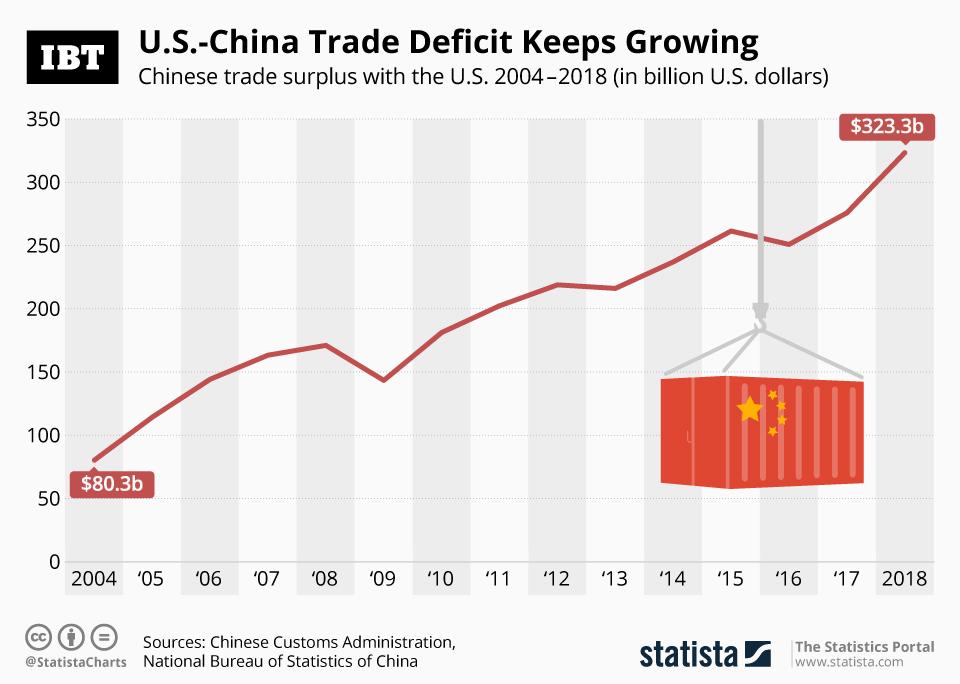
A recent chart from zero hedge,

https://www.zerohedge.com/news/2019-08-10/former-chinese-central-banker-warns-beijing-may-dump-treasuries-retaliation

Jo recognized the growing trade deficit of the US with China. She differentiated the cultural differences between the two countries, CN being hierarchical, US more flexible in commerce and politics. CN's Xi Jinping leadership is followed down the line, US' Donald Trump leadership is littered with opposition, erratic, "magulo."

I raised this point during the open forum, that CN being a one-party communist dictatorial government needs someone in the US who's "less traditional" and "magulo" to prick their complacency, to create disruption in how things are done in trade, investments and IPR protection.

She replied that the kind of communism in CN is not the traditional view that we know, there is leeway in private businesses to grow. She added that CN has created a community of allied countries and economies (BRI, etc.) even before the tensions with Trump leadership started.

I added that on the contrary, CN has pictured itself as a bully and isolationist, like its militarization of the SCS/WPS that alienated Vietnam, Indonesia, Philippines, aside from its territorial disputes with Japan, problems with "rebel" regions like Taiwan, Tibet, Uighur province, plus the ongoing political protests in HK.

Jo recognized these geopolitical problems of CN and diplomatic steps are undertaken.
There are other things she said that I don't really agree but overall, the lady is very articulate and intelligent to cover many topics with just a short piece of paper as her guide notes.

UPSEAA board members present that night headed by President Jeffrey Ng (to the left of Johanna).


Batches '93 and '94 guys.


Meanwhile, great food and drinks were served by Kuwago's.


Thanks again to Union Bank for allowing UPSEAA to use their cool digital banking place, The Ark.

Next event -- the annual UPSE alumni reunion on September 7, Saturday, 4pm down at UPSE Diliman. Host will be the silver alumni, batch '94.
----------------

See also:
UPSEAA lecture 1, Robina Gokongwei-Pe, July 20, 2019
UPSEAA lecture 2, DTI Sec. Mon Lopez, July 21, 2019 

UPSEAA lecture 3, Tito Ortiz, July 22, 2019.

Tuesday, August 06, 2019

IPR and Innovation 45, PH IPR courts, BOI-IPO, GII 2019

Some updates on IPR protection in the Philippines here. Private property is private property, physical or intellectual. They are not social or communal property.
---------------

(1) SC asked to designate special courts for IPR cases
August 5, 2019 | 10:41 pm

THE Intellectual Property Office of the Philippines (IPOPHL) said it proposed to the Supreme Court the creation of more courts specializing in commercial matters to handle intellectual property rights (IPR) cases.

In a statement, IPOPHL said Director-General Josephine R. Santiago met with Chief Justice Lucas P. Bersamin on July 24, requesting the creation of more special commercial courts (SCCs) with the power to issue search warrants in connection with IPR cases.

“We believe the designation of additional SCCs to be located in the Visayas, Mindanao, and Northern Luzon will further bolster the Philippines’ standing in the areas of rule of law and administration of justice and will be beneficial, as this will serve a greater number of stakeholders,” Ms. Santiago was quoted as saying.

According to IPOPHL, SCCs are only located in Pasig, Makati, Manila, and Quezon cities.

“The request is made amid increased IPR cases over the years, relating particularly to trademark infringement,” IPOPHL said, adding that it will submit a report to the SC showing the effectivity of having courts focusing on IPR cases in other countries help in disposal and declogging of dockets.

It also requested the designation of Regional Trial Courts specializing in IPR cases as the SCCs for all commercial cases.

IPOPHL said Mr. Bersamin responded positively to the proposal, saying the designation of additional SCCs or special IPR courts is possible because Congress has agreed increase the number of trial courts. The chief justice also tasked Associate Justice Diosdado M. Peralta to review the guidelines.

Asked to comment, the SC’s Public Information Office head Brian Keith F. Hosaka said the court will consider the proposals of IPOPHL.

“The proposal of IPOPHL will indeed be seriously taken into consideration by the Supreme Court,” he said.

“However, there must be a formal resolution by the SC en banc before additional commercial courts are designated,” he added. — Vann Marlo M. Villegas

(2) Supreme Court and IPOPHL to work on speeding up disposal of IPR cases
Published on August 5, 2019

The Intellectual Property Office of the Philippines (IPOPHL) has paid the Supreme Court (SC) justices a courtesy visit which yielded encouraging discussions on various approaches that can ease crowding dockets and bring faster resolution to pending intellectual property rights (IPR) related cases.


Last July 24, IPOPHL Director-General (DG) Josephine R. Santiago elevated to Chief Justice (CJ) Lucas P. Bersamin the office's request for more special commercial courts (SCCs) with the power to issue search warrants, in relation to IPR cases, that are enforceable nationwide.

(3) BoI, IPOPHL to push commercialization of IP rights
July 30, 2019 | 10:21 pm

THE BOARD of Investments (BoI) and the Intellectual Property Office of the Philippines (IPOPHL) have agreed to promote the commercial use of registered intellectual properties by linking these to investors.

The two agencies signed a memorandum of agreement (MoA) on July 23, 2019 for the project, which is also in line with the objective of the BoI to attract more innovation-driven investment.

BoI Managing Head Ceferino S. Rodolfo said his office has been setting record investment approvals over more than 50 years.

“While we continue to outperform ourselves in promoting investments, we still need to attract new investments that are considered ‘innovation drivers’ under the 2017-2019 Investments Priorities Plan (IPP),” he said.

Mr. Rodolfo, who is also Trade undersecretary, enumerated these drivers to include research and development (R&D) activities, conduct of clinical trials, the creation of so-called “Centers of Excellence,” innovation centers, business incubation hubs, fabrication laboratories, and co-working spaces, and the commercialization of new and emerging technologies and products of the Department of Science and Technology or government funded R&D.

Through the MoA, the agency will be part of IPOPHL’s Mind2Market Network, which will tap the existing programs of BoI, such as the One Window Network (OWN) and the Trade and Industry Development (TID) Talks, to create stronger linkages between creators/inventors and investors.

BoI said it had also agreed to create communication channels with IPOPHL “to ease technical consultations on matters related to innovation, including on new and emerging technologies that are registrable with the BoI.”

It said the move would also facilitate the resolution of issues that industry stakeholders might face in the registration, recognition and enforcement of intellectual property rights.

The agency quoted IPOPHL Director General Josephine R. Santiago as saying that the partnership “should excite all creators and innovators.”

“This period is the sunrise of our intellectual property, especially now that we have partnered with formidable agencies such as the BoI. I hope that with the national innovation law that was recently passed and the creation of the national innovation council, we hope to put and enhance value to the innovation agenda of the President,” she said.

BoI said the “patent landscape reports” being prepared by IPOPHL would help the investment promotion agency to identify gaps that require foreign investments to bring technologies into the country. — Victor V. Saulon

(4) Expanding innovation-fostering society drives PH's 19-notch leap in 2019 GII ranking
Published on July 27, 2019

The Intellectual Property Office of the Philippines (IPOPHL) has expressed delight with the results of the latest Global Innovation Index (GII) report, viewing the Philippines' huge improvement in both ranking and score as the concretising of the country's efforts to put innovation at the center of its economic, socio-cultural, and scientific development….

The 2019 GII report showed that the country is now placed within the top 42% innovative economies, pulling it closer to the frontier as compared to the past four years when it has annually been within the 60% top countries. This, as the Philippines landed 54th from 73rd in the previous report, making the country the most improved among its peers in the Association of Southeast Asian Nations (ASEAN).

The Philippines also entered for the first time into the group of innovation achievers—economies that outperformed on innovation relative to GDP—for 2019 as it booked above-average scores in all innovation dimensions, with the exception of market sophistication, relative to its lower-middle-income peers….

(5) MOST COMMON INTELLECTUAL PROPERTY RIGHTS PROBLEMS: FOCUS ON SOUTH – EAST ASIA
July 2019

… A wide range of foreign industries are now looking towards Southeast Asia, not just to take advantage of an abundance of cheap labour for production of goods for export, but also to tap into new consumer markets formed from a growing middle class population. But the less developed nature of business-related legislation means the dangers of intellectual property (IP) infringement are often great.

IPR Enforcement in South East Asia

Particularly, the development of IP laws across South-East Asia has been uneven and IP laws in many South-East Asian countries are still being developed and revised to be in alignment with international standards.

This table below provides a summary of the status of accession of South-East Asian countries to key international IP Treaties and Agreements in relation to the ten countries of the ASEAN Economic Community.[2]

The three columns: (1) Accession to Bern Convention, (2) Accession to Paris Convention, (3) Accession to TRIPS:

Brunei                   YES         YES         YES
Cambodia            NO         YES         YES
Indonesia            YES         YES         YES
Laos                       YES         YES         YES
Malaysia              YES         YES         YES
Myanmar            NO         NO         YES
Philippines          YES         YES         YES
Singapore            YES         YES         YES
Thailand               YES         YES         YES
Vietnam               YES         YES         YES

Unlike the EU, which has a unified instrument directing IPR enforcement, South-East Asian countries do not yet share the same level of cooperation, resulting in comparatively fragmented IPR enforcement laws and regulations.  Implementation of IPR laws across South-East Asian countries vary from one another.another , This is mostly due to the diversity of culture, history and laws in the region.  The Association of South-East Asian Nations (“ASEAN”) however has established the ASEAN Working Group on Intellectual Property Cooperation (AWGIPC)[1]which aims to align and streamline IP rights and practices across the region, and more changes should be expected from this collaboration…
-------------------

See also: 

Monday, August 05, 2019

Climate Tricks 83, On Greenland ice melt alarmism

My lawyer-friend JB Baylon posted in my fb wall the other day this note and news report,

“My friend Nonoy Oplas will say that this is a bunch of cow dung.”

Greenland's ice sheet just lost 11 billion tons of ice -- in one day
By Mark Tutton, CNN
Updated 1310 GMT (2110 HKT) August 2, 2019

I commented that the term "cow dung" is not mine, it's his. It is unfair for cows to be compared with the Clinton News Network (CNN). Cows are not involved in systematic, deliberate fake news production. CNN is. So my term is "CNN dung" or "CNN fake news."

For instance, these sentences from that report are fake news.

1. "the melt season typically begins around the end of May."
Fake. melt season usually starts mid-March.

2. "melt season typically lasting to the end of August"
Partly fake. melt season ends around mid-September. From there, ice will grow, 100%.

"ice growth season will soon start around second half of September, up to mid-March the next year."
True story. And we will not find that in this and other CNN alarmist stories.


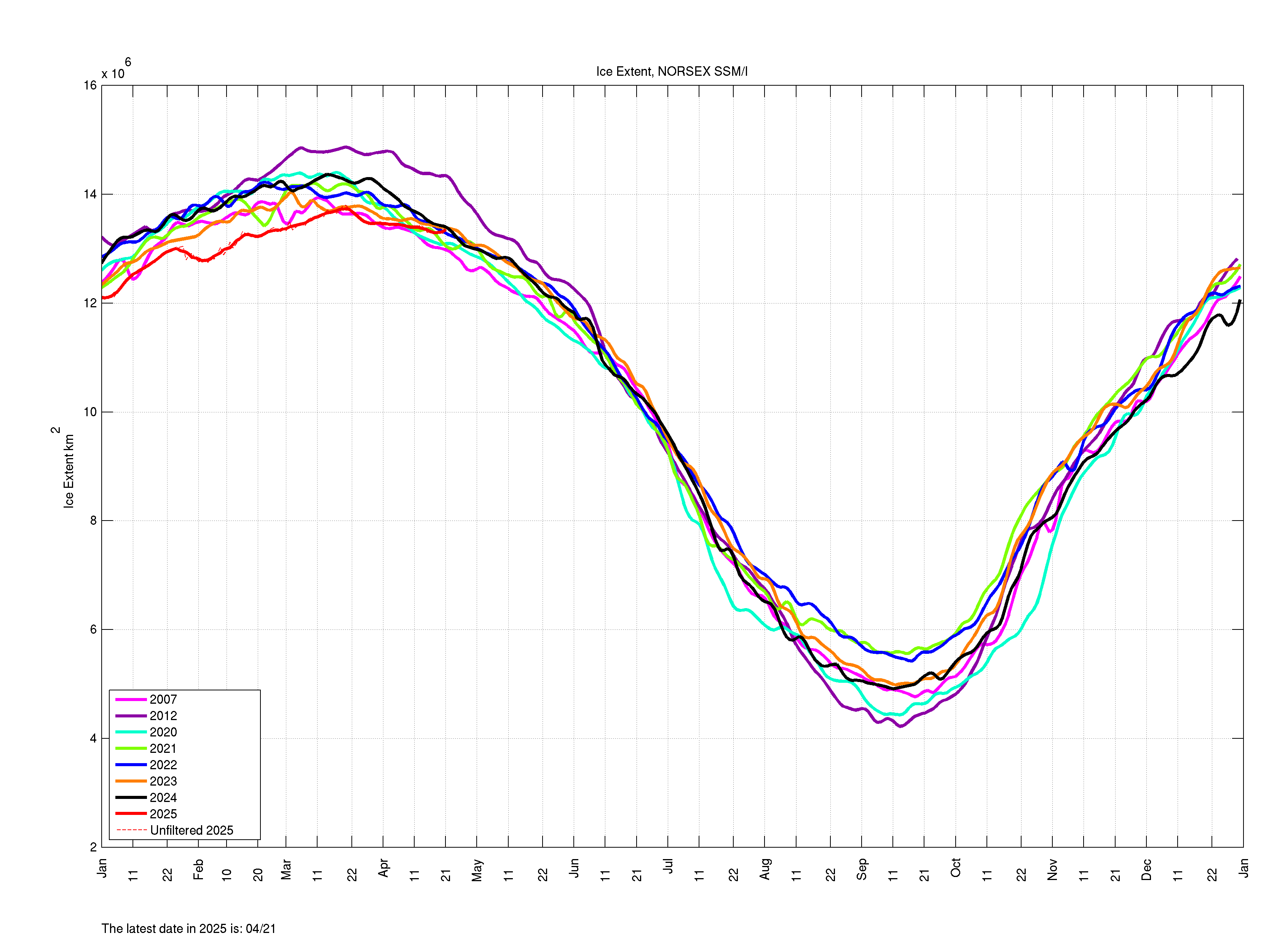
The above chart shows that as of August 01, 2019, ice extent was about 6.5 million sq. kms. (msk). It can go down to as low as 4.3 msk (2012 record) by mid-September this year, then grow up to about 14.9 msk by mid-March (also 2012 record).

From Dr. Roy W. Spencer last August 03 fb post:

"Greenland Melting in the news. This is another example of a few activist scientists (and the usual warmmongers) finding a way to get the public stirred up and interested in the Climate Emergency. The few days of reported extra surface melt was just after a few days of extra gain (which wasn't reported on). But it doesn't matter, because the latest study of the Greenland ice sheet mass balance says even decadal time scale changes can see-saw back and forth and are not indicative of long term trends. They estimate 2/3 of the long-term ice loss on Greenland is from increasing discharge from glaciers at the ice sheet periphery. I would bet that increase is the delayed result of extra snow accumulation many years ago (it takes a long time for ice to flow hundreds of miles downhill). It's a complicated problem."

Forty-six years of Greenland Ice Sheet mass balance from 1972 to 2018
Jérémie Mouginot, Eric Rignot, Anders A. Bjørk, Michiel van den Broeke, Romain Millan, Mathieu Morlighem, Brice Noël, Bernd Scheuchl, and Michael Wood
PNAS May 7, 2019 116 (19) 9239-9244; first published April 22, 2019 https://doi.org/10.1073/pnas.1904242116

From the paper’s Abstract:

"Even in years of high SMB, enhanced glacier discharge has remained sufficiently high above equilibrium to maintain an annual mass loss every year since 1998."

Also from Dr. Roy W. Spencer:

"found this plot of reconstructed Greenland temperatures up to 1990 on Wikipedia (History of Greenland). Looks like someone forgot to Hockey Stickify the data... it was no warmer in 1990 than 1,000 years ago."


And from Willis:

Greenland Endures
Willis Eschenbach / August 3, 2019

"So IF the Greenland ice sheet were to lose 103 billion tonnes per year into the indefinite future, it would take about twelve thousand five hundred years to lose half of it …

And even if the loss were to jump to ten times the long-term average, it would still take twelve hundred years to melt half the ice on the Greenland ice sheet. Even my great-great-great-great-great-great-great-great-great-great grandchildren won’t live long enough to see that."

Meanwhile, a geologist friend, John Encarnacion, shared this blog,

“… climate denialism is closed minded. It thinks it knows the truth and wants to interpret the evidence to suit that.”

That term “climate denialism” is stupid-idiotic. ALL skeptics that I know recognize climate change (CC). No one denies CC, we've had CC since the past 4.6 B years. What is being questioned is the adjective "anthropogenic" CC. The debate is whether current CC is "man-made"/anthropogenic or "nature-made"/natural, cyclical.

Fake news all around. Here’s a good advice from Dr. Spencer,

“Climate change — it happens, with or without our help.”
http://www.drroyspencer.com/global-warming-natural-or-manmade/

Another fake news from Clinton News Network last week,

Record heat waves might have made July the hottest month ever recorded
By Isabelle Gerretsen and Brandon Miller, CNN
Updated 2302 GMT (0702 HKT) August 1, 2019

Well, this is the real and true story, not fake news.

July 2019 Was Not the Warmest on Record
August 2nd, 2019 by Roy W. Spencer, Ph. D.

“July 2019 was probably the 4th warmest of the last 41 years. Global “reanalysis” datasets need to start being used for monitoring of global surface temperatures.”

Meanwhile, the country leader that many people so despise, US President Trump, has the brain and political will to pull the US out of Paris Agreement (2015) and hence, tell the UN, Al Gore, etc that CC is cyclical, warming-cooling, and there is no need to penalize American taxpayers to contribute to $100 B a year, even $500 B a year suggested by other scammers, of climate money.

In contrast, former President Obama gave away $1B to UN climate fund in his last 1-3 months in office, without Congress authorization. UN climacrats were so desperate for more, bigger climate junkets they needed more tax money, Obama gave them the money as if it comes from his own pocket.

The whole UN, Al Gore climate drama is 100% corruption. Less rain or more rain, less cold or more cold, less dogs or more dogs, taxpayers should send more money to them and they will "save the planet".

This is a systematic, large-scale, global project to fool the people around the world so that large scale transfer of money via carbon taxes, endless environmental regulations and prohibitions with big fines and penalties, can be instituted.

This is a 100% political science project that masquerade as climate science. The twisting of facts and science are so raw, so blatant that even an honest elementary biology teacher can protest -- declaring CO2 as pollutant gas. Can people really believe that? The gas that they themselves, their family and friends exhale, the gas that their pets and farm animals, wild animals exhale, is a pollutant? Wow.
--------------

See also:

BWorld 356, Infrastructure, mobility and liberty

* My article in BusinessWorld on August 01, 2019.


WASHINGTON, DC — Among the notable views and experiences for people coming from less developed countries like the Philippines who go to rich countries like the USA are their long, wide, extensive, good roads. Even their rural village or barangay level roads are smooth.

I saw these when I visited some suburbs of DC like Alexandria, Virginia, and the rural village of Forest, Virginia. Lots are big, houses are detached, flat or hilly terrain, the rural roads are smooth.

And except for few big cities, spaces are too wide — interstate roads, city roads, housing lots, school and university lots, malls and groceries with wide parking lots, etc. So many cars and trucks traveling at high speed so they can cover long distances in a short period of time.

The Philippines has generally low infrastructure level and quality compared with our neighbors. Take these numbers for instance from the World Economic Forum Global Competitiveness Report 2018 (See table).


Among the possible reforms for the Philippines are the following:
  
One, encourage more toll roads nationwide, via integrated Public Private Partnerships (PPP) and not hybrid PPP scheme. Toll roads prohibit tricycles, small motorcycles, tractors, and bicycles, and make travel by car, bus, and truck safer and faster.

Two, demonopolize routes. Allow jeepneys and aircon vans to go in areas that are currently tricycle route monopolies; allow buses and aircon vans to go in areas that are currently jeepney route monopolies. Passengers will choose what’s convenient for them and very likely, tricycles and jeepneys will die a natural death in many areas. So these slow and low-passenger vehicles will be out of the roads and mobility will be faster.

Three, business and civil society organizations must make a scorecard of road quality by province, by city and major municipalities. Bad roads, narrow roads due to many unauthorized parking by vehicles will be reported and might shame and wake up lazy governors and mayors.

Four, expand and modernize rail network in major islands like Luzon, Mindanao, and Panay, again via integrated PPP schemes as much as possible.

More mobility means more freedom, more liberty. A developed, modern road and rail system will greatly enhance the mobility of people, their products and services, which reduces the cost of goods and services. Which expands food and other necessities of the population.
---------------

See also:

On gun shooting and gun ownership

First off, condolence to the families of people shot and murdered in El Paso, Texas (20 dead) and Dayton, Ohio (9 dead) today. Tragic indeed.

On prohibiting gun ownership to civilians to "stop gun shooting", I support the position taken by a friend, Willis Eschenbach, posted in his fb wall today. Reposting below. The meme here, CTTO.
---------------

I've been thinking about the tragedy of the shooting in Texas, and the fact that as a result, people once again are screaming for more gun laws.

It's funny. I grew up on a cattle ranch. When I was a kid, every boy I knew got a rifle when they were 12. My older brother. Me. Kids on other cattle ranches.

And during deer hunting season, something like a quarter of the pickup trucks in our high school parking lot had a rifle in the gun rack. It was not uncommon to see a deer on the way to or from school, and kids wanted to be prepared.

And you know what?

Nobody ever shot anyone at our school.

We had lots of guns, including semi-automatic rifles, available any time during school hours for the entire deer season.

So please, don't try to tell me that the problem is the availability of guns. We had lots of semi-automatic rifles in our high school parking lot, what they now falsely call "assault weapons" although they are nothing of the sort.

We had ammunition, both in the guns and in the glove boxes of most of the trucks.

And nobody got shot.

The problem is not the availability of guns.

The problem is the people. And sadly, tragically, all the gun laws in the world won't cure that.

California has some of the strictest gun laws in the nation. Despite that, some lunatic shot up the Gilroy Garlic Festival last week. Here's how.

He used an illegal gun, with an illegal magazine. He illegally broke into the festival, illegally took his gun into a gun-free zone, and illegally murdered some folks ...

... does anyone truly think that more gun laws would have stopped him? Every single thing he did was illegal—you can tell how much laws of any kind meant to him. Zero. Zip. Nada.

Assuredly this is not an easy problem to solve, but focusing on the guns and the gun laws is a guaranteed way to NOT solve it ... as we used to say in the sixties, "When guns are outlawed, only outlaws will have guns".

Best regards to you all, hug those you love, life is most uncertain and tomorrow is not guaranteed.
------------

On October 25, 2015, I posted this, On Liberalizing Gun Ownership.
I argued there,

I believe that gun ownership should be liberalized with only one condition -- people should belong to a gun club, a private, civil society organization, that in turn is registered with the government.

The club will provide training and teach responsibility to members.. The club and its officers will assume some accountability if one or some of their members will abuse their gun ownership. Self-policing of members is a must. So when a club member harms or murders another person somewhere, the guys who will primarily haunt him will be his clubmates, not the police. The clubmates know where he lives, works, hangs out often, his other close friends, and so on….

Saturday, August 03, 2019

BWorld 355, No climate crisis

* This is my article in BusinessWorld last Tuesday, July 30, 2019.

WASHINGTON, DC — The various presentations at the Heartland Institute’s 13th International Conference on Climate Change (ICCC-13) on July 25 in this city reiterated what many scientific papers from the fields of meteorology, geology, climatology, physics, chemistry, biology, mathematics, etc. have found — there is no climate crisis or climate emergency.

Global warming is true, climate change is true, but they are largely natural, nature-made and not man-made (or anthropogenic), and cyclical. What is termed and called by others as “extreme weather” has no baseline period as basis of comparison. So when asked, “extreme weather compared to when, 200 or 800 or 10,000 or 10 million years ago?” the answer is often the sound of silence.

The fact is that there was “extreme weather” during the Roman warm period, Medieval warm period, until the current modern warm period, and in the next hundreds and thousands of years into the future.

Dr. Roy Spencer, a climatologist at University of Alabama in Huntsville (UAH) observed that the Coupled Model Intercomparison Project (CMIP) of the World Climate Research Program (WCRP) models are “warming about twice as fast as both UAH satellite temperatures and the average of four global reanalysis datasets. And even if observed warming is due to increasing CO2, it is too weak to notice in our lifetime.”

Dr. Nir Shavi, a physicists at the Hebrew University of Jerusalem, argued that “actual evidence points to a strong solar climate link and a low climate sensitivity, future warming will be benign, and that solar activity should be taken but it is ignored by the UN IPCC (United Nations Intergovernmental Panel on Climate Change).”

Dr. Jay Lehr, a hydrologist and famous author of a thousand-plus scientific articles, noted that there are at least 12 climate variables — changes in seasonal solar irration, energy flows between the air and land, etc. — that people should look into and study before declaring with certainty that there is indeed a climate emergency.

Governments, upon the prodding of the UN, make policies bases on wrong “climate crisis” scenario of “unprecedented, unequivocal global warming.”

Thus in the Philippines, we enacted the Renewables Energy (RE) Act of 2008 (RA 9513) which gives plenty of special privileges to solar/wind/biomass/hydro power producers, like the feed in tariff (FIT) or guaranteed price for 20 years, to “help save the planet.” The higher oil, diesel, coal taxes under the TRAIN law (RA 10963) is also done along this goal.

There were two reports in BusinessWorld in July 29 related to this:

1. “NGOs call for more aggressive moves to adopt renewable energy”;

2. “Deputy Speaker vows ‘big push’ on department bills, pay hikes.”

Pushing for more intermittents like solar/wind power will further raise electricity prices. Expanding some existing bureaus into full Departments will further require more taxes to finance more Departments and bureaus.

Many East Asian economies hardly pay attention to injecting more solar/wind into their national electricity grid. In particular, Indonesia, Malaysia, South Korea, Singapore, Vietnam, Taiwan, and Hong Kong have a solar and wind share of only 2% or lower of their total electricity generation. And these economies generally have high per capita income (see table).


To create more climate-related agencies — the Department of Disaster Reduction and Department of Water Resources — on top of having the Department of Environment and Natural Resources and the Climate Change Commission, etc. and they will create more regulations to “fight” less rain and more rain, less flood and more flood, less cold and more cold.

We should not further expand bureaucracies but instead, expand conventional energy sources to significantly expand our electricity production, which will help bring down energy prices and make electricity supply become more stable.
----------------

See also:

Climate Tricks 82, Polar ice melt, and grow

When I went to the US last week, I took Korean Air, so route is Manila - Incheon/Seoul - Washington DC Dulles airport. From Seoul to DC last July 24, our KE flight was to the right of Alaska and Bering Sea. Flying back DC to Seoul July 30, the plane flew to the left of Alaska towards East Bering Sea.

Below, photos I took from the plane's Airshow, camera looking directly below the plane, real time. I saw thick ice over the Arctic Ocean, until the East Siberian Sea -- in the middle of summer 2019.


The plane then was more on the northern islands of Canada near Greenland.


Earlier, when the plane was above those northern islands.


When the plane was approaching the East Siberian Sea and Russia... (note Greenland above right)


The ice were less dense. 


Here, real time view of Greenland, ice possibly covered about 90% of total area.


Scenes at the Arctic Ocean as viewed from the plane are consistent with these reports,

(1) Shockingly thick first year ice between Barents Sea and the North Pole in mid-July
charles the moderator / July 30, 2019

(2) Icebreaker headed for North Pole turned back by thicker ice than expected
July 16, 2019 by Robert

(3) Thoughts from the Bow of an Icebreaker
By Dr. Thea Bechshoft, Staff Scientist
7/24/2019 6:48:06 PM

"what we saw was indeed really impressive sea ice. In fact, the sea ice we encountered was thick enough that reaching our destination—the geographic North Pole—took roughly 1.5 days longer than we’d expected."

Polar ice melt, and grow, and melt, and grow... for years, centuries. When people say that "Polar (or Greenland, Arctic, Antarctica,...) ice melt alarmingly" and do not say that same polar ice also grow, they are lying. They are spreading fake news. See Arctic ice melt-grow cycle here, 


Sea ice extent as of end-July 2019 below, about 6.5 M sq.kms. Sea ice melt, and grow, and melt, and grow, every year for decades and centuries. When hard data is shown, emotionalism and faith-based Gorebal warming should give way. 

Source: https://arctic-roos.org/

UN, Al Gore, etc. demonize CO2 -- the gas that they themselves exhale. The gas that their favorite vegetables, trees and flowers use to produce their own food via photosynthesis. CO2 is a useful gas. More CO2, more plant food, more food production. The climate charlatans always say that CO2 is a bad, pollutant gas. Far out from basic, elementary biology.

For plants, current 400+ ppm CO2 is actually not enough. Scientific, modern greenhouse farming use CO2 injectors, raise the level to 600-1,000 ppm, depending on crops. Results - for certain vegetables, instead of harvesting say in 3 weeks, they harvest in 2 weeks. More food production per unit of land and time.
---------------

See also:

Friday, August 02, 2019

BWorld 354, Airports, trains and buses

* This is my paper at the Economy section, BusinessWorld July 26, 2019.


WASHINGTON, DC — It’s my first time to land at Washington Dulles International Airport from Manila via Seoul-Incheon airport. The two previous times (2004 and 2009) that I went to Washington DC, I landed at Ronald Reagan Washington International Airport.

From Dulles to Washington DC proper, I took the bus-rail combination. It is safe, convenient and cheap, only $10 or about 1/6 of the taxi or Uber fare here; travel time for this combo is about one hour. When I went to Kuala Lumpur in May, I also took the train-bus combo from KL International Airport (KLIA) to my hotel in KL city center. Bus fare from KLIA to KL Sentral is about 12 ringgit or 1/3 of Ekspress train.

Metro rails are good complements to international airports. Metro Manila has one of the shortest rail network among developed and developing Asia, we need to have more.

The development and expansion of trains from international airports and seaports to and from Metro Manila was not covered by President Rodrigo R. Duterte in his State of the Nation Address (SONA) 2019 on Monday. Congress leaders should prioritize these.
------------------


See also: